
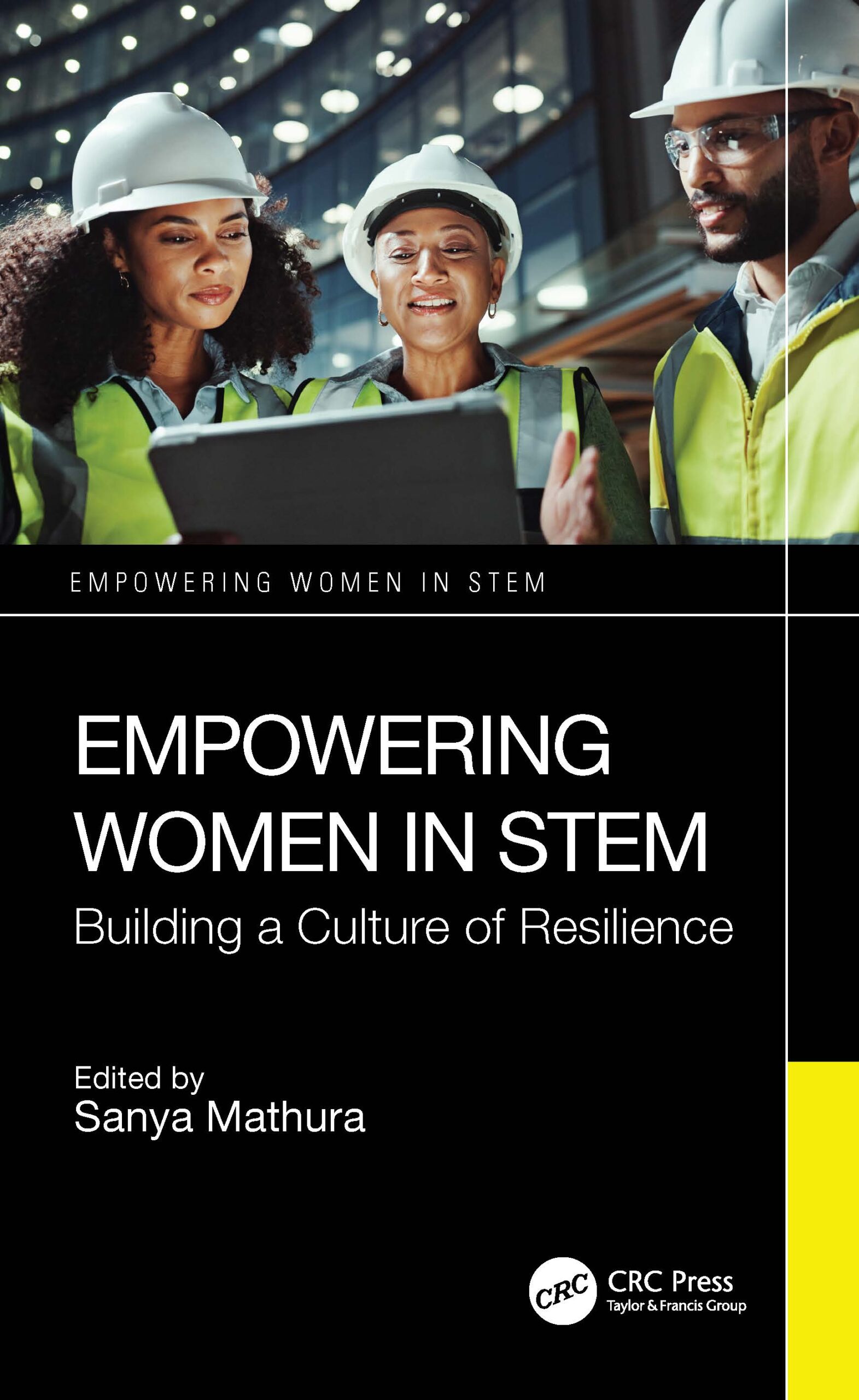
Empowering Women in STEM: Building a Culture of Resilience
Women and men in STEM often face challenges unrelated to their technical work but rather to the approach behind completing tasks and presenting to peers. The STEM fields have developed a reputation for being cold, focused on hard numbers and facts, while overlooking the human element—that real people with lives and feelings are behind the data and discoveries. This book addresses the human complexity in STEM environments, where practical situations are overshadowed by societal and cultural norms that particularly affect how women are perceived in these predominantly male-populated fields.
Empowering Women in STEM: Building a Culture of Resilience offers practical strategies and real-world success stories from women and men who have navigated the complex landscape of STEM careers. Each chapter presents common challenges—from being interrupted in meetings to having ideas attributed to male colleagues—followed by actionable techniques that have worked for others. The book includes interview excerpts from women leaders in various STEM disciplines, exercises to build resilience and communication skills, and frameworks for addressing bias in professional settings. Additionally, it provides guidance for creating supportive networks and mentorship relationships that sustain long-term career growth.
Serving as an essential resource for women at all stages of their STEM careers, this book offers practical guidance for overcoming gender-based obstacles while maintaining their passion for their work. It's equally valuable for male colleagues who want to become effective allies and advocates, helping to create more inclusive work environments. Department heads, team leaders, and HR professionals will find concrete steps to implement structural changes that support diversity and retention. Ultimately, this book is for anyone committed to building a more resilient future in STEM—one where diverse perspectives drive innovation and everyone can contribute their best work.
Meet the Authors!
Foreword
Founder & CEO, Empowering Pumps & Equipment & Empowering Women in Industry
Writing my own story is a challenge. I found myself hesitating, questioning whether my experiences were significant enough, and wrestling with limiting beliefs. From my work with Empowering Women in Industry, I know these are challenges many women face. Yet, every story shared here proves that our experiences matter, that our voices have power, and that our journeys can inspire and uplift others. Surrounding yourself with a community of bold, supportive people, like Sanya and the women who contributed to this book, can transform doubt into action and hesitation into courage.
It is my hope that as you read this new edition of Empowering Women in STEM, you will be inspired not only by the accomplishments of the remarkable women featured but also by the ways they navigated challenges that may resonate with your own life. This book encourages you to embrace your strengths, confront your doubts, pursue authenticity, and boldly pioneer your own path. STEM is vast, evolving, and inclusive. There is space for every voice, every perspective, and every dream.
Your story matters. Your journey is inspiring. And your contribution, however unconventional it may seem, is shaping the future.
(Excerpt from the foreword).
Charli K. Carruth is a leadership coach, entrepreneur, and advocate for women in industry and STEM. With a background in business and finance, complemented by a minor in economics, Charli has spent over a decade building businesses focused on digital media, marketing, and leadership development. She is the founder and CEO of Empowering Women in Industry, an organization dedicated to supporting women and emerging leaders in male-dominated industries.
Charli is passionate about helping professionals identify and overcome challenges such as impostor syndrome, burnout, and limiting beliefs, while developing confidence, authenticity, and leadership skills. She is a sought-after speaker, facilitator, and mentor, sharing her insights on leadership, advocacy, and the power of community. An open-heart surgery survivor and empath, Charli draws on personal experiences of resilience, perseverance, and courage to inspire others to embrace their unique paths and make a meaningful impact.
Her work extends globally, empowering women and leaders across industries to break barriers, advocate for themselves, and pioneer new paths in STEM and beyond.
Section I: Work-Life-Parent Ecosystem
Chapter 1: Learning to Thrive as a Woman in STEM
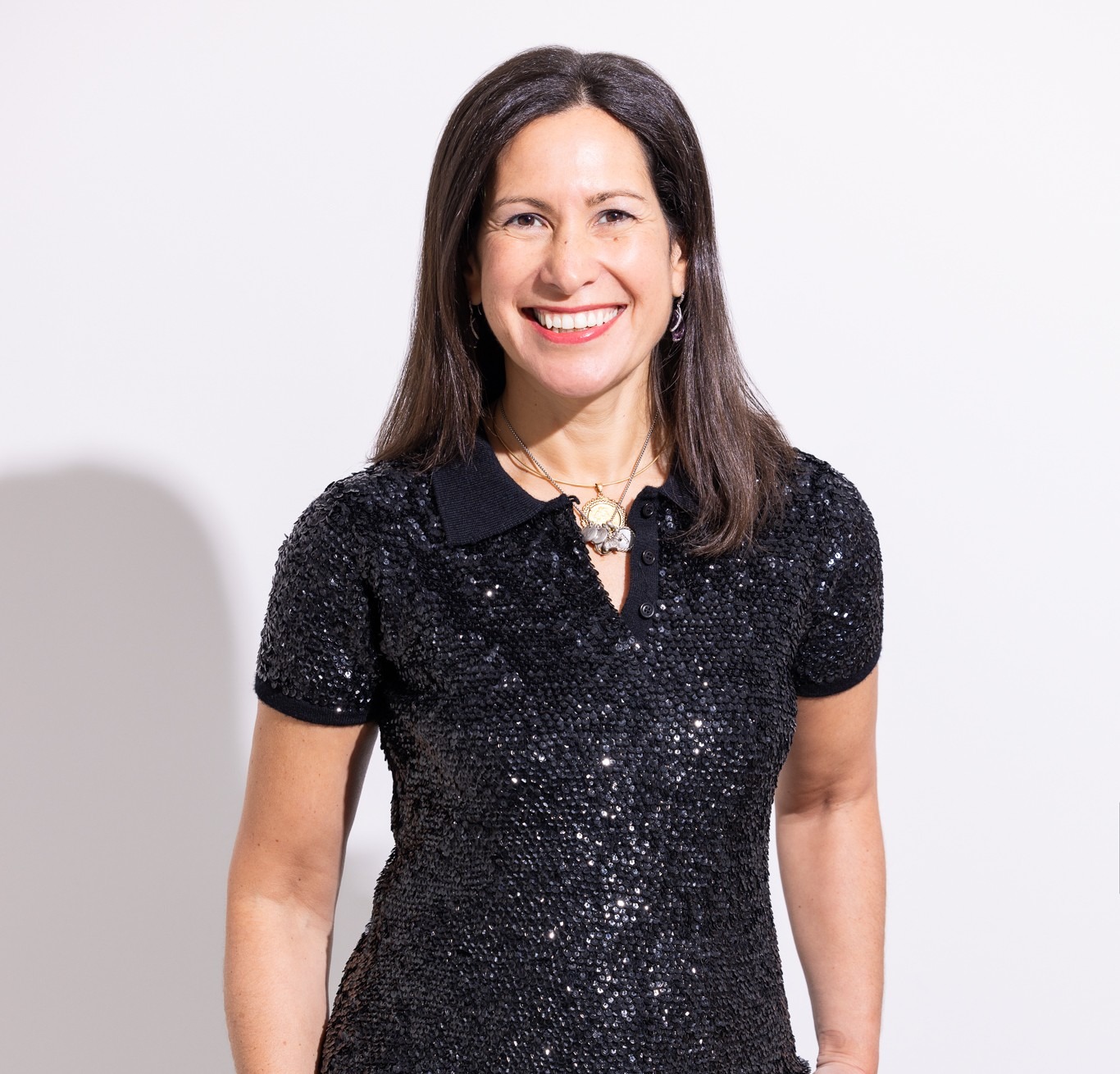
CEO & Co-Founder health.enabled & Senior Associate, Center for Global Digital Health Innovation, Johns Hopkins Bloomberg School of Public Health
It has never been about balance; it has always been about alignment. Being a parent while leading global digital health efforts on little sleep can feel like a daily tug of war. As Patty Mechael reflects, women in STEM often push themselves to prove their worth, burning the candle at both ends at work and at home until exhaustion becomes the norm. Through the birth of her son, the pressures of executive leadership, and the realities of early career perfectionism, she learned to thrive by weaving work and family into one integrated thread of purpose grounded in compassion and competence.
In her chapter, she shares how 4 am calls, cross-continental travel, and conference leadership coexisted with morning routines and the fierce desire to be present for her child. She urges readers to protect their energy, prioritize wellbeing—including sleep—and stay anchored in who they are, because that is what ultimately shapes authentic leadership. Patty also shows how vulnerability, especially with her team, can strengthen trust and open pathways for collective growth and emotional support. Integration of our many identities, not balance, is what enables women in STEM to thrive.
More about Patty
Patricia (Patty) Mechael, PhD, MHS is an award-winning global digital health leader, children’s book author, keynote speaker, and creator of the CULTIVATE Framework for compassionate, human-centered leadership. A pioneer in mobile and digital health with nearly 30 years of experience across 45+ countries, she serves as CEO and Co-Founder of health.enabled and Senior Associate Professor at the Johns Hopkins Bloomberg School of Public Health. Patty is known for blending scientific rigor with “mom-energy leadership,” helping organizations reduce burnout, foster wellbeing, and build cultures where people and innovation can thrive. Her work spans global health, AI ethics, women’s leadership, and workplace wellbeing, and she brings her signature message—lead with compassion, connect with purpose, and design for humanity—to stages around the world.
Chapter 2: Prototyping the Future: What STEM Gives You as a Parent

Speech Pathology Team Leader, Chris O'Brien Lifehouse
Something which hasn’t been explored as much is what STEM gives you as a parent. Dr Emma Charters shares her experience about the transferable skills she has acquired by being a parent, a STEM clinician and researcher. She explains that the skills she learnt as a parent have made her a better STEM clinician and researcher and vice versa. Her STEM background allowed her to navigate her children’s learning challenges such as hearing loss and speech delay and even misdiagnosis. Emma also talks about ways parenting has sharpened her leadership skills.
For her career in STEM where there is no “off” switch it has provided her with flexibility to navigate her work and parental duties, but this is accompanied by burnout. What she hopes to instill in her children is the curiosity to learn more, visually see what resilience looks like as she juggles work meetings and home duties. Being the parent of neurodivergent children, she wants them to also learn that STEM is not reserved for one type of brain. Emma reiterates that parenting isn’t a detour from STEM, it’s an advanced course.
More about Emma
Dr. Emma Charters, Speech Pathologist and Head and Neck Cancer Researcher, BAppSc Speech Pathology, PhD is the team leader of speech pathology and head and neck researcher at Chris Obrien Lifehouse in Sydney, Australia. She is also Speech Pathology Lead within the Integrated Prosthetics and Reconstruction (IPR) multidisciplinary team, where she is actively involved in the (1) clinical, (2) translational research, and (3) point of care manufacturing. She has developed the service with an integrated research agenda focusing on communication and swallowing rehabilitation after head and neck cancer. Her clinical and research interests include improving the functional and quality of life outcomes after jaw reconstruction for oral cancer, restoration of oral competence following facial nerve injury and optimising swallowing outcomes after head and neck cancer treatment.
Dr Charters completed her PhD in 2021, her thesis examined the impact that advances in head and neck cancer treatment have on swallowing and communication outcomes. She is the co-developer of a novel, 3D printed device purpose built for trismus rehabilitation called RestorabiteTM and holds a joint clinical and research position at Chris Obrien Lifehouse. She lives in Sydney, Australia with her husband Rafe (an engineering and STEM enthusiast), dog and 3 children, Ellie (8), William (6) and Sullivan (4), loves camping, the ocean, margaritas and is a terrible cook.
Section II: Impostor Syndrome & Confidence Gap
Chapter 3: When Competence Isn’t Enough: Impostor Syndrome and the Design of Authority
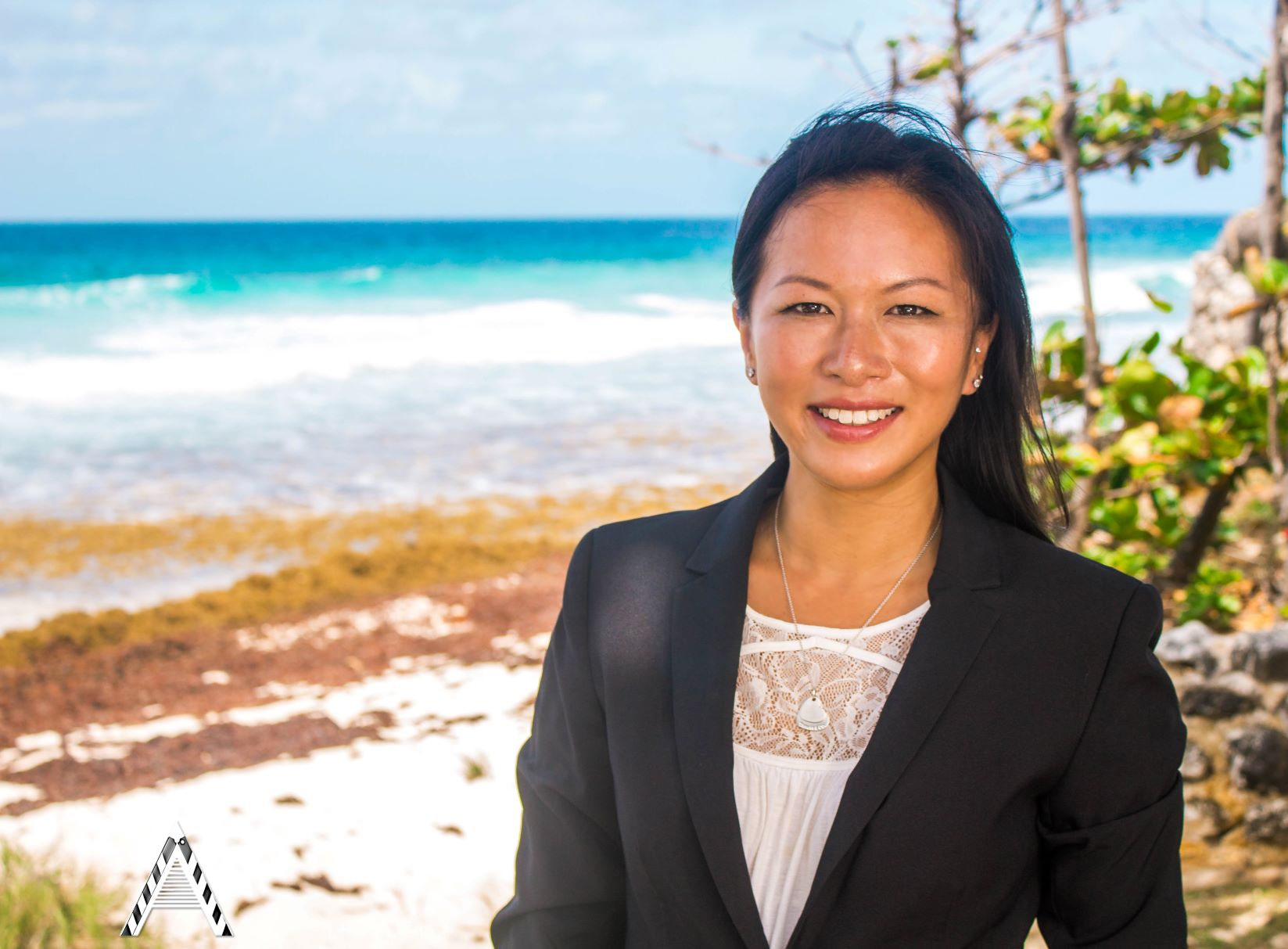
Confidence is often treated as a personal trait — something women in STEM are encouraged to cultivate, project, or perform. But what if confidence is not the starting point? What if it is the outcome of how authority is structured? In this chapter, Genevieve Cheung examines impostor syndrome and the confidence gap through the lens of organizational design. Drawing from her experience in male-dominated technical environments, she argues that self-doubt frequently emerges not from lack of competence, but from ambiguity in decision-making power and visibility.
Through her transition from middle management to external advisory roles, Cheung observed how shifts in authority reshape internal experience. When roles are built around execution without voice, doubt expands. When responsibility and decision-making power align, hesitation narrows — not because personality changes, but because the structure does. Rather than positioning imposter syndrome as a psychological weakness, this chapter reframes it as a signal of misalignment between expertise and authority. The confidence gap, she argues, is sustained less by internal insecurity and more by institutional patterns that require women to demonstrate certainty before granting them voice. For leaders, organizations, and women navigating technical fields, this chapter challenges the narrative that confidence must come first. In well-designed systems, confidence follows authority.
More about Genevieve
Genevieve Cheung is a civil engineer and founder of Atticus Consulting, a project management and procurement consultancy specializing in hospitality developments across the Caribbean. With over a decade of experience across engineering, construction, and leadership roles, she writes and speaks on professionalism, power, and accountability in environments where women remain underrepresented.
Chapter 4: The Fraudulence Paradox: Beyond Self – The Systemic Roots of Impostor Syndrome
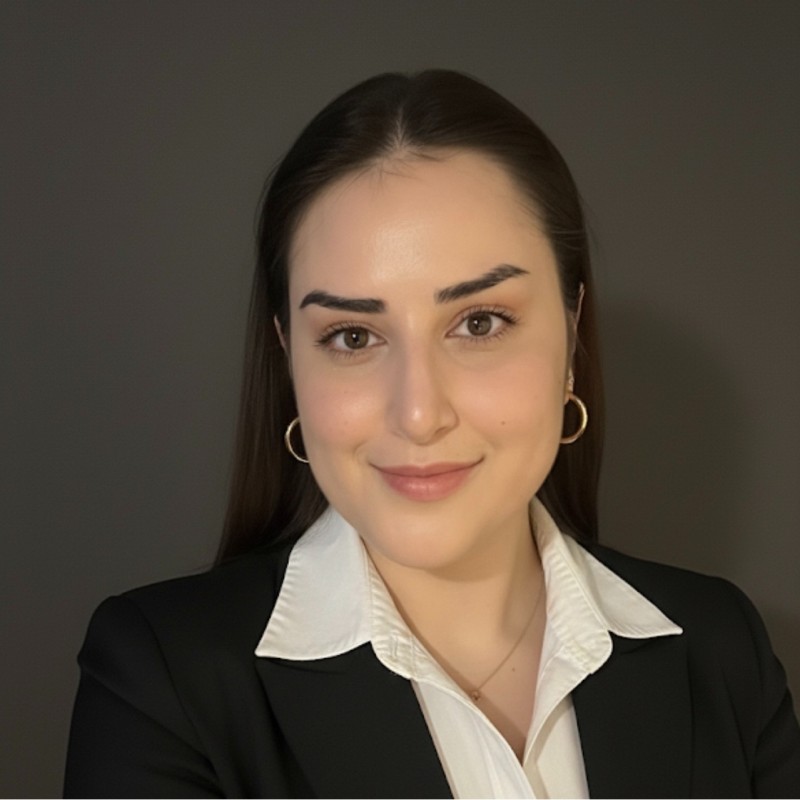
Founder, The Growth Studio by Selen
The very essence of Impostor syndrome lies in the feeling of believing you do not belong but is impostor syndrome a real thing?
Selen Demir takes us on her journey to uncover the systemic roots behind this phenomenon and explores how the foundation of this research began in the 1970s.
Using scientific research coupled with her own experiences, she guides us in ways of identifying various archetypes of inadequacy and provides a code for us to rewrite the myths surrounding impostor syndrome.
Selen reiterates that Impostor syndrome is not a cover story for failure, rather it’s where our potential grows faster than our self-acceptance.
More about Selen
Selen Demir is a passionate developer, entrepreneur, and content strategist dedicated to making technology accessible and inclusive. She is the founder of The Growth Studio by Selen, a modern media and technology company delivering the tools, insights, and systems needed for holistic growth. Her growing ecosystem includes Zentra, a flagship habit and wellness tracker application, and creative media platforms such as the Almost Iconic podcast, the Mobile Engineering Digest publication, and the Explore with the Selenverse newsletter.
Selen holds a Bachelor of Engineering in Computer Engineering from Antalya Bilim University and graduated with an MBA from Kennedy University of Leadership. She has extensive experience in building mobile applications and software solutions, consistently bridging the gap between technical innovation and business leadership.
Beyond her engineering work, she is a committed community leader. She serves as a Women in Tech Global Youth Ambassador and actively volunteers with organizations like Women in Tech Netherlands, Women Who Code, and Women Tech Makers to support underrepresented groups in tech. Additionally, she shares
her expertise as a Learning & Development Advisor at Mentor Me Collective and, as a certified #IamRemarkable facilitator, empowers others to recognize and celebrate their achievements while driving meaningful impact in the global tech ecosystem.
Chapter 5: Be Bold, Be Brave, Be Visible.
Head of Strategic Initiatives and Growth at ATLANT 3D
Impostor Syndrome can show up in many places, often in the “ordinary” things. Dr Bonnie Tsim shares her insight into how her mantra, “Be Bold, Be Brave, Be Visible” has helped her and those around her to lead with more purpose and confidence.
She talks about ways in which the confidence gap and impostor syndrome can influence behaviour ultimately hampering your growth.
For women in STEM fields, impostor syndrome and the confidence gap are very prevalent. She provides some advice on ways to curb these behaviours and break out of the cycle.
Bonnie gives some insight about ways advocacy, integrity and confidence can also help fill some gaps which are created by impostor syndrome. Community has a critical role in addressing these behaviours and closing the gaps.
Bonnie also instigates for treating visibility like an experiment, “Just see what happens”.
More about Bonnie
Dr. Bonnie Tsim is VP of Commercial Strategy and Partnerships at ATLANT 3D, a deep tech company, and holds a PhD in Theoretical Physics from the University of Manchester, where her research focused on the electronic properties of twistronic graphene. With experience spanning deep tech strategy, advanced materials, and international ecosystem building, she has led AI strategy and digital transformation in corporate consulting within the infrastructure sector, and convened global stakeholders across exponential technologies such as advanced materials, quantum, and semiconductors through her work at a for-profit think tank.
Section III: Being The Only One
Chapter 6: You will always Stand Out, So Stand Up!
Owner and Lead Consultant, Reliability Engineering Champions LLC
You find wisdom in so many places: a book, a movie, a friend, a mentor, your own experience, and even random internet quotes. Somehow, we take information from the world and incorporate it (or not) into our experience.
Martha Wittler uses various pop culture references from throughout her life to discuss what it’s like to be the only woman in the room. She discusses how to prepare, how to thrive in the moment, and how to find satisfaction with the improvements you make, whether they are major or minor.
Martha shows that success is achievable and reminds us that while we might be alone in the moment, we have each other to lean on. Her message is clear: you are different and everyone is watching you anyway – so make it a performance worth watching.
More about Martha
Martha Wittler is the Owner and Lead Consultant of Reliability Engineering Champions LLC based out of Akron, Ohio where she empowers organizations to sustainably transform their maintenance and reliability. She earned her Mechanical Engineering bachelor's degree from Purdue University, while minoring in Physics. Martha leads with 20 years of industry experience, working from Engineer through Maintenance Supervisor and up to Director with stops in IT, Purchasing, and Operations along the way. She brings maintenance & reliability process, data, and training knowledge to her clients that provides for lasting culture change and bottom line impact. Martha is a Certified Reliability Leader, and works with the Reliability Leadership Institute Consortium to provide guidance to organizations looking to implement technologies like IoT and AI in their maintenance and reliability practices.
Martha is passionate about engineering and inspiring younger generations to enter the field. She fulfills this particular duty as a part time Pre-Engineering Professor to local Padua Franciscan High School. She aims to both excite students about engineering and encourage diversity within the field. She has a strong history of advocating for Women in STEM both within her past industry experience, and now joining the ranks of female business owners. She has been featured in Women in Engineering magazine and regularly speaks at maintenance and reliability conferences. Martha is always ready to challenge obsolete institutional norms, and to speak for lasting change, especially when it comes to Women in STEM.
Chapter 7: The Journey is Better Together: Cultivating Connection in Your Career

Recently Retired Fellow at Northrop Grumman
Why is belonging important? Because it’s woven into our human nature to want to connect, contribute, and feel part of something larger than ourselves. In this chapter, Gabriela Coe shares powerful insights about being “the only one in the room”, whether that’s as a woman, a person of color, or simply the newcomer. She highlights the importance of building meaningful connections and finding camaraderie that can ease the isolation that often comes with being the only one.
Many of us assume that standing out means we have to go it alone or work twice as hard just to be seen. But as Gabby explains, the truth is quite the opposite. Community can open doors to new roles, mentorship, genuine support, and even just a safe space to vent with someone who understands your journey. Your network doesn’t need to be large; sometimes one person can make all the difference. Gabby also emphasizes that belonging grows through participation. Even in professional communities, progress happens when you consistently show up. And most importantly, community is not one-sided, there is tremendous power in giving back, supporting others, and contributing to the spaces that support you.
More about Gabby
Gabriela (Gabby) Coe is a recently retired Fellow at Northrop Grumman. She serves as a change agent for her organization, driving the adoption of systems engineering and software development disciplines across the enterprise. During her time with Northrop Grumman, Gabby has worked on a variety of complex projects and held various systems engineering leadership positions supporting the Department of Defense (DoD) and civilian agencies of US federal, state, and local governments and also international projects supporting the governments of the United Kingdom and Colombia.
Gabby holds a M.S. in Systems Engineering from Virginia Polytechnic Institute and State University, and a B.S. degree in Industrial Engineering from the University of Miami. Gabby was the recipient of the 2019 Northrop Grumman Invention of the Year Award and the INCOSE 2020 Product of the Year award. Gabby served as an active-duty officer in the U.S. Army Corps of Engineers.
Section IV: Gender Stereotypes
Chapter 8: Dismantling the Gender Stereotype
Creator, STEM with Mr N. & Teacher of Innovation at Kelvinside Academy
When we think about gender stereotypes we often lean towards the idea of a lone female in a male populated industry. However, in this chapter, Stuart Naismith talks about being the lone male in a female populated industry and shares his perspective on this table turning event. Even though teaching is seen as a predominantly female profession, he remarks that he never had to face some of the challenges or biases that women in STEM faced regarding his entry to this field.
As a father and educator, he tries to make it clear to his students that all careers are open to everyone regardless of gender. Through small shifts in language, he is dismantling these stereotypes from an early age which can easily shape the future of the younger generation to have empowered women and supportive allies. He is also encouraging his students to break away from the traditional thought processes and become trail blazers.
More about Stuart
Stuart Naismith is a teacher in Scotland and the creator of STEM with Mr N, a voluntary initiative sharing free, low-cost STEM videos and resources used by teachers and families in the UK and internationally. His work centres on diversity and early careers literacy, including a STEM Career Interviews series profiling role models from varied backgrounds. Stuart serves on the boards of SSERC and The Sustainables Academy and the ESERO-UK Advisory Board. His contributions have been recognised with multiple awards including the Royal Society of Chemistry Excellence in Primary Education Prize and the Scientix Next-Gen Shapers Award.
Section V: Guiding Lights: How Mentors and Sponsors Shape STEM Careers
Chapter 9: The Importance of Female STEM Role Models for Diversity and Inclusion in the Future of STEM
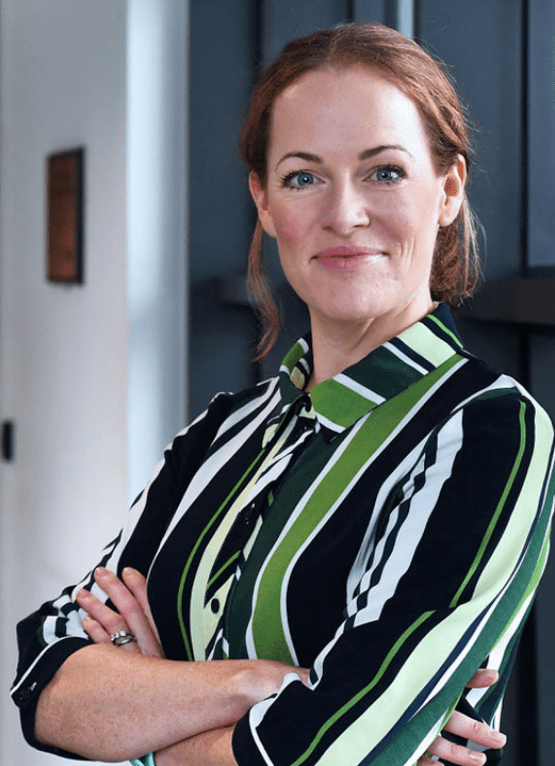
Founder & CEO, STEMAZINGKids CIC
Female STEM role models do not simply inspire admiration; they shape aspirations, reduce the psychological barriers that push girls and women out of STEM, create social proof that success is possible, and alter institutional cultures that otherwise reproduce exclusion. Alex Knight explores these concepts and shares strategies that educators, institutions and policymakers can use to widen participation and inclusion for more women in STEM. She makes the case that addressing underrepresentation affects scientific quality, economic competitiveness, and social justice – and role models are a direct tool for changing representation.
Alex dives into the psychology behind career development and also provides some empirical evidence of how role models can change behaviour and outcomes. She further goes on to explain the mechanisms behind how role models work based on her TEDx talk. She additionally provides some real-life data based on the impact that her organization STEMAZING has seen over the years in this field. Alex is making an urgent call to invest in role models now to help our society see better science and engineering outcomes, economic returns and social justice and inclusion
More about Alex
Alexandra Knight MBE CEng FIMechE FWES is a Chartered Engineer, Fellow of the Institution of Mechanical Engineers and Fellow of the Women’s Engineering Society. After a career of over 15 years in Industry working in engineering consultancy and innovation, she founded STEMAZING – a social enterprise dedicated to inspiration and inclusion in STEM.
Through the organisation’s two key themes - STEMAZINGWomen and STEMAZINGKids, Alex leads several not-for-profit initiatives to empower women in STEM and link this to inspiring our future generations of innovators and problem-solvers. In the last 5 years STEMAZING has trained over 750 women in STEM globally on their Inspiration Academy programme to level-up as visible role models and they have collectively delivered over 197,000 STEMAZINGKids engagements for 7 – 9 year olds in areas of deprivation.
Alex is also Mentor, Trainer, Visiting Professor and TEDx speaker. Her TEDx Talk – “Why Courage, Visibility and Sex Matter in Engineering” has been viewed over 350,000 times on the TED YouTube Channel. She is a regular keynote speaker at events and schools and has featured on engineering TV shows on Channel 5, Prime and CuriosityStream.
In 2025 Alex was awarded the prestigious Rooke Award from the Royal Academy of Engineering for promotion of engineering to the public and won a National Diversity Award, selected from over 85,000 nominees. In 2026 Alex was recognised with an MBE in the King's New Year Honours List for Services to Diversity and Inclusion in Engineering.
Chapter 10: Improving the Visibility of Both Male and Female Role Models
Creator, STEM with Mr N. & Teacher of Innovation at Kelvinside Academy
Did you know that many children, particularly in the early years, may go through their entire primary education without ever being taught by a man? While that seems baffling, Stuart Naismith explains the imbalance in the primary teaching system and the importance of male primary teachers to provide a counter narrative to gender stereotypes. Just as male primary teachers demonstrate that men can succeed in nurturing professions, women in STEM show that women can thrive in technical ones.
He further explains that the challenge for both groups is not their absence, but their visibility. That is why visibility matters; not just so girls can see themselves in STEM, but so boys grow up expecting equality as the norm. Stuart emphasizes the need to have gender neutral terms when describing STEM roles to ensure that these careers are seen as accessible to everyone regardless of gender. He further says that role models open doors while mentors hold them open and guide others through.
Chapter 11: Courage and Trust, the Foundation for Mentorship
Owner and Lead Consultant, Reliability Engineering Champions LLC
"I am a mechanical engineer, like my mother before me." It's rare that we get to say a phrase like that within STEM. Yet, Martha Wittler uses that mantra to impart mentoring lessons obtained throughout her career, starting with her first influential mentors: her parents, and in particular her mother. As Martha grew, her parents, together, taught her that she could have everything (career, family) by working as a team with her partner.
Through her mother’s example especially, she developed the skills for great mentoring relationships. In her chapter, Martha dives into the moments where her mentors provided guidance, but it was her courage to be honest that grew those relationships, and with them, her career.
Martha shares wisdom on the importance of courageous honesty as the formula that builds trust and enhances communication between mentees and mentors. Finally, she makes a call for action that aims to guide mentors, mentees, and organizations implementing mentorship programs.
Section IV: Handling Harassment (Hostile or Unwelcoming Work Environments)
Chapter 12: When Silence Becomes Complicity: Harassment, Power, and the Cost of Being “Professional”
Silence is often framed as professionalism in the workplace. In reality, it is frequently the mechanism through which harm is allowed to persist.
In this chapter, Genevieve Cheung examines how harassment in STEM does not always originate within formal workplace structures — and how institutional silence can enable escalation far beyond them. Drawing on her experience as an engineer and consultant in male-dominated technical environments, she explores the unspoken rules women are expected to follow: be competent but unthreatening, engaged but not familiar, assertive but never disruptive.
Through careful reflection and systems-level analysis, Cheung exposes how informal power, reputational protection, and avoidance of discomfort can override formal responsibility. She challenges the belief that professionalism guarantees safety and reframes escalation not as troublemaking, but as record-keeping in environments that rely on silence.
This chapter offers a clear-eyed examination of power, accountability, and what professionalism truly costs women in STEM — particularly when no one intervenes.
Chapter 13: More Than Me Too
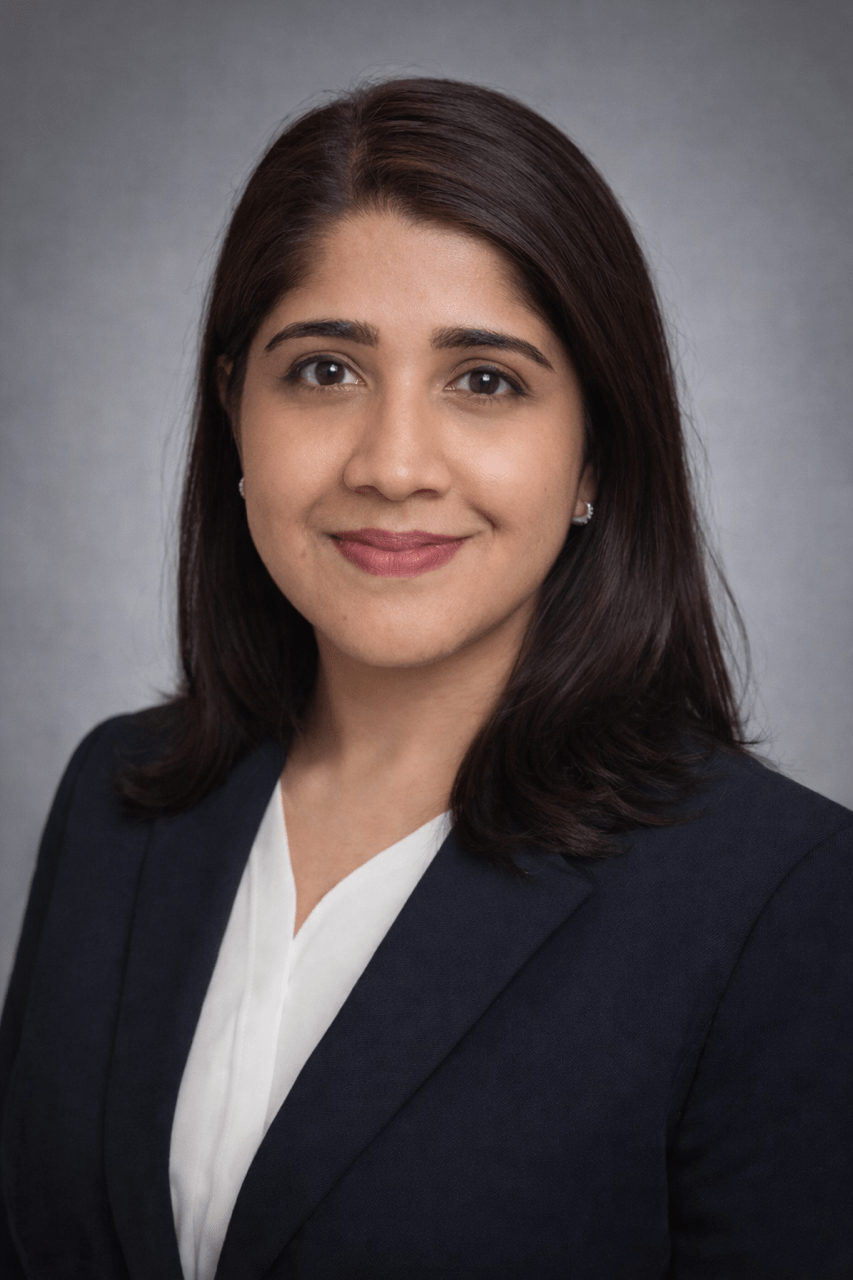
Principal Product Manager, Microsoft
Dr. Priya Iyer discusses a profoundly candid and boundary-breaking exploration of workplace harassment—one that refuses silence, sanitization, or abstraction. Drawing on personal experiences that few leaders dare to share publicly, she traces her journey from early lessons in protection to navigating male-dominated professional environments, openly discussing infertility, and ultimately confronting harassment head-on. With rare vulnerability and moral clarity, Dr. Priya reveals the emotional cost of staying quiet and the catalytic power of anger transformed into action.
The chapter pairs raw lived experience with practical guidance, offering six concrete steps women can take when faced with harassment—from documentation and trust-building to navigating organizational systems and prioritizing healing. More than a memoir, this chapter is a call to courage and collective accountability, reframing survival as strength and equipping the next generation of women with tangible tools to rise, speak, and lead without apology.
More about Priya
Priya Iyer, PhD is an Adjunct Faculty member at City University of Seattle and a technology leader at Microsoft, where she works on large-scale AI infrastructure programs that enable next-generation artificial intelligence systems. With over a decade of experience spanning traditional energy systems, product leadership, and advanced AI platforms, she brings a distinctive interdisciplinary perspective that connects engineering fundamentals with real-world technology leadership.
At City University of Seattle, Dr. Iyer is a passionate educator known for her interactive, industry-grounded teaching style and is collaborating with CityU to launch a first-of-its-kind AI-driven product management course.
Dr. Iyer holds a PhD in Chemical Engineering and has worked across oil and gas production, R&D, and technology commercialization. She is a named inventor on multiple patents, has presented her technical work at 25+ conferences and has authored over 10 peer-reviewed publications in areas including energy systems, system scale-up, and emerging technologies. Her industry background includes building and scaling products at global technology companies and leading complex, cross-functional teams delivering mission-critical systems.
Beyond her technical and academic work, Dr. Iyer is an active thought leader at the intersection of AI, product strategy, and responsible technology. She is a frequent invited speaker and has participated in over 20 podcasts, panel discussions, and webinars, where she shares practical insights on AI systems, leadership, women in tech, and the future of work. She is deeply passionate about advancing women in the workplace and is a visible advocate for inclusive leadership, mentorship, and creating pathways for women to thrive in technical and product-driven careers.
Section VII: Advocating for yourself (or the “Prove it Again” Burden)
Chapter 14: Embracing Detours and Moving Forward
Executive Director, Girlstart
As leaders, we’re always told to be our most authentic selves but what if that moment of authenticity almost cost you everything you’ve worked for?
Shane Woods takes us on her journey of navigating funding and other challenges for DEIB groups (Diversity, Equity, Inclusion and Belonging) while those initiatives are being dismantled.
Her passion and resilience for making a difference in this world continue to shine through as she has had to advocate for herself and beliefs.
She talks about being able to expand past the limitations that are placed on us and truly embody the work we have been called to do.
More about Shane
Since 2022, Shane Woods has been the Executive Director for Girlstart, a nonprofit dedicated to empowering girls in STEM. Her career began as a middle school science teacher in Fort Worth, where she spent 17 years, ultimately becoming the district's K-12 Science Director, overseeing curriculum and professional development. From 2019 to 2022, Shane served as the Senior Director of the Girl Scouts of Northeast Texas STEM Center of Excellence, a 92-acre living laboratory fostering STEM skills, confidence, and leadership. A nationally recognized leader and speaker in science education and STEM equity, Ms. Woods remains active in both formal and informal education. She also contributes to youth development and education organizations like Dallas Afterschool and the Texas Girls Collaborative Project. Shane holds an MS in Education and a BS in Biology.
Chapter 15: The Invisible Weight of “Prove it Again”
Maintenance Systems Engineer, Hexpol Compounding Americas
Many people may not know that the “Prove it again” bias exists but as Angelica González-Gomez explains, it is something that pops up for many women, young people, or people of different nationalities. Very often, it may shape their behaviour, confidence and the way they prepare for opportunities. She explains that the “prove it again” was a rule while she was growing up and it was used for her to demonstrate her competence. This carried over to university and eventually to her place of work.
Instead of letting it drain her, she instead used it as fuel and ensured that she was always prepared with her evidence for her meetings, ready to anticipate questions and provide proof without hesitation. This meant that she left no room for doubt. She shares her personal toolkit which has helped her to allow her competence to speak for itself. Angelica also warns about confusing proving yourself vs seeking approval as one is about competence while the other is about validation. She concludes that every act of self-advocacy today lays a foundation for others tomorrow.
More about Angelica
Angelica González-Gomez is a Mechatronics Engineer with a master’s degree in Marketing Analytics and ten years of experience in industrial maintenance, engineering, and reliability within manufacturing environments. She has worked across multiple industrial sites in Mexico and the United States, leading initiatives related to maintenance excellence, operational performance, digital transformation, and the application of AI in industrial operations. Her work focuses on bridging technical expertise with strategic thinking, leveraging data, automation, and artificial intelligence to improve reliability, workforce development, and decision-making in maintenance and engineering teams. As an immigrant woman in a male dominated field, Angelica is passionate about advocating for integrity, technical rigor, and visibility in STEM, and about creating systems that open doors for the next generation of professionals.
Chapter 16: You Are Your Best Advocate: Claim your Space with Confidence
Specialist, University of California, San Francisco (UCSF)
Self-advocacy isn’t reserved for the loudest person in the room. There is a cost of being silent at times when you need to speak up with your ideas or name your boundaries.
Dr Verima Pereira explores the ways she has developed self-advocacy at times when she felt she just wanted to stay hidden and let her work speak for itself.
She talks about the way the energy shifts when you start naming what you need and setting your boundaries.
Verima encourages readers to find their inner advocate and ensure that they are being seen and their voice heard, because it matters.
More about Verima
Dr. Verima Pereira is an accomplished molecular biologist and research scientist with several years of laboratory experience. She brings extensive expertise in molecular biology and translational research, with a strong focus on CRISPR-based technologies, next-generation sequencing, Spatial transcriptomics, Single nuclei and single cell, MALDI-TOF mass spectrometry etc. Dr. Pereira is recognized for her meticulous attention to detail, strong organizational skills, and ability to collaborate effectively within multidisciplinary scientific and clinical teams.
Dr. Pereira holds a Doctor of Philosophy (PhD) in Gastroenterology and Microbiology from P. D. Hinduja National Hospital, University of Mumbai. Her doctoral research focused on the gut microbiome, and she has made significant contributions to the study of the gastric microbiome in dyspeptic and non-dyspeptic patients. Her work also includes the development of protein chip arrays for the detection and screening of enteropathogenic microorganisms.
Currently a Research Scientist at the University of California, San Francisco (UCSF), Dr. Pereira conducts translational cancer research at UCSF, where her work integrates advanced genomic and molecular approaches to better understand tumor biology and therapeutic response. Her recent research involves biomarker discovery, next-generation sequencing–based analyses, and the application of cutting-edge technologies to support precision oncology efforts. Previously, she investigated the integrated stress response as a therapeutic target in hepatic carcinoma and contributed to studies identifying biomarkers for hepatocellular carcinoma (HCC) in combination with anti–PD-L1 therapy.
Dr. Pereira’s scientific contributions have received notable recognition. She was featured as a guest on the Ordinarily Extraordinary podcast highlighting women in STEM and was recognized for one of the top 100 most-read microbiology articles in 2017 for her publication in Scientific Reports. Through her sustained commitment to scientific excellence, translational impact, and mentorship, Dr. Pereira continues to make meaningful contributions to the broader scientific community.
Section VIII: Cultural & Societal Expectations
Chapter 17: Breaking the Mold – Changing Cultural Expectations by Lifting Others
Founder, Emphareli
We each have the power to make a difference, whether by mentoring someone new, challenging outdated norms, or simply leading with empathy and integrity. Linda Perry talks about growing up in a small town where her path was framed around service, care and family while her brothers were assigned to more adventurous fields. She mentions the turning point where she received a microscope as a kid which shifted her life trajectory and helped her to break out of the mold that society set out for her.
Linda recounts entering the industry and dealing with the “prove it again” bias where she had to fight to be heard. She worked twice as hard, but her persistence turned into progress, and progress turned into respect. Linda talks about the double bind which exists in leadership for women and how she learned that empathy and compassion were her strengths not weaknesses. She also emphasizes the importance of mentorship and how it can help in breaking the mold for those who may not be able to do so for themselves.
Strength is not about perfection; it’s about showing up again and again even when everything feels like it’s falling apart, is something that Linda learnt after her daughter was diagnosed with cancer. She speaks about vulnerability being a bridge rather than a weakness and that success always comes back to trust, integrity, and relationships. She reflects on how the new generation is more open to having conversations on diversity and inclusion as they lead with curiosity rather than fear and collaboration rather than competition.
More about Linda
Linda Perry is a Senior Business Development Executive and reliability strategist with over 35 years of experience helping organizations improve asset performance, manage risk, and optimize long-term ROI. She is the founder of EmphaReli, where her core passion is marrying customers to the right solutions by aligning reliability engineering, procurement, and operations.
Linda also supports strategic growth at The Viswa Group, bringing deep technical and industry expertise to expand Viswa’s testing, inspection, and condition monitoring services across power generation, manufacturing, transportation, data centers, and public-sector markets. She is known for her collaborative, customer-centric approach, and ability to translate complex technical data into practical business value.
Chapter 18: The Changing Roles of Women in Food Systems
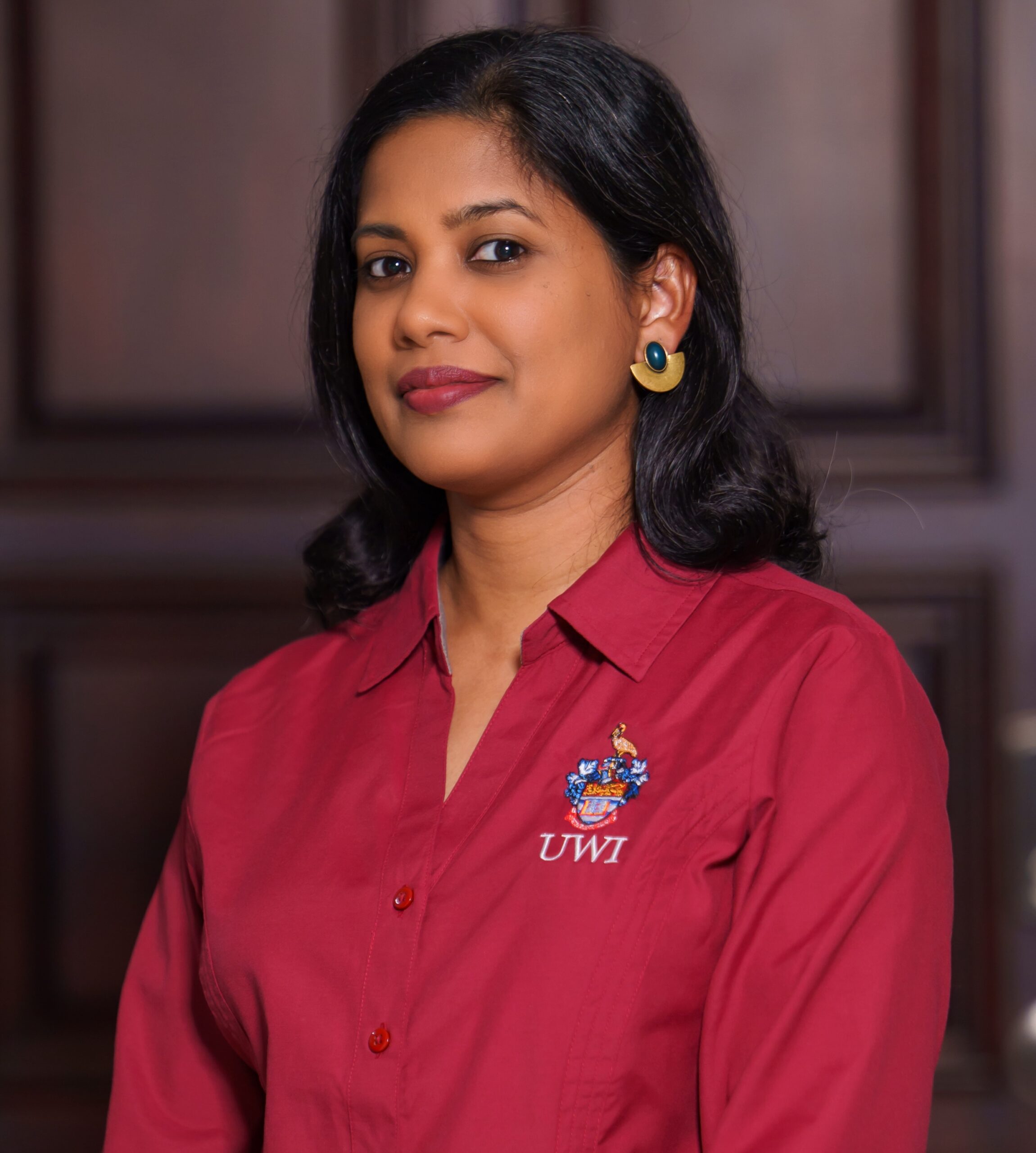
Lecturer in Food Science and Technology, Department of Chemical
Engineering, The University of the West Indies, St Augustine, Trinidad and Tobago
Society has often assumed that women of a particular age should be addressed as “Mrs.” rather than Miss or even Dr. This is an assumption that leads Naailah Ali to explore the cultural shifts that are taking place regarding the status of women.
Being a woman working in the food system herself, she talks about the criticality of food systems and the roles that women play.
She maps out the ways in which women are transforming food systems and how these transformations are bolstering sustainability, entrepreneurial activity and digital advancements.
She advocates for creating more inclusive policies, leadership opportunities, as well as increased visibility for women in food systems.
Naailah is promoting a mindset shift to achieve gender equality, where society can truly embrace women for their valuable and unique contributions.
More about Naailah
Dr. Naailah A. Ali was recently appointed as Lecturer in Food Science and Technology in the Department of Chemical Engineering, Faculty of Engineering, The University of the West Indies (The UWI), St. Augustine, Trinidad and Tobago. Prior to this, Naailah worked at Cocoa Research Centre, The UWI, for 19 years, as a Food Technologist, involved in research and outreach projects on cocoa fermentation and drying, quality assessment, product development, sensory evaluation, geographical indications, flavour mapping, morphological characterisation and social sustainability. Naailah has been a member of the technical committee for Cacao of Excellence since 2021.
Chapter 19: Where Mathematics Meets Humanity: Redefining STEM Through Border, Culture, & Courage
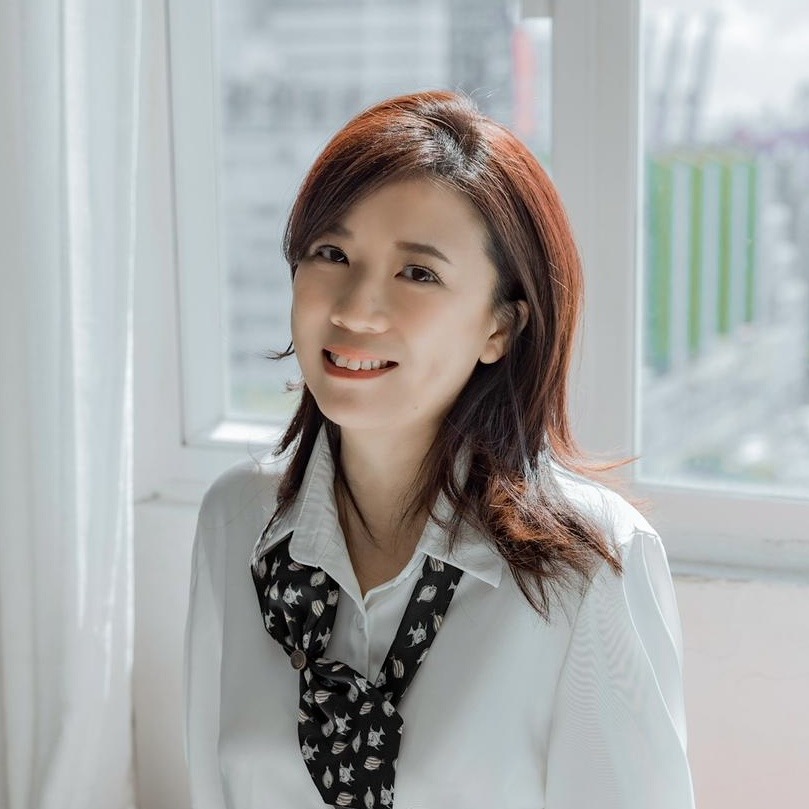
Founder, Hypatia Analytics / Doctoral Research, University of Sussex /Trustee, Age UK Wandsworth
In Hong Kong, expectations are woven into everything. When moving from Hong Kong to the United Kingdom at 17, Karrie Liu didn’t expect to have three sets of parents. Each family (including her own) taught her the foundations of who she is today grounded in love with a foundation in Mathematics. She learned structure, discipline, creativity, and freedom from these families. One life-changing event set her on a path to use numbers and analytics to search for the truth and advocate for change within the medical field.
Karrie talks about navigating systems which were not designed for her, especially regarding sponsorship and visa requirements in the workplace. After working in the NHS, this led her to create her own consultancy, Hypatia Analytics, which made analytics more human, compassionate and purposeful, bridging the gap between analytics and humanity. She reflects on the lessons she has learned as an Asian woman in STEM and describes how she has handled some of the challenges she encountered.
More about Karrie
Karrie Liu is a Chartered Mathematician, healthcare analytics consultant, and the founder of Hypatia Analytics, where she combines mathematical expertise with a deep commitment to social impact. Her career spans over a decade across the NHS, consultancy, and academia, where she currently pursues part-time doctoral research on women’s health. Her work is grounded in the belief that data and compassion can transform healthcare, communities, and lives.
Karrie serves as a Trustee at Age UK Wandsworth, Maths on Toast, and the Institute of Mathematics & its Applications. She has volunteered with charities including Water Harvest and Pioneer Maths, and has led pro bono analytics projects supporting community organisations. She is the creator of several cross-sector programmes that blend STEM with creativity, wellbeing, and social connection.
Originally from Hong Kong, Karrie’s journey across cultures shapes her mission to champion representation and equity in STEM. She is the recipient of awards including the She Inspires Award for Women in STEM, recognising her as a role model from a minority and immigrant background.
Section IX: Authenticity
Chapter 20: Authentic by Claim, Inauthentic by Data: The Everyday Impact of Unconscious Inauthenticity
Doctoral Researcher & HR Practitioner, Loughborough University and Manufacturing Technology Centre (part of the UK Catapult Network)
We often assume women feel inauthentic in male-dominated workplaces. But what if men do too? And what impact might this have for women? Helen Johnson explores the dynamics of conscious and unconscious inauthenticity and how these affect both men and women especially in the engineering field. Based on her Doctorate research she found a hidden story where the engineering field is not only failing women, but also men. Men face experiencing unconscious inauthenticity and it’s impacting women; contributing to women leaving the industry.
In her chapter, Helen dives deeper into allyship and surmises that it can become performative rather than transformative: men may support inclusion while unintentionally reinforcing the norms that limit others’ authenticity. She also shares that without self-awareness, allyship can lack the depth needed to challenge cultural assumptions, redistribute psychological safety, or create environments where authenticity is genuinely possible for everyone.
More about Helen
Helen Sara Johnson is a doctoral researcher (and possibly, by the time you read this chapter, a Doctor of Philosophy) from England, UK. She is also a human resources practitioner at the Manufacturing Technology Centre. Her academic accomplishments, BA (Hons), MA and LLM, align with a successful HR career spanning over 20 years. Inspired to give something back, she has presented her research through academia and industry, engaging with organisations including Jaguar Land Rover and the UK Catapult Network. Outside of academia, Helen is an autistic ADHDer, a champion of well-being and neurodiversity, has a passion for endurance running and is a proud cat mum. Helen’s PhD thesis will be available through the Loughborough University Research Repository as and when completed. To engage with Helen to discuss her research, she can be contacted via Loughborough University, UK.
Chapter 21: Authenticity: Coming Home
Your true authentic self should feel like coming home. Dr Ludmilla Derr and Viktoria Ilger bring their ideas about authenticity to this chapter with an applied exercise which readers can perform. They explore ways you can be honest with yourself and some telltale signs which can help you navigate this pathway to authenticity with lightness. The team talks about removing your ego and uncovering your gifts to help you on your path towards self-discovery. They guide the reader in an exercise to help them find out the elements of what makes them truly happy and talk about their experience with this exercise.
Ludmilla and Viktoria dive into the balance between authenticity and connecting with others. They deconstruct some common misconceptions about what can truly make you feel happy or fulfilled and draw from their own experiences of living societal expectations rather than their authentic self. The duo encourages readers to take action on their discoveries about what makes them truly happy and live an authentic life.

Founder and Managing Director of Derr Ltd
More about Ludmilla
Dr. Ludmilla Derr is Founder and Managing Director of Derr Ltd., formerly known as Elite Experts Conferences Ltd., and a distinguished thought leadership coach who bridges innovative start-ups with established tech giants. With a degree in chemistry and a PhD in material sciences, she brings exceptional scientific expertise to her work. Remarkably, she has become a sought-after marketing strategist as an autodidact who mastered marketing through practice and real-world application, successfully coaching marketing, sales, HR, and technical teams at renowned tech companies. Her unique ability to translate complex technical expertise into compelling marketing insights and meaningful communication, combined with creative thinking, sets her apart in the industry.
Dr. Derr organizes and moderates C-level panels that have already been featured four times by Forbes US, serving as platforms for knowledge exchange and connecting industry leaders with emerging talents. She crafts strategic marketing initiatives around these high-profile events, tailoring content to drive impactful discussions and innovation. As a coach, she provides C-level one-on-one coaching and group training for LinkedIn corporate influencers, helping companies enhance their digital presence and thought leadership. Her ability to connect with diverse audiences and foster innovation has made her a sought-after coach in the competitive tech landscape.
More about Viktoria
Viktoria Ilger is an innovation strategist and corporate venturing expert with more than a decade of experience helping organisations build future-ready business models. She began her career in banking, where she first explored how new technologies and business models reshape established industries. Today, her work sits at the intersection of strategy, sustainability, and collaboration, supporting leaders in navigating uncertainty and turning emerging opportunities into tangible outcomes. She has built venture clienting programs, guided co-creation initiatives between corporates and startups, and advised companies on structuring innovation in complex environments.
Viktoria combines strategic clarity with an authentic, people-centred approach, believing that lasting innovation emerges where expertise meets genuine connection. She integrates financial reasoning, performance metrics, and business impact into her work to ensure that new initiatives translate into measurable results. She partners with organisations across the DACH region to strengthen their resilience, adaptability, and capacity for long-term value creation.
Section X: Burnout
Chapter 22: Weathering the Storms: What Burnout Means for Me
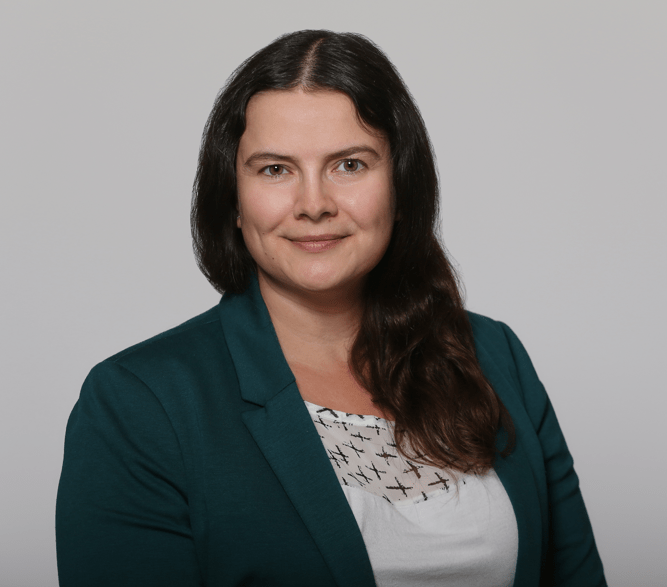
Sustainability Leader, Nokia
We are often told that the storm will pass, we just need to make it to the other side. However, during the storm, damage can occur and not everyone comes out unscathed. Desirée Squires shares some of the storms that she has been through and how she was able to endure and overcome them.
As she navigates through the storms of academia, work and personal life, she provides some insight into how burnout manifests for her and what she does to overcome it. She also provides some guidance on developing your relationship with burnout and factors which can help guide you to determine whether or not you are okay with it.
Desirée advocates for the audience to become more aware of the factors which may influence their burnout and be guided accordingly.
More about Desirée
Desirée Squires, P.Eng., M.Eng., MBA, is a sustainability professional with a background in mechanical and aeronautical engineering. She pivoted from her highly specialized technical career upon learning during her MBA education about the role business leaders play in achieving the UN’s Sustainable Development Goals (building from the Millennium Development Goals familiar from her years with an Engineers Without Borders university chapter), and the concept of a “circular economy”. She now works as a sustainability leader within Nokia’s Network Infrastructure business segment. She is driven to help the tech business progress on their sustainability journey and believes broadly that a circular economy is a critical path forward to enable environmental and social sustainability. She has volunteered as a leader with Circular Economy Clubs of Canada (a consortium of Circular Economy Club chapters) and co-founded weRcircular non-profit after being CEO of Sunset Renewable Asset Management Inc. – a startup which is bringing circularity to the renewable energy industry in Canada. She also enjoys advising students in STEM programs
and sustainability initiatives.
Chapter 23: Befriending Dragons – From Burnout to Confidence
Founder & Principal, Befriending Dragons
Burnout may show up in many small signals – headaches, overexplaining, avoidance, procrastination. There’s often some version of “Why am I broken?” flying through our brains. What if that’s not the verdict, the inevitable outcome? Now imagine it’s just a signal - a dragon we’ve been fighting so long we have forgotten how to step back and ask what it wants? Cindy Gross introduces us to Befriending Dragons™ - staying present and getting curious about the signals in and around us, then creating maps that let us navigate with confidence. She tells us stories of some of her pivotal moments in tech workplaces – systems never built for everyone.
She uses those lessons to illustrate how we can name and map the hidden rules, like double binds and vague success bars pretending to be metrics, to stop internalizing the friction to the point of burnout. Readers hear stories that affirm their own lived experiences and learn practical tools they can apply Monday morning at work. Now we can stop feeling broken, write our own playbooks, and create pathways where our fire fuels our futures.
More about Cindy
Cindy Gross is a strategic navigation partner for keystone leaders in tech—often the underestimated connectors who quietly hold delivery, culture, and relationships together. With 25 years in enterprise technology and five years as a leadership coach, she brings both technical fluency and deep human insight to burnout recovery and sustainable leadership.
Her signature approach, Befriending Dragons™, turns pressure, fear, and criticism into usable information—so leaders can build new maps, set clean boundaries, and create measurable ripples of change without losing themselves. Cindy is the creator of the Leadership Navigation System™.
Section XI: Unconscious Bias in Recruitment & Evaluation
Chapter 24: Identifying and Extinguishing Bias in Recruitment and Evaluation
Many people have had to interview for a job at one point in their life. After that interview, they may have felt that there was an unconscious bias during the recruitment process.
Christopher Gray and Heather Campbell dive into the backgrounds which shape unconscious bias and how this can affect recruiters.
Based on their experiences as recruiters, they also share some ways to help bring unconscious bias to the surface and eliminate it.
They provide some critical guidelines for candidates to navigate the current systems and strategies which can be used during the recruitment process.

NonProfit Recruiter and Partner, ThinkingAhead Executive Search
More about Christopher
Born on a US Naval base in the Florida Panhandle during the Vietnam War. Raised in the 80s in East Tennessee at the Foothills of the Smokies. Earned 2 music degrees including one from the Eastman School of Music. Performed and worked in the Music Business in NYC for almost 20 years. Has toured the world, visiting five continents and approx. 20 countries. He now recruits Power Delivery Engineers nationwide for Boutique Consulting Clients and is based in Middle Tennessee.
More about Heather
Heather partners with mission-driven organizations to identify leaders who strengthen impact and guide organizations through moments of growth and transition. Since joining the firm in 2019, her work has supported a wide range of nonprofits, including those advancing human and women’s rights, conservation, education, and organizations focused on the natural world.
Her commitment to equity, reflection, and intentional decision-making shapes both her approach to executive search and her perspective on recruitment practices more broadly. Before entering executive search, Heather worked in marketing and business development, experiences that sharpened her understanding of organizational dynamics, storytelling, and relationship-building, skills she now brings to her work with boards, leadership teams, and candidates.
Heather lives in Northeast Minneapolis with her partner, their kids, and her blue heeler, Phoebe. Outside of work, she enjoys road biking, camping, and hiking, and believes deeply in continual self-development, community building, and kindness, values that inform how she works with others and navigates the world. She holds a B.S. in Business Administration in Marketing and Management from St. Catherine University in St. Paul, Minnesota.
Chapter 25: Fight or Flight: Navigating the Minefield of Unconscious Bias in the Workplace

External Affairs, Governmental and Political Relations - Region Great Britain, Ireland, Northen and Eastern Europe Bosch
What exactly constitutes unconscious bias in the workplace? Eman Martin-Vignerte explores some of the biases which currently exist and ways to navigate them within the workplace.
She gives us some insight into the many faces of unconscious bias which exist namely; gender, racial / ethnic, age, appearance, neurodiversity, education, and socioeconomic status.
Eman touches on three key factors that directly or indirectly influence unconscious bias: quotas, neurodiversity, and artificial intelligence (AI).
She also shares her story on navigating the cross section of these unconscious biases as she was as a female leader, an engineer, and an ethnic minority diagnosed with neurodiversity.
She shares some ways that we can all move towards a more inclusive future and reiterates the foundation of fairness in everything we do.
More about Eman
Eman Martin-Vignerte is a force in the engineering world, currently serving as the Director of External Affairs and Government Relations at Bosch. However, her influence extends far beyond her title. With both a Bachelor's and Master's degree in Electrical and Medical Engineering from the University of Paderborn/Ulm in Germany, Eman has amassed over six years of diverse experience in software and hardware engineering, particularly within the automotive and telehealth sectors in the UK and Ireland.
Her career is marked by transformative achievements, including her role as project manager for electronic pump systems for Hyundai, where she spent a pivotal year in Korea. Eman’s contributions also include developing innovative ceramic control units for vehicle engines, highlighting her ability to merge cutting-edge technology with real-world applications.
Eman is not only a leading engineer but also a passionate advocate for diversity and empowerment in leadership. She serves on several influential boards, including Buckinghamshire Business First, CBI Southeast, and the Local Enterprise Partnership Buckinghamshire, where she actively shapes industry policies and practices. As a member of OCAVIA, the Oxford-Cambridge ARC Virtual Institute for Aviation, and an advisor for WE-Transform under the EU Commission, she plays a crucial role in advancing transport automation and innovation.
Her commitment to fostering female leadership is evident in her work with various organisations, where she champions the inclusion of women in STEM fields. Eman is a celebrated author on female leadership, sharing insights and strategies to inspire the next generation of women leaders. Her thought leadership extends to her advisory role at Autotech Europe and her board membership at Cenex, where she drives forward-thinking initiatives. Recognised for her exceptional leadership skills, Eman is a Fellow of the Leadership Fellow Society at St George's House, Windsor Castle.
Section XII: STEM Survival Kit: Tools for Navigating and Thriving in Your Career
Chapter 26: Career Pivots are Where Growth and Self-Discovery Align
Principal Consultant, Steppe Consulting Inc
Career pivots may seem a bit adventurous for some but as Susan Lubell explains, these are often where the opportunity for growth and self-discovery can occur. She explores how our careers change over time especially as it relates to our current environment whether that is school, work or even family.
Susan compares the number of existing career paths to climbing a mountain where there are various paths which can be chosen each with their own scenic views or rugged terrain.
She encourages readers to build their transferable skills and explore networking and mentorship, and these can lead to more opportunities. She also provides some practical steps for career pivots.
More about Susan
Susan Lubell P. Eng. CFAM CAMA MMP is the Principal Consultant, Steppe Consulting Inc, and author of Root Cause Analysis Made Simple – Driving Bottom Line Improvements by Preventing One Failure at a Time. With over 25 years of progressive leadership in asset management, reliability, and operational excellence, Susan is a seasoned consultant and educator dedicated to helping organizations achieve sustainable performance improvements. As Principal Consultant she has advised clients across oil & gas, energy, and mining sectors, guiding organizational restructuring and embedding leading practice asset management, maintenance and reliability strategies. As an instructor for PEMAC Asset Management Association of Canada’s Maintenance Management Professional (MMP) and Asset Management Professional (AMP) programs, she has shaped the next generation of industry leaders while serving as President of PEMAC and Chair of the World Partners in Asset Management (WPiAM). Her career includes senior employee roles at asset-intensive energy production companies where she led cross-functional teams to implement ISO 55000-aligned asset management. A respected thought leader and speaker, she continues to advance global asset management competency and operational excellence.
Chapter 27: Navigating a Vibrant Career Journey
Sustainability Leader, Nokia
Everyone starts off with a dream career when they are kids. Sometimes that dream career may not turn into reality, but it begins the process of our career journey as we pivot from one role to the next. Desirée Squires talks about the way a simple school assignment kickstarted her plan to become an engineer. She dives into the career pivots which transformed her journey to lead to her current role today.
From working in the government to engineering consulting to aerospace and defence and finally to sustainability for a tech company, she sheds some light on her “aha!” moments which allowed her to look towards new opportunities. As Desirée takes us on her journey, she reminds us that we don’t have to stay in one industry to feel fulfilled. We can pivot and use transferable skills to create the impact we want to have on the world.
Chapter 28: How Embracing Change and Creating Opportunities Helped Me Find a Place in STEM

CEO & Founder, NEOL Copper Technologies
Leyla Alieva knew that she wanted to contribute to something transformative – something that could leave a lasting impact. Even with a background in Financial management, she was able to transition into STEM with the backing of a strong, supportive environment from her peers. By working with technical experts, her understanding of the industry was deepened and this further reinforced the importance of collaboration especially for someone who is new to the industry.
Leyla shares one piece of advice for those aspiring to succeed in STEM, or any field; passion is key and can go a long way to showing others why your ideas can be successful. When you are passionate about what you do, challenges become opportunities, and obstacles become surmountable. She also talks about the importance of being confident, believing in yourself and being brave enough to create your own opportunities.
More about Leyla
Leyla Alieva is a CEO and Co-Founder of Neol Copper Technologies Limited, an innovation-led technology and lubricant company with a single mission: to rethink what lubricants can be.
Leyla holds a degree in financial management and earned her CFA designation in 2007. Her professional background spans over 12 years in private equity and alternative fund management, followed by leading roles in business development and executive management of science-based enterprises. Her leadership combines deep financial expertise with a clear vision for sustainability and industry transformation.
Chapter 29: From Molecular Biology to Balloon Artistry in STEAM Education
Founder and Director, Twisty Science Pty Ltd
Can someone with a background in molecular biology also be a balloon artist? Dr Chloe Lim, a researcher in molecular biology found a path which merges her recently developed talent in balloon artistry with her work in science. She takes us on her journey from Malaysia to New Zealand, Singapore and Australia as she navigated scholarships, grants, funding and raising a family while diving deeper into the field of molecular biology. She talks about some of the challenges of returning from maternity leave only to discover that the work she was developing had been moved to another department.
Chloe lets us in on the strategy she used to further navigate the transition from academia to government and how she used her transferable skills. She further shares how the balloon artist emerged and the way she decided to pair this new passion with her work in research. She reminds us that not every path is straight, some of them have lots of twists but it’s your approach to your legacy and how you want to impact the world which really dictates your own path.
More about Chloe
Dr. Chloe Lim is a scientist, children’s author, professional balloon artist, and science communicator who transitioned from a 14-year career in epigenetics research to regulatory science in government, while founding Twistyfic to make STEAM (Science, Technology, Engineering, Arts, and Mathematics) learning accessible and joyful through balloon-powered storytelling. A nationally recognised science communicator and Channel 7’s Blow Up finalist, she is also a passionate advocate for culturally and linguistically diverse (CALD) and migrant women, mentoring through multiple non-profits, and amplifying culturally diverse voices via her CALD Voices in STEM podcast. Her business excellence has earned accolades including the 2023 Canberra Women in Business Micro Businesswoman of the Year.
Section XIII: How AI Can Reinforce or Break Gender Bias
Chapter 30: The Algorithmic Glass Ceiling: How Objectivity Becomes Architecture
Principal Product Manager, Microsoft
In this chapter, Dr. Priya Iyer discusses the concept of the “algorithmic glass ceiling,” arguing that contemporary AI systems—designed to appear objective and meritocratic—can structurally reproduce gender inequality at scale. Drawing on her experience in large-scale AI infrastructure and her training as a systems engineer, she reframes bias not as individual prejudice but as an outcome of optimization, historical data, and infrastructural decision-making.
The chapter traces how definitions of merit, efficiency, and leadership become encoded into algorithms, organizational processes, and compute allocation, rendering exclusion statistical, procedural, and difficult to contest. By examining infrastructure as a source of power, Dr. Priya highlights how access to data, compute, and scale shapes whose ideas and futures are amplified.
She concludes by proposing an engineering-informed framework that treats equity as a reliability problem—one that requires instrumentation, continuous auditing, and deliberate design intent to ensure that advanced technologies expand opportunity rather than entrench existing hierarchies.
Section XIV: Financial Empowerment
Chapter 31: The Personal Sides of Financial Empowerment
Sustainability Leader, Nokia
Many of us start off with a bit of personal allowance as kids from family members but this does not extend into adulthood. Desirée Squires takes us on the more personal side of financial empowerment and what that means to her.
She talks about the foundations that were laid during her childhood and how these helped her through navigating financial adulting. She shares how she was able to fund her education and secure her first car and house.
Desirée also provides some tips on ways you can improve your financial position starting from a simple mindset switch.
Chapter 32: Towards Financial Flourishing: A Call to Courage and Change
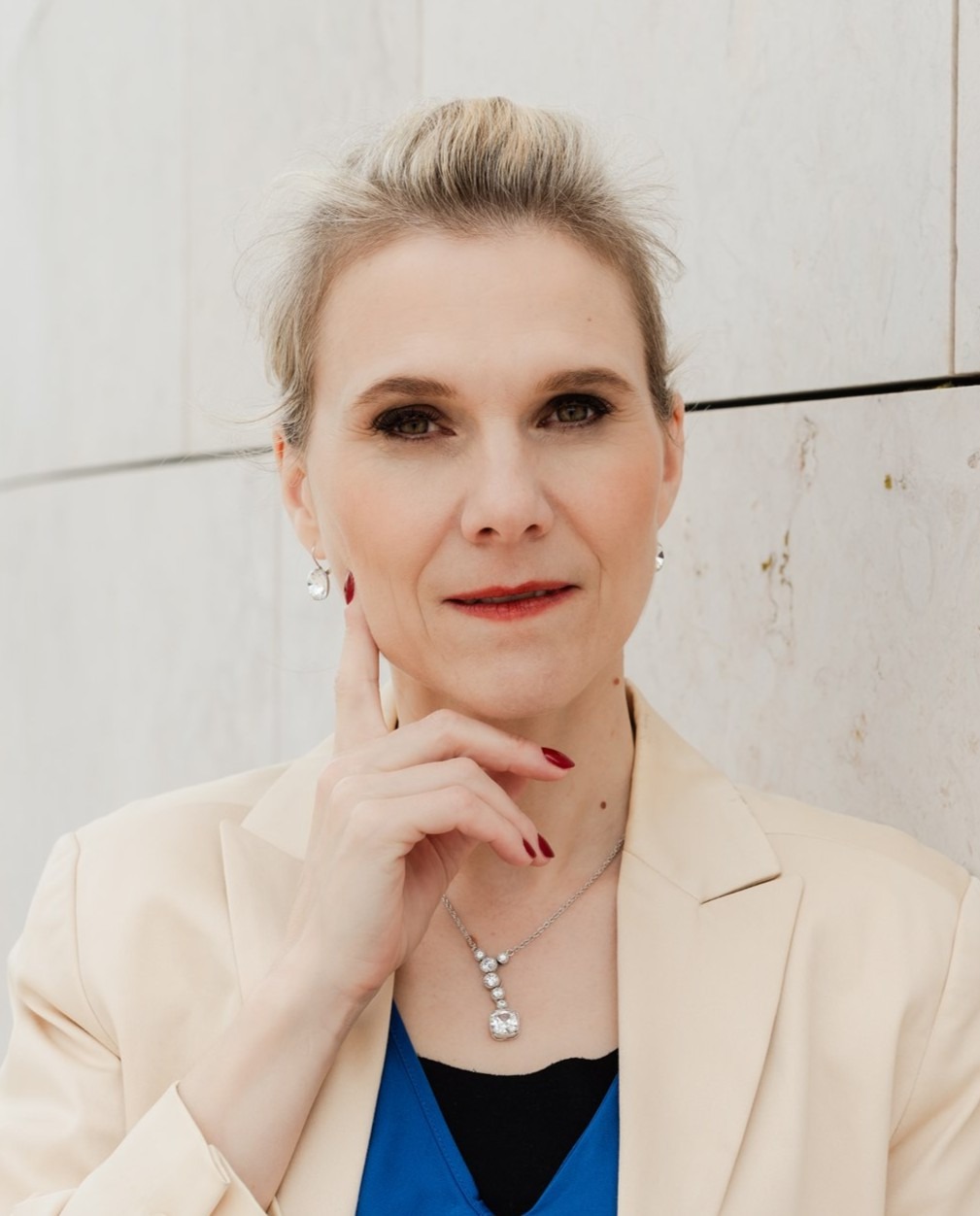
Certified Life Coach & Positive Psychology Practitioner, Dr Sophie Coaching SARL-S
Dr Sophie Jablonski sheds some light on financial independence especially for women in STEM and how it starts with a mindset, not the numbers. She explains that your financial life can be shaped by inherited fears, unexamined beliefs, and limited emotional literacy around money. She further dives into the structural forces that shape women’s financial trajectories in STEM, and the psychological narratives that influence their financial behaviour.
While she addresses the gender pay gap, she also talks about the financial power gap where women are structurally excluded from wealth building opportunities and experience. Sophie dissects where this can stem from and helps the reader to better understand their relationship with money. She also highlights the systemic barriers which can prevent women from earning more in addition to unpaid care and domestic labour which can reduce their career progression. She further goes on to discuss misconceptions which should be put to rest as well as strategies which can be executed. She wants women to cultivate financial empowerment to secure their future, lead, mentor and contribute from a place of autonomy rather than fear.
More about Sophie
Dr Sophie Jablonski is a Life Coach and Positive & Financial Psychology Practitioner, dedicated to helping women leaders in STEM and finance reconnect with themselves and step into their brightest colours – professionally, personally, and financially. She is the CEO & Founder of Dr Sophie Coaching and Co-Founder of Flourish Financially, through which she has supported over 100 clients since 2023 using evidence-based positive psychology and a human-centred approach to financial empowerment and flourishing.
Alongside her coaching practice, Sophie mentors young female engineers, writes for Janette Magazine in Luxembourg, and serves as a Guest Lecturer for M.Phil. students at the Department of Engineering, University of Cambridge.
Before transitioning into coaching, Sophie built a 20-year career as a technical expert in renewable energy infrastructure, working at EY Paris, the World Bank, and for 15 years at the European Investment Bank. She holds a PhD in Renewable Energy Policy (UK), an M.Phil. in Engineering for Sustainable Development (UK), and an M.Sc. in Engineering & Sustainable Development (France). She is a Certified Life Coach (The Life Coach School, USA) and is currently completing an M.Sc. in Applied Positive Psychology & Coaching Psychology at the University of East London.
Born and raised in France, Sophie has lived and worked in the UK, the USA, and the Czech Republic, and has made Luxembourg her home since 2009, where she lives with her husband and three daughters.
Section XV: How to Better Engage Male Allies
Chapter 33: Creating the Shift from Passive Observers to Purposeful Allies

Founder, Token Man Consulting
Are fish aware of the water that they swim in? Humans just like fishes may not readily see the systems which are a part of our everyday life. Daniele Fiandaca uses his storytelling expertise to truly capture some pivotal moments which helped him to really understand how some of the systems are broken. One of those moments included him being the only male in the room of an event he had organized. This helped him to change his perspective from awareness to allyship and this later led to him drive the mission of bringing more men into the inclusion and diversity conversation.
Daniele talks about the system being harmful to men; when they are told to be stoic, cope and carry on which makes them disconnect from empathy, the main driver of inclusion. By supporting men, the door to empathy is opened and that is the foundation of allyship. He talks about bringing more men into the conversation through the Support-Inspire-Recruit model. Daniele also provides a Men Leaning In Matrix which is a framework used to help men evaluate where they are now and how they can play a more active role in supporting gender equity. He emphasizes, men don’t need more blame, they need more belief; belief that they can change, that inclusion will make them stronger and vulnerability isn’t the opposite of strength. Real change begins when equality stops being a woman’s issue and becomes a human one.
More about Daniele
Daniele Fiandaca is founder of Token Man Consulting, an inclusion and diversity business specialising in engaging men and senior leaders with I&D. His work focuses on building inclusive leadership, dismantling harmful gender norms and developing men as accountable allies who help create workplaces that are genuinely equitable and diverse. Current and recent clients include Channel 4, Colt Technology, Engie, Heineken, HSBC, Merlin Entertainments, Monster Energy, Ogilvy, Saint Gobain and Virgin Media.
Daniele is also an executive coach working with senior leaders to develop emotionally intelligent, heart-led and inclusive leadership. Daniele’s work is grounded in vulnerability, empathy and the belief that men can be powerful agents of change when given the space to reflect and grow. Through keynotes, training, Brave Spaces and coaching, he supports men to move from awareness to action and from intention to meaningful change.
Token Man Consulting grew from Token Man, the initiative he co-founded nearly a decade ago to engage men with gender equity. He is also co-founder of Masculinity in the Workplace, one of the few I&D events focused on engaging men, and Hard as Nails, a movement encouraging men to paint their nails to open conversations around healthy masculinity and mental health.
Previously, Daniele co-founded Utopia, an award-winning culture change business whose clients included Coca-Cola Europacific Partners, Google and Spotify.
A recognised thought leader in inclusive leadership and male allyship, Daniele was named one of Management Today’s Top 30 Male Agents of Change and one of the Top 50 Trailblazers in Gender Equality in the UK. He is a White Ribbon Ambassador and HASSL Ambassador, advocating for the prevention of male violence against women and girls and systemic approaches to safety and inclusion.
He co-authored the best-selling Creative Superpowers and spent more than two decades in advertising as CEO of Profero, Managing Partner and Head of Innovation at Cheil Worldwide, and co-founder of Creative Social, winning numerous awards including a Gold Cannes Lion.
Chapter 34: Beyond the Perception of Gender
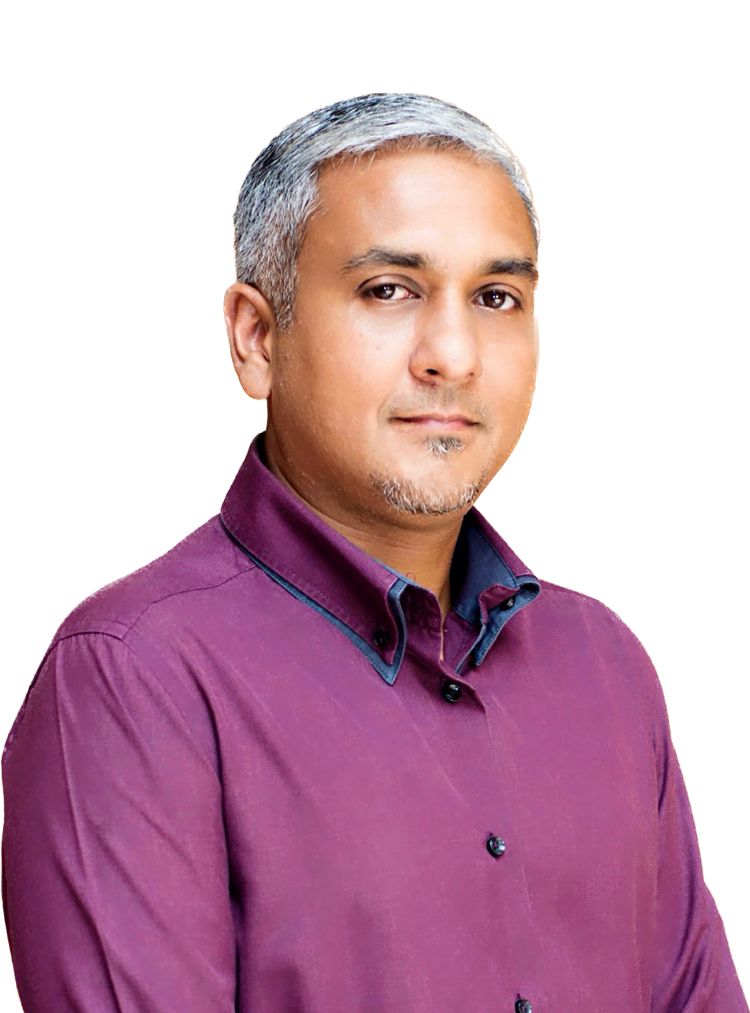
Professor of Power Systems and Sustainable Energy, Department of Electrical and Computer Engineering, The University of the West Indies St Augustine, Trinidad and Tobago
Many of us are familiar with the concept of gender as it applies to machinery or components but have we ever stopped to consider that these are inanimate objects and there is no gender. Professor Sanjay Bahadoorsingh explores this topic in his chapter as he notes that the competency of the engineer is what ultimately matters most to the situation and when interfacing with the equipment.
He delves into experiences both in the classroom and in the electrical engineering field where technical competence is the ultimate requirement. He also comments on the role of gender inequality and how societal constructs can transcend the workplace influencing a decline in the number of opportunities for technical enhancement of female engineers.
As a girl dad, Sanjay also advocates that the empowerment of females begins at home by encouraging them to explore all opportunities available, limited only by their imagination.
More about Sanjay
Professor Sanjay Bahadoorsingh H.B.M. is a national awardee and distinguished registered electrical engineer with more than two decades of service to Trinidad and Tobago and the wider Caribbean. His expertise spans power systems, sustainable energy, electric mobility, standards development, and technical education. He currently serves as Professor of Power Systems and Sustainable Energy at The University of the West Indies (UWI), St. Augustine, where he was promoted at age 41 as the youngest male professor within the University at that time.
Professor Bahadoorsingh holds a BSc in Electrical and Computer Engineering from The UWI, an MSc in Power Systems Engineering and Economics from UMIST (University of Manchester Institute of Science and Technology), and a PhD in Electrical and Electronic Engineering from The University of Manchester. He is a former Head of the Department of Electrical and Computer Engineering and previously served as Deputy Dean for Enterprise Development and Outreach within the Faculty of Engineering.
A Registered Engineer with the Board of Engineering of Trinidad and Tobago, IEEE Senior Member, and APETT (Association of Professional Engineers, Trinidad & Tobago) Senior Member, he has led numerous emergency power system interventions and served as an expert witness in landmark national infrastructure cases. His work includes extensive peer-reviewed publications, industry-focused technical reports, and regional consultancy engagement.
Professor Bahadoorsingh plays a pivotal role in electrical standards and policy development, chairing national technical committees and representing Trinidad and Tobago. He received the Hummingbird Medal (Gold) in Engineering and Education (2024) and the APETT Fenrick R. De Four Award for Outstanding Engineering Achievement (2025).