Tagged: lubrication

How to identify the Root Causes of ESD in Lubrication

Thus far, all the prevention methods have focused on the physical roots of ESD. We did not explore some of the human or systemic roots that are also accountable for ESD. In this section, we will develop a logic tree designed to address a critical failure occurring in a plant. This will be used as an example of the logic tree, which can be developed when investigating the root causes of ESD.

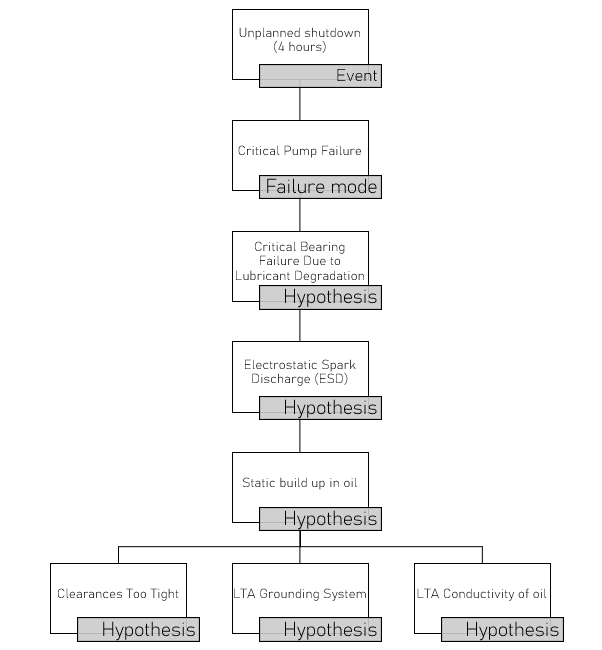
Let’s start with the top of the logic tree, where we define the event or the reason we care. In this situation, it is an unplanned shutdown for 4 hours. An unplanned shutdown will impact the plant’s production, which is why we care about conducting this investigation.

We will assume that the failure mode occurred on one of the critical pumps, and we are investigating how that failure could have happened. Note, we did not ask the question “Why?” because it can be misleading to an opinion, and we are trying to stay as factual as possible.

A disciplined root cause analysis doesn’t start with ‘why’ – it starts with evidence. Each degradation mechanism tells its own story, and Electrostatic Spark Discharge is just one of them.

For this investigation, we will investigate the hypothesis of a critical bearing failing due to lubricant degradation. Since we are focused on ESD for this article, we will have only one hypothesis regarding the degradation mode being ESD. However, in the real world, if this logic tree were being developed, we would be investigating the six various lubricant degradation mechanisms: oxidation, thermal degradation, microdieseling, ESD, additive depletion, and contamination.

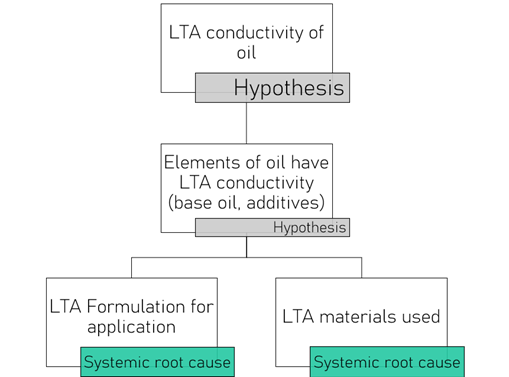
Figure 1: Top part of the Logic tree for ESD

As shown in Figure 1, at the top of the logic tree, we start by placing our hypotheses on the tree, and then using evidence/facts, we can rule them out afterwards. This is a critical step as the investigation should be able to stand on its own in the court of law (even if it may not reach that point). The next hypothesis is the buildup of static in the oil. There are three possible ways for this to occur;

  • Clearances too tight (as discussed earlier, this can lead to molecular friction, which can induce static)
  • Less than adequate grounding system (if a proper grounding system doesn’t exist, then there isn’t an option for the static to dissipate)
  • Less than adequate conductivity of the oil (if the conductivity of the oil is too low, then the charge can build up and cause it to be dissipated along the system, such as the filters)

Now, we need to investigate each of the three main hypotheses stated and find out the root causes for them.

Let’s begin with the Clearances being too tight hypothesis.

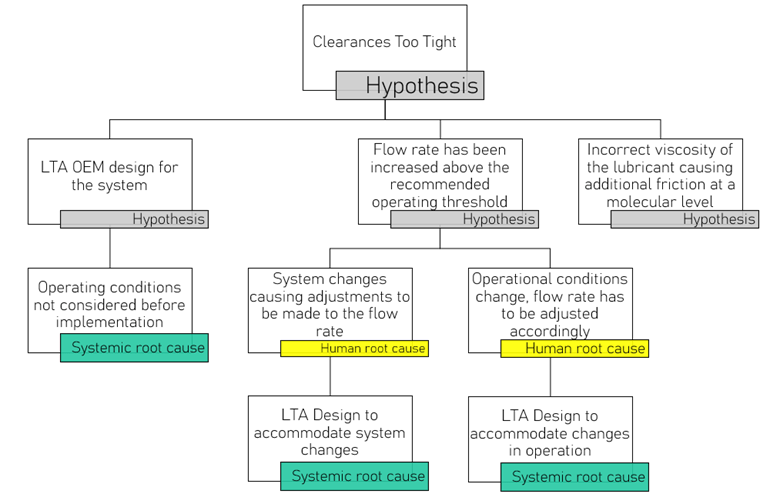
For this hypothesis, we will ask the question, “How can clearances be too tight?”. In this case (and we will have to keep it general and in broad buckets, so we can drill down into these later and eliminate as necessary), there are three possible reasons:

  • The OEM could have designed the system such that it was less than adequate (LTA)
  • The flow rate could have been increased above the recommended threshold
  • Incorrect viscosity of the lubricant could cause additional friction (we will dive into this one later).

We will develop the other two hypotheses in Figure 2.

Figure 2: Investigating the hypothesis, "Clearances too tight"

If we further investigate where the OEM did not design the system effectively, we can determine that the operating conditions were probably not adequately considered before implementation. This is a systemic root cause and one that needs to be addressed with the OEM.

On the other hand, if we investigated the flow rate, there could be two main reasons for the adjustment. One could be because of system changes, which forced adjustments to the flow rate. Since a decision was made here, it is a human root cause. Someone decided to change the flow rate based on the variables involved. However, if we investigate why these changes were made (once a human is involved, the question moves from how to why), we can determine that the system was not designed to accommodate these changes. This is a systemic root.

Similarly, if the operational conditions change (such as when a higher output is required, which is different from system changes), then the flow rate must be adjusted. Again, a decision must be made here, and a human is involved. Then we ask the question, “Why?”. In this case, we have the same systemic root, and the design is inadequate to accommodate the necessary changes.

For this part of the tree, we have found some human root causes where decisions were made, as well as systemic root causes. Both need to be addressed when we perform the final root cause analysis. For the human root causes, we can think about the procedures that guided them to make those decisions (if they existed) and amend these accordingly.

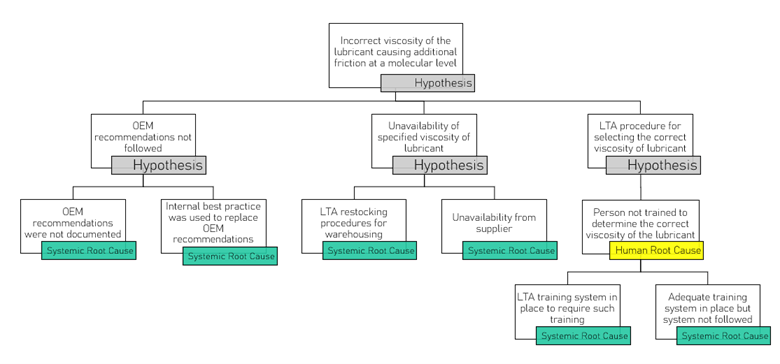
On to the next hypothesis, which we have yet to investigate (still under the clearances being too tight), the incorrect viscosity of the lubricant, which is shown in Figure 3. There are a couple of ways in which this can happen:

  • OEM recommendations were not followed
  • There was an unavailability of the specified viscosity of the lubricant
  • There was a less-than-adequate procedure for selecting the correct viscosity of lubricant

If we investigate why the OEM recommendations were not followed, we can find two main reasons. Either they were not documented and therefore could not be followed, or the internal best practice was used instead to replace the OEM recommendations. In both cases, these would be systemic root causes, and we should investigate why these were not documented or why they were replaced.

Figure 3: Investigating the hypothesis, “Incorrect viscosity of lubricant”

When investigating the unavailability of the specified viscosity of the lubricant, we can find two main causes. Either there was an issue with the restocking of this lubricant at the warehouse due to their forecasting, or appropriate checks were not carried out. This is a systemic root cause that should be investigated further.

Another hypothesis could be that the specified lubricant was unavailable from the supplier. This is another systemic root cause and should be addressed with the supplier to ensure it is resolved in the future.

When lubricant viscosity errors trace back to missing stock or missing training, the problem isn’t the person or the product – it’s the system that allowed both to fail.

On the other hand, if we examine the procedure for selecting the correct viscosity of the lubricant, we identify a human root cause, as someone would have made the decision on which viscosity to use. But in this case, we need to investigate why the person was not trained to determine this value.

There are two main reasons why a person does not receive training: either it doesn’t exist, or it was not followed. In both cases, these are systemic roots that need to be further investigated and addressed.

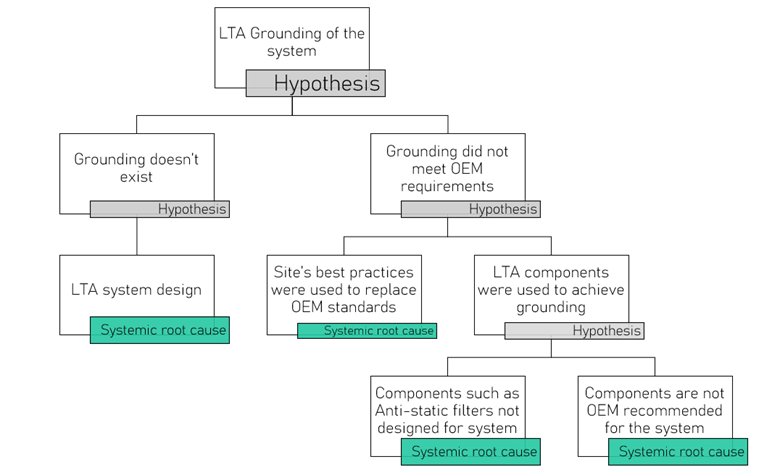
Now, we will investigate the next major hypothesis, “LTA grounding of the system” in Figure 4.

Figure 4: Investigating the hypothesis, “LTA Grounding of the system”

When investigating the grounding of a system, we can identify two major classes: either it doesn’t exist, or it didn’t meet the requirements. If grounding did not exist, then this is an inadequate system design and therefore a systemic root cause. On the other hand, if the grounding did not meet the OEM requirements, we need to determine how this was possible.

Figure 5: Investigation of the hypothesis, “LTA Conductivity of oil”

There are two possibilities: the site’s best practices were used to replace the OEM standards, which is something we often see, especially if these requirements have worked in the past. This is a systemic root cause that should be investigated. Or there were fewer than adequate components to achieve grounding.

In this case, we can have components that are not designed for the system (do not meet the system’s requirements) or components that were not OEM-recommended and are being used (such as aftermarket products that do not meet the necessary specifications).

Finally, on to the last major hypothesis, “LTA conductivity of the oil,” as shown in Figure 5.

As noted earlier, if an oil has a conductivity of more than 100pS/m, it will be able to dissipate any accumulated charge easily. However, if it falls below this value, the charge will be dissipated in the system at the earliest opportunity.

How can oil have less than adequate conductivity? Perhaps the elements of the oil have a less-than-adequate conductivity. If that is the case, then there can be two plausible reasons for this. Either the formulation was not appropriately designed, or the materials (base oils, additives) were not of a particular standard. Both causes are systemic root causes and should be investigated further to determine if anything can be done to correct these.

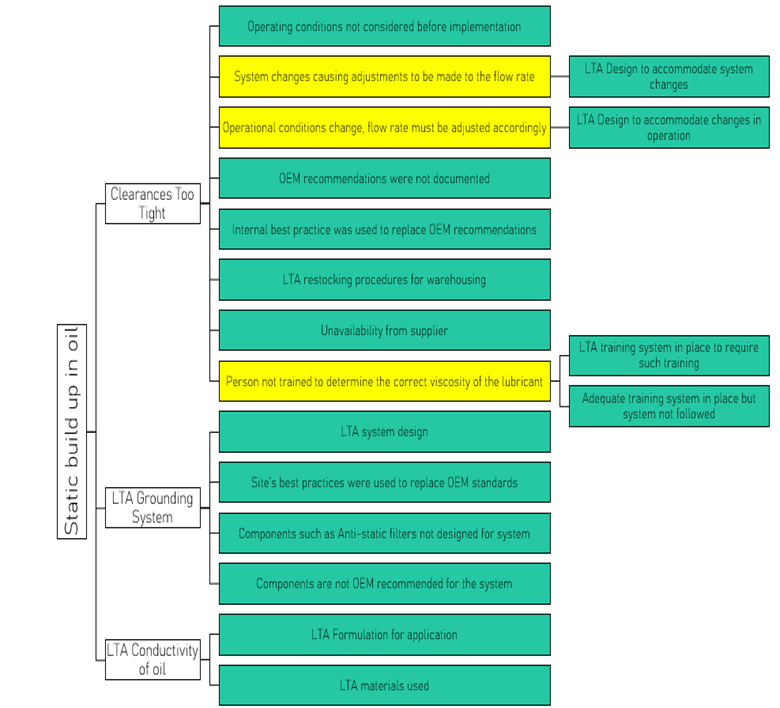
If we were to summarize a list of the root causes, we would see that many are systemic, while a few are human, as shown in Figure 6.

Figure 6: Summary of the root causes of ESD

This further reiterates the need to develop a comprehensive logic tree when investigating any failure, as many root causes are not physical or surface-level. If these are not adequately addressed, the failure mode will recur in the future. The entire logic tree can be found here under additional support material, along with logic trees for other degradation mechanisms.

References

Mathura, S. (2020). Lubrication Degradation Mechanisms: A Complete Guide. Boca Raton: CRC Press.

Mathura, S., & Latino, R. (2021). Lubrication Degradation: Getting into the Root Causes. Boca Raton: CRC Press.

What are Effective Strategies to Prevent ESD in Lubrication?

ESD occurs when there is a buildup of static in the oil; therefore, one of the best methods of preventing it is to ensure that the static levels remain low or are dissipated before they have a chance to wreak havoc on the system. The simplest and most common way of reducing this static is the installation of antistatic filters. These filters can help to remove static from the system before it builds up to dangerous levels, where it can burn the membranes or develop varnish.

Static in oil is inevitable – how you control and discharge it determines whether your system runs clean or burns itself from within.

Ensuring that the system is grounded correctly is another way to guarantee that any built-up static is removed. This is where your electricians can perform checks and install proper grounding devices for your equipment to safeguard against this buildup of static in the system. Therefore, if static charges get built up in the system, they can be dissipated without the effects of ESD.

If oils experience high levels of conductivity, they can conduct static. Typically, if the conductivity is above 100pS/m, there is potential for the fluid to conduct the charge and allow it to be discharged along the system without causing harm.

Unfortunately, there are base oils with low conductivity (below 100pS/m) that cannot carry the charge and dissipate more easily. As such, these types of oils will see an increase in the presence of ESD if not formulated correctly for modern lubrication systems.

As the viscosity of the oil decreases, more force is required to pass through the filters, which can lead to a buildup of static at a molecular level. Additionally, as temperatures decrease, the viscosity also decreases. In these cases, keeping the oil at the system temperature (designed for that particular viscosity) can help to reduce the buildup of static charge in the oil.

Understanding Electrostatic Spark Discharge and Its Impact on Lubrication Systems

Electrostatic Spark Discharge typically occurs when static is built up in an oil at a molecular level, causing it to discharge in the system and create free radicals, which increase the opportunity for varnish to form. This usually occurs at temperatures of around 10,000 °C.

If we were to liken this to an everyday situation, we could think about walking around a carpeted room where the static builds up in our body. When we touch a metallic object (more than likely a door handle), we get a bit of a shock as the built-up static is discharged through us and the door handle.

Inside a lubricant system, static doesn’t just build – it ignites microscopic sparks powerful enough to scar filters and start the chain reaction that leads to varnish.

Similarly, in lubricants, static exists at a molecular level, and in areas of tighter clearances, some molecules are forced to rub against each other, causing a buildup of static. When it accumulates to the point of becoming a full charge, it dissipates at the first opportunity, usually at the filter membrane or some sharp-edged object along the way. These are seen as burnt patches on the filter membrane.

When this spark occurs, it creates a chemical reaction that generates free radicals. Free radicals are highly reactive species that need to engage with other substances. These are the initiators of varnish, and their presence can accelerate reactions, leading to deposits forming in the lubricant. Eventually, this will lead to a system that has experienced both ESD and oxidation.

In this article, we will discuss various identification methods and ways to prevent ESD in modern lubrication systems. We will also spend some time identifying typical root causes for ESD by developing a logic tree as a guide for future investigations.


How to Identify Electrostatic Spark Discharge in Lubrication Systems

Every degradation mechanism produces varying results in the form of deposits or in how these are formed. For ESD, some tell-tale signs alert the user to its occurrence. These include:

  • Crackling sounds / buzzing outside of components – This noise is representative of sparks as they discharge on part of the media/asset. Typically, this occurs when the fluid is in motion, allowing it to be heard near the filters when the system is operating.
  • Burnt or pinhole filter membrane – The filters usually feel the full effect of ESD, and small burn patches or even pinholes are created when ESD occurs. When changing filters, the membranes should be examined for these patches to determine if ESD is occurring.

Free radicals are produced when ESD occurs. As such, this leads to polymerization of the lubricant, which produces varnish and sludge. This is part of the oxidation process, and the antioxidant levels will begin to decrease. During ESD, certain gases are also released in the oil. Some of the lab tests which can be used for identifying where ESD has occurred include:

  • RULER® – Remaining Useful Life Evaluation Routine test, which quantifies the presence of antioxidants in the oil. By trending this over time, one will be able to determine whether the levels of antioxidants are decreasing or not. Typically, this test can be performed twice annually on larger sumps (such as turbines) or the frequency can be increased according to the criticality of the equipment. If the value gets below 25% then this is the critical limit, and methods to regenerate the oil or change it should be explored.
  • MPC – Membrane Patch Colorimetry – this measures the potential of the oil to form varnish or deposits. Depending on the equipment, the warning limits will vary, but a good rule of thumb is to treat results below 10 as normal, those above 15 as within the monitor range, and those above 20-25 as the critical range. Be sure to double-check these levels with the OEM of the equipment.
  • FTIR – Fourier Transform Infrared Spectroscopy can identify various molecules in the oil. It is likened to identifying the fingerprint of the oil, where each molecule has a specific characteristic spectra representative of that molecule. This test can be used to identify the presence of oxidation or any deposits that may have formed.
  • DGA – Dissolved Gas Analysis – this test can be used to identify the presence of particular gases that are released during ESD, such as acetylene, ethylene, and methane.

Those above are just some of the methods that can be used to identify the presence of ESD in a lubrication system.

Sensors vs Traditional Oil Analysis

In this age of AI, it seems that everyone is moving towards sensors and online data. Oil analysis sensors aren’t far behind in this revolution. There are mid-infrared sensors that have been engineered to relate their findings to those of regular oil tests (developed by Spectrolytic). While sensors are the way of the future, the fundamental concept remains the same. What are we doing with the data, and what data are we trending?

Sensors deliver speed, but proven lab methods still set the benchmark for accuracy.

Traditional oil analysis labs trend data, albeit the frequency of the data points is not as high as that of an online sensor. Hence, subtle/instant changes may not be readily noticed or detected. The methods used in these labs have been tried and tested over the years (and approved by various standards committees) to reflect conditions that the oil is facing in the field.

On the other hand, in the sensor world, not many of them (with the few exceptions) correlate exactly to what is being seen in the field. Hence, some lab tests, especially for the specialty tests such as RULER, MPC, and TOST (mainly for turbines), still need to be done by the lab. This is a great opportunity for traditional labs and sensor companies to collaborate and provide customers with collated data.

Moving Towards Sustainable Maintenance

While this article explicitly discusses extending the oil drain intervals for your assets, it underscores the importance of working alongside maintenance and condition monitoring to achieve these results. There is no clear cookie-cutter routine to achieve this, as each fleet of assets will be different and require varying levels of complexity for analysis. One thing is clear, though: we need to move towards sustainable maintenance.

Performing maintenance in the traditional way of just waiting for the appointed interval may be costing us increased labor and parts. However, by working alongside maintenance and condition monitoring, we can get more value from our assets and even increase our ROIs. Sustainable maintenance is the way forward for most asset owners as we move into a new era of maintenance.

How do you set oil-analysis limits for diesel fleets?

What Baselines should you use?

Global oil suppliers have baseline or tolerance limits that are used when providing guidelines to customers about their equipment. The limits for a gearbox will differ from those of an engine. For instance, an iron content level of 3000ppm is normal for an automatic transmission gearbox but highly irregular for a diesel engine! Hence, it is important to know the limits associated with the application.

Some labs have also developed their own set of limits based on years of collecting hundreds of samples and liaising with their customers in the field. OEMs have also developed their own sets of limits (usually displayed in their manuals) based on their testing in the lab and on the field.

Knowing your own “normal” is more valuable than any generic industry limit.

Ideally, when developing your target levels, you should trend your data and find out what “normal” looks like for your equipment. In some cases, what is normal for your environment may be abnormal in a different environment. But it is important to note when normal varies from standard operating tolerances. This is where you would want to work together with your oil supplier, lab, and OEM to develop tolerances that align with your equipment.

Depending on your maintenance program, you can also adjust the tolerance accordingly. If you are aware that maintenance may not act on a threshold limit right away, it may be a good idea to add some padding to those limits. This ensures that the equipment does not suffer by pushing it to the limits.

What are the Oil Analysis Limits for Diesel Fleets?

Let’s explore how to set the limits for a diesel engine fleet of trucks.

Here is a step by step guide on developing an oil analysis program for diesel fleets.

First, let’s categorize the trucks into critical, semi-critical, and non-critical.

The critical ones are those that, if they break down, there is no replacement; the downtime hurts us financially and can delay the project. These need to be available 24/7.

The semi-critical ones are those that still have an impact on the operation if they break down, but it’s not quite as disastrous. These can be trucks that are not on tight deadlines, can afford to have some leniency or delays with their workload.

The non-critical trucks are those that can be easily swapped out for another truck without causing any delay or impact to the project, but they are still important.

Now that these are categorized, we need to find out what types of engines are being used and what the recommended diesel engine oils are for these units. Typically, most operators have mixed fleets. Thus, one may see a wide age/mileage gap in the engines. This gives us an idea of the reliability of the engines, which can impact the setting of the tolerance limits.

Since it’s a diesel engine fleet, it would be worthwhile to consider the type of fuel being used for this fleet. With diesel engines, there are varying levels of sulphur in the fuel, which can impact the oil drain intervals as well.

For this fleet, we may need to establish varying oil drain intervals to ensure maximum reliability, based on the categories outlined by their criticality. Before adopting set oil drain intervals, it is important to execute a pilot project with the fleet to anticipate any rollout challenges for the future. We will discuss these in more detail in the case study section.


Real-World Results from a Diesel Fleet Oil Analysis Program

Fleet: Mixed long-haul trucks of various ages/mileages

Predominant oil: Mineral 15w40 Diesel engine oil (CI4 spec)

Regular Oil Drain Interval: 3000km (based on best practice over time)

Approach: An engine asset list was first compiled for every truck in the fleet. This follows the table below:

Table 1: Sample of Engine Asset listing for Mixed long-haul fleet

It’s important to have a column for comments as this can capture some data that we may not be aware of, such as a recent engine overhaul done to the unit, or the driver has regularly lost power over the past few weeks, or the driver tops up the oil every time he gets back to the yard.

These little details may not be captured in the CMMS (if one exists) or the maintenance logs, but they are crucial in determining whether we can safely extend the oil drain intervals or not. For units that require special attention or are under warranty, these may have to be excluded until more favorable conditions exist.

Based on the fleet (15 trucks), they were categorized into three main groups:

Critical – these units were being used every day on projects that had tight deadlines. They were often unavailable to return to the yard for maintenance or oil changes, as each hour away from the job affected the project deadline.

Semi-critical – these units were utilized by various customers at distant locations and often spent most of their time at the customer site (due to the distance). Hence, basic maintenance was usually performed at the customer’s site, causing minimal disruption to the operation.

Non-Critical – these units are often deployed in situations where extra assistance is required, or they are the standby units if one of the critical units is in trouble.

Even though they had these three groupings, the engine types and mileages were very varied. Hence, a matrix was formed for this fleet.

Table 2: Criticality Matrix – Long-haul fleet

The majority of the fleet falls within the 20-100,000km range, spanning across the critical, semi-critical, and non-critical categories.

A pilot test was done on the following:

  • 3 of the critical units within the 20-100,000km range
  • 1 semi-critical unit in the >100,000km range
  • 1 non-critical unit in the > 100,000km range

Since the typical oil drain interval was 3,000km, we took samples at 1500, 2000, 2500, and then again at 3000km. Based on the trend observed from the first 3 samples, we had a fair indication of the condition of the oil before it got to 3000km.

None of the samples showed any unusual signs of wear, excessive additive depletion, or ingress of contaminants. For these samples, we kept a close eye on maintaining the following parameters:

Table 3: Suggested Parameters to monitor for fleet

Samples were then taken at 3500, 4000, 4500, 5000, 5500 & 6000km. Then, another set of samples was taken at 6500, 7000, 7500, and 8000km once the oil analysis values were still within range. The aim was to at least double the oil drain interval for this fleet.

Intervals of 500km were used as a cautionary value to allow enough time for any anomalies to be caught. The critical engines got to these values faster than the semi-critical and non-critical units.

All of the critical units easily got to 9000km without any of the oil analysis values entering the warning zones. However, the semi-critical unit, which had exceeded 100,000km, only made it to 8,500 km before the TBN and fuel dilution values entered the warning zone. The non-critical unit, which exceeded 100,000km, also reached 9,000 km without any issues.

Since the owner wanted to be on the side of caution (and allow some wiggle room between the intervals for trucks which could not get maintenance done at the specified interval), they chose to change the oils across the fleet at the 7500km mark but keep the oil analysis program where they perform samples at 4000 & 7000km.

They will now work alongside oil analysis, and for some trucks, where they believe they can have an even longer interval, they will extend it accordingly.

What does this mean?

These engines take approximately 44 quarts or roughly 42 liters of oil and are changed every 3000km or roughly 2 months (critical units) with an average of 3 hours downtime for the oil change.

Hence, one unit undergoes approximately six oil changes per year:

  • An average of about 3 hours x 6 times = 18 hours downtime
  • An average of 42 liters x 6 times = 252 liters changed per year
  • Thus, for six critical units that would be:
  • Downtime => 18 hours x 6 units = 108 hours
  • Oil consumption = 252 liters x 6 units = 1,512 liters

The new oil drain interval of 7500km resulted in a 2.5-fold increase in the interval.

This means that the new interval would be every 5 months instead of every 2 months.

Thus, these six units would only do oil changes twice for the year.

New downtime = 3 hours x 2 times/year x 6 units = 36 hours / year

New oil consumption = 42 liters x 2 times/year x 6 units = 504 liters

The following table summarizes the changes.

Table 4: Comparison with extended oil drain interval (ODI)

This is just for part of the fleet, and a dollar value has not been assigned to these, but clearly, there are lots of benefits to extending the oil drain interval through guided oil analysis.

Which parameters should you track in oil analysis?


Every type of equipment will have different tests that should be performed to monitor its health. We will break down a few common types and the associated basic and some specific oil analysis tests that should be performed.


Here are the key parameters you should track — and why each matters.

Diesel/Gasoline Engines (can be further broken down into on-road, stationary, aviation, landfill, and marine)

These are some Basic (monthly tests) and why they matter.

diesel-gasoline-engins

Gearboxes (can be broken down into industrial or automotive). These are the tests and why they matter.

gearboxes

Hydraulics

These are the tests for hydraulics and why they matter.

hydraulics

Turbines and Compressors

Here is a list of tests and why they matter for turbines and compressors.

turbines-compressors

We did not dive into Electrical oils, heat transfer oil, circulating oils, metalworking fluids, or seal oils, but these will have similar type tests and some special tests as well.

What are the risks of pushing oil drain intervals beyond manufacturer limits?

Pushing drain intervals can lead to increased wear, contamination buildup, reduced lubricant efficacy and much more. There is always a danger in pushing limits; that’s why limits exist. They serve as guardrails to ensure that things remain within the standard envelope. As it applies to oil analysis, there are some dangers if the limits are not addressed.

Typically, maintenance intervals are determined by the number of hours worked or the mileage of equipment. These guidelines were developed by OEMs (Original Equipment Manufacturers) based on lab and, in some cases, field tests. Usually, these limits are set with some tolerance for “marginal error,” where the oil may not be changed exactly at the specified interval. However, nobody states what those margins are or what tolerance limits can be used.

In these cases, the oil, whether it has reached the end of its useful life or not, is changed in an attempt to protect the equipment from failing in the future. Hence, OEMs always recommend staying within the limits, as those are what they can guarantee / warranty. Pushing the limits may mean getting in a bit of trouble with your OEM, and they may void your warranty. However, if the benefits outweigh their concerns, then it may be time to push those limits.

What are the safety and environmental benefits of extending oil drain intervals?

Apart from the financial benefit of extending the oil drain interval, there are also safety and environmental benefits. If these pieces of equipment are in high-risk areas, then the humans involved in changing the oil would be placed at risk during these times.

If the oil drain interval is extended, then the humans performing these operations will have reduced hours spent in these high-risk areas. As such, it will limit the number of risk-hours and possibly lower the LTI (Loss Time Injuries) or occurrence of any such safety incidents.

Fewer oil changes mean fewer hours in hazardous zones – and fewer chances for accidents.

Every time the oil is drained from the sump, it must be disposed of safely. Typically, worksites have a dedicated area in which the used oil is stored until it is collected by a disposal provider. Some providers may charge based on the volume they collect or the frequency at which they service their customers. However, the oil must still be disposed. With longer oil drain intervals, there is a reduced volume of used oil collected by these suppliers.

Additionally, longer oil drain intervals also impact the consumption of new oil for these systems. Therefore, equipment owners would likely see a decline in the volumes of oil purchased. This also translates to a saving on the environment as resources used to create new oil are also now reduced, or rather, the demand may be reduced overall.

Another benefit of extended oil drain intervals is that the equipment is available for a longer time. This can become critical in some jobs where the equipment is needed 24/7 or even for an emergency. The availability of equipment can also translate into the potential saving of a life (depending on the equipment).

Overall, there are financial, safety, and environmental benefits to extending the oil drain interval for equipment.

How much money can you save by extending oil drain intervals?

Before diving further into the condition monitoring aspect, we need to answer the question, “Are there any real benefits to extending the oil drain interval of a piece of equipment?” The answer depends on the criticality of the equipment and the cost associated with its downtime.

Financial Gains from Extended Oil Drain Intervals

For critical equipment where maintenance downtime hampers production or availability, extending oil drain intervals offers tremendous financial benefits. For every oil drain interval, there are associated costs such as manual labor, cost of supplies (filters, new charge of oil), and disposal of used oil, to name just a few.

Every unnecessary oil change wastes labor, materials, and money that could be invested in reliability.

Depending on the size of the sump, costs can escalate, particularly if cleaning is required before the new oil charge is placed into the equipment. Different types of applications will advise the draining of the sump and refilling with new oil, while others recommend that the sump be flushed or manually cleaned before the new oil is administered.

Additionally, if the used oil becomes heavily contaminated during use, the sump and entire system would need to be cleaned thoroughly before new oil is used.

What is condition monitoring and why does it matter in lubrication systems?

Condition monitoring began as a way to detect anomalies in our equipment using various types of technologies. These include: vibration, ultrasound, infrared, oil analysis, and even temperature.

These were all conditions that were “aligned” with what was happening on the inside of the machine. As such, changes in their values usually indicated that something was occurring, but it was up to the trained analyst to determine if that was a good thing or a bad thing.

The most effective reliability programs blend multiple condition monitoring technologies to catch failures before they happen.

For this article, we will focus heavily on oil analysis, but this does not mean that it’s the only technology that should be used for monitoring your equipment. It has been proven that a combination of technologies can maximize the opportunity to detect an impending failure earlier and allow the maintenance team to act/plan accordingly. This can save millions of dollars depending on the industry and the type of equipment.


How to use Oil Analysis as a Core Condition Monitoring Tool

Stated, oil analysis can be any test performed on the oil that has been in use in the system. It is essential to note that the oil sampled should be representative of the system; otherwise, the results can lead to operators making inaccurate decisions.

For instance, oil taken from a dead leg of the equipment or in a stagnant zone does not truly represent the oil in the system. This can give a false representation of the system and cause misdiagnosis.

Depending on the equipment being monitored, specific tests would be required to determine the health of those systems. For example, with a turbine oil, one specific test would be the RULER® test to determine the remaining useful life (in the form of antioxidants).

However, if this test were performed for a transformer oil, it would not provide the operator with the necessary information, and more aligned tests such as Viscosity, Dissolved Gas Analysis, or Flash point would be more suitable.