Category: Oil Properties

What impact do Viscosity Index Improvers have on Efficiency, Wear, and Degradation?

If we filled a swimming pool with honey during the winter when no heating was available, the honey would crystallize and become more viscous. Hence, if anyone tried to walk through the pool, moving would be difficult and require more energy. However, if heating was available to the pool, then the honey would be more fluid, and someone could walk a bit more freely (although still sticky at the end of the day!). As such, they would not have to exert as much energy.

The same applies to lubricants and their viscosities. If the lubricant is too viscous (thick honey in the winter), then more energy is required for the components while they are moving. For systems with varying temperatures, finding a lubricant that can maintain the desired viscosity for those changes is challenging.

However, with the invention of Viscosity index improvers, oils can now maintain a desired viscosity at variable temperatures. This significantly affects the energy the system requires and can reduce the energy needed, making some systems more efficient.

As such, the system’s overall efficiency is impacted, and less energy is required to overcome the internal frictional forces of the lubricant (as its viscosity remains within the required range). Passenger car engine oils saw this change with the integration of VIIs when multigrade oils were invented. They no longer needed one oil for summer and another oil for winter. This significantly saved many owners from draining and replacing their oils seasonally or finding their oil frozen in the winter!

Viscosity index improvers, therefore, enhance the overall efficiency of these systems by maintaining the lubricant’s viscosity throughout the changing temperatures. Subsequently, there is no need for additional heaters in the lube oil system, which would also require additional energy. This is another area where cost and energy savings can also be achieved.

Maintaining a particular viscosity at variable temperatures allows the lubricant to form a full film (also known as hydrodynamic or elastohydrodynamic lubrication) between the two surfaces, thus offering them protection from wear.

If the viscosity became reduced (due to an increase in temperature without the VII), then the lubricant would not form a full film or experience boundary or mixed lubrication. In this case, there is the potential for increased wear, which will negatively impact the components in the system. As such, using VIIs can also reduce the potential occurrence of wear or aid in reducing wear.

As per (Gresham & Totten, 2006), this does not mean that the viscosity never changes. When the viscosity of a lubricant changes, its viscosity index will change accordingly. If the viscosity index decreases, this can likely be because of the breakage of the polymeric Viscosity Index Improver polymer molecules to produce smaller chains, which essentially reduce its originally intended effect. If there is a reduction in the molecular weight of the VII, then the lubricant will see a reduced viscosity at both 40 & 100°C. This also reduces the temperature related viscosity effect.

Viscosity Index Improvers significantly improve a system’s overall efficiency and can help reduce wear. However, these additives can degrade over time with high temperatures and shear stress.

Find out more in the full article, "Viscosity Index Improvers Explained" featured in Precision Lubrication Magazine by Sanya Mathura, CEO & Founder of Strategic Reliability Solutions Ltd. 

What is the role of Viscosity Index Improvers in Lubricants?

Viscosity Index Improvers began their commercial debut around the 1950s to accommodate the new developments in automotive oils, which were then adapting multigrade viscosities. However, they were used even before (back in the 1930s) when workers in crude distillation realized that small amounts of rubber improved the VI of the oil but also increased sludge formation.

Today, VIIs are still primarily used as engine lubricants. They can also be found in automatic transmission fluids, multipurpose tractor transmission fluids, power steering fluids, shock absorber fluids, hydraulic fluids, manual transmission fluids, rear axle lubricants, industrial gear oils, turbine engine oils, and aircraft piston engine oils. (Mortier, Fox, & Orszulik, 2010).

Essentially, VIIs try to maintain the oil’s viscosity at varying temperatures. They try to ensure that the oil does not experience a loss of viscosity, which can occur due to high temperature or shear. VIIs can be considered polymers, which are tightly wound coils. When temperature or shear is applied to these coils, they unravel (lose their viscosity). Depending on the amount of shear, they may never recover their original shape (or viscosity).

As seen in Figure 1 below, Mortier, Fox, & Orszulik (2010) describe the change in the shape of the VIIs as a result of high temperature or shear. They can coil and uncoil depending on the shear stress, but if the bonds are broken, they will not reform their original coil and lose their intended viscosity.

Figure 1: Mechanical Polymer Degradation (excerpted from (Mortier, Fox, & Orszulik, 2010)

Interestingly enough, it must be noted that some VIIs provide lubricants with additional functions of Pour point depression and dispersancy. This is highly dependent on their composition.

Find out more in the full article, "Viscosity Index Improvers Explained" featured in Precision Lubrication Magazine by Sanya Mathura, CEO & Founder of Strategic Reliability Solutions Ltd. 

What are Viscosity Index Improvers?

Viscosity Index Improvers (VIIs) are additives that help maintain the viscosity of lubricating oils across a wide temperature range, ensuring consistent performance.

This article will explore the nature of viscosity index improvers and their role in industrial and automotive lubricants. We will also look at their impact on lubricant efficiency, innovations involving this type of additive, and future trends.

Before discussing the nature of viscosity index improvers, we need to understand the role of viscosity. Essentially, this is one of the most critical functions of a lubricant, as it directly affects its flow rate and ability to keep the two interacting surfaces apart.

By nature, all base oils have an assigned viscosity based on their blend. However, other properties are required when we’re creating finished industrial or automotive lubricants. For instance, we may need the oil to withstand higher temperatures while still maintaining a particular viscosity, which not only provides wear protection for the equipment but also flows at a rate that does not incur frictional losses. Those are a lot of functions!

Typically, as temperature increases, viscosity decreases, and as the temperature decreases, the viscosity increases. One example is the state of water: when heated, it can turn into a gas (lower viscosity), or when frozen, it can transform into ice (higher viscosity). However, depending on the type of material, there will be varying rates of viscosity change with temperature. The viscosity/temperature relationship is called the viscosity index (VI).

As per Mortier, Fox, & Orszulik (2010), the kinematic viscosity of oil is measured at 40°C and then at 100°C. The viscosity change is then compared with an empirical reference scale initially based on two sets of crude oils: a Pennsylvania crude arbitrarily assigned a VI of 100 and a Texas Gulf crude assigned a VI of 0.

The higher the VI, the less effect that temperature has on the oil, which means that the oil can maintain a particular viscosity for a longer time at a more extensive temperature range. This is ideal for lubricants in environments experiencing temperature changes. However, not all oils have a high viscosity index. Typically, paraffinic oils can have a very high viscosity index. On the other hand, naphthenic oils have a low or medium viscosity index. The table below gives an overview of the viscosity index for various oils.

Table 1: Viscosity index of API Groups I-III

When trying to manage or alter the viscosity index of the oils above, the use of Viscosity Index Improvers (VII) can help by adding that property to an oil to allow it to have other beneficial properties. As per (Mortier, Fox, & Orszulik, 2010), viscosity index improvers consist of five main classes of polymers:

  • Polymethylmethacrylates (PMAs).
  • Olefin copolymers (OCPs).
  • Hydrogenated poly (styrene-co-butadiene or isoprene) (HSD/SIP/HRIs).
  • Esterified polystyrene-co-maleic anhydride (SPEs)
  • A combination of PMA/OCP systems.

Find out more in the full article, "Viscosity Index Improvers Explained" featured in Precision Lubrication Magazine by Sanya Mathura, CEO & Founder of Strategic Reliability Solutions Ltd. 

Understanding the oil analysis results of Diesel Engine Oil

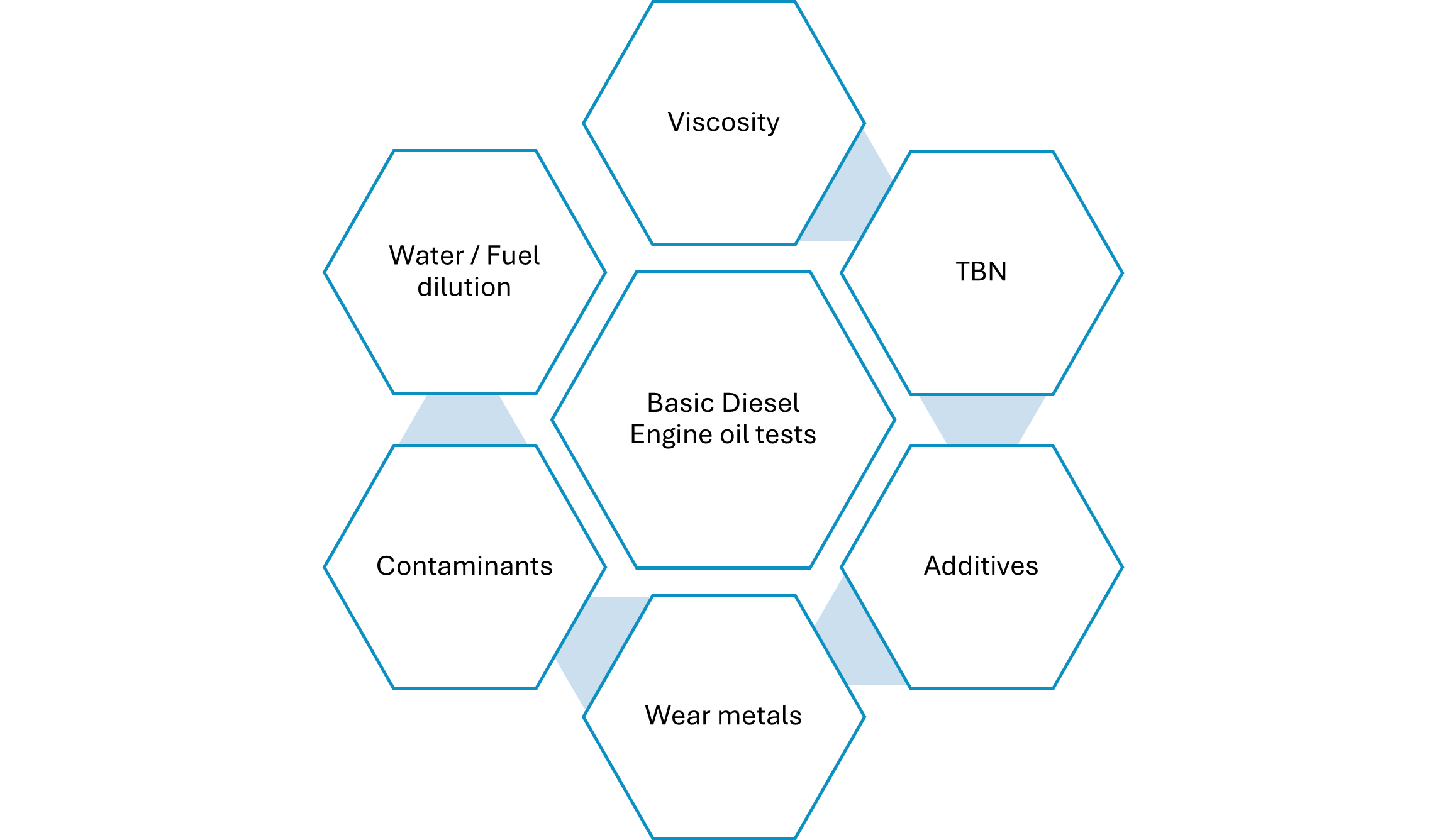
Having the information above is great to understand how your diesel engine oil degrades, but how will you know that it is degrading? One of the most reputable ways is to submit your oil for testing in the lab. Depending on the type of diesel engine (on-highway, marine or off-highway), different tests will be involved. However, here are the basic ones that you should be familiar with.

When determining the health of your diesel engine oil, the first thing to check is the oil’s viscosity, total base number (TBN), whether all the additives are at the correct levels, if there are any wear metals or contaminants present and finally the presence of water or fuel dilution as shown in Figure 3.

Figure 3: Basic oil analysis tests for your diesel engine

Viscosity (American Society for Testing and Materials D445) – The viscosity levels should ideally fall within ±5% of the original value. If they exceed ±10% of the original value, then the levels will fall out of the classification for that grade of oil.

For instance, Mobil Delvac 15w40’s kinematic viscosity, at 100°C, is 15.6 millimeters squared per second (mm2/s), according to its technical data sheet. If this value drops below 14.04 mm2/s or above 17.16 mm2/s then it can no longer be classed as a 15w40 oil and will not be able to properly lubricate the engine. These values vary depending on the manufacturer, application of the oil and the lab being used. These are a guideline in this example.

TBN– This is the amount of alkalinity remaining in the oil. The oil’s alkalinity helps neutralize the acids formed in a diesel engine. This value is always depleting as acids are continuously forming in an engine. However, if the TBN value drops below 40% to 50%, then there isn’t much reserve left to continue to protect the oil. This is the threshold limit, which can vary depending on the application, but this is a good guide to follow.

Additives – All finished lubricants have additive packages. These will vary depending on the oil producer. However, a few additives should be on your radar when trending their depletion in diesel engine oils. These include zinc, phosphorus, magnesium and calcium. These additives typically form parts of the dispersant, corrosion and antiwear additives that protect the oil. Ideally trending the decline of these may be helpful but your lab would have reference values (based on the type of oil) and can advise on concerning levels.

Wear metals – During the engine's lifetime, components will wear. Depending on the engine’s manufacturer, the warning limits will also vary (this also differs depending on the application). Iron, aluminum, chromium, copper, lead, molybdenum and tin are some metals to trend. If other special metals are in your engine, then you can ask your lab to include them in the oil analysis report. Typically, if there is an upward trend, this indicates wear/damage of specific components.

Operators can perform a simple test to determine if metal filings are in their oil (indicating some form of wear). They can place the oil in a shallow container and then place a magnet below the container or place the magnet in a sealed plastic bag and immerse it into the container. When the magnet is removed, if there are metal filings on the magnet, then this indicates the presence of wear metals, and the mechanic should begin investigating for damaged components.

Contaminants– These include any material which is foreign to the lubricant. Typically, labs test for the presence of sodium and silicon. Depending on the application’s environment, these values can increase indicating that they are entering the system somehow. Usually, this can occur during lubricant top-ups or improper storage and handling practices.

Presence of water – This is never a good sign because water can affect the lubricant by changing its overall viscosity, bleaching out some of the additives and even acting as a catalyst. Many labs perform a crackle test (where the oil is heated and if it produces a “pop” sound, then that confirms water in the lubricant. In certain instances, it is obvious that there is water present because it settles out in the sump/container. Labs can also perform a test to quantify the volume of water present. Typically, 2,000 ppm to 5,000 ppm is too much for most applications but this varies depending on the manufacturer.

Operators can perform their version of the crackle test by placing some of the oil in a metal spoon and heating it with a flame. If it produces a pop, then they can confirm that the oil has too much water in it before sending it off to the lab. Note: This should not be done in a highly flammable environment!

Fuel dilution – This occurs in most diesel engines due to the nature of the engine. However, limits need to be adhered to because too much fuel in the oil can lead to drastic changes in its viscosity. Usually, this value should not exceed 6%, but this can vary depending on the application and the manufacturer.

One way that operators can find out if there is fuel in their oil is to place a small drop of the oil on a coffee filter and leave it to “dry” for some time. The oil will spread out in concentric rings and if there is fuel present, there will be a rainbow ring. This means that the mechanics need to figure out if there is an issue with any of the injectors or seals in the diesel engine.

Ideally, the main idea with oil analysis is to develop a trend for your equipment and understand how the values align over time. This can help operators spot if an inaccurate sample was taken (possibly after a top-up, directly after an oil change or even from the bottom of the sump). An analysis also assists in planning the maintenance of components. For instance, if the value of iron in the oil analysis report keeps increasing then there is a strong possibility that some iron component is wearing. This can give the mechanic the time they need to investigate the engine and replace the component before it causes unscheduled downtime.

Protect One of Your Greatest Assets

Your diesel engine oil is one of the greatest assets in your fleet. You should be able to use an oil that aligns with your application while slowing its degradation rate with good practices and managing its health. Diesel engine oils form a critical part of your operation and deserve attention.

References

American Petroleum Institute. (November 18, 2016). New API Certified CK-4 and FA-4 Diesel Engine Oils are Available Beginning December 1. Retrieved from API: https://www.api.org/news-policy-and-issues/news/2016/11/18/new-api-certified-diesel-engine-oils-are

American Petroleum Institute. (February 19, 2024). API's Motor Oil Guide. Retrieved from API: https://www.api.org/-/media/files/certification/engine-oil-diesel/publications/motor%20oil%20guide%201020.pdf

The International Council on Combustion Engines. (2004). Guidelines for diesel engines lubrication - Oil Degradation | Number 22. CIMAC.


Find out more in the full article, "The Evolution of Diesel Engine Oil" featured in Equipment Today Magazine by Sanya Mathura, CEO & Founder of Strategic Reliability Solutions Ltd. 

Why Does My Diesel Engine Oil Degrade?

All oils degrade over time. They can be considered consumable items as they must be replaced over time. Diesel engine oils are no different except that they may be susceptible to certain mechanisms that turbine oils are not. The diesel engine is often placed under a lot of pressure to deliver power while keeping cool and managing emissions.

The critical areas for lubricant performance in a diesel engine usually include:

  • Viscosity control
  • Alkalinity retention, base number (BN)
  • Engine cleanliness control
  • Insoluble control
  • Wear protection
  • Oxidation stability
  • Nitration

Typically, these factors are monitored in these types of oils to ensure that they remain in a healthy condition.

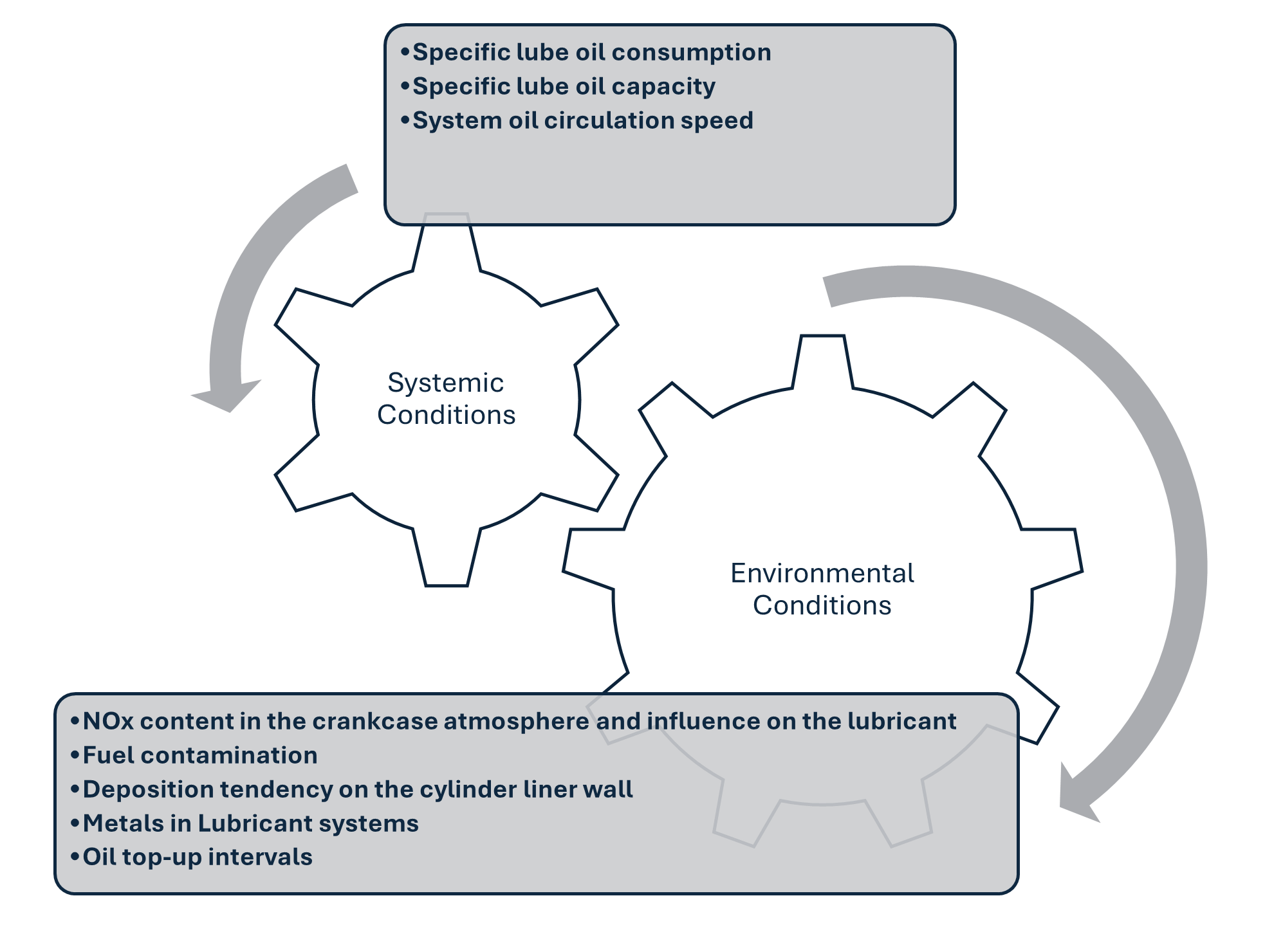
Several factors affect oil degradation in a diesel engine. According to The International Council on Combustion Engines (The International Council on Combustion Engines, 2004), these include specific lube oil consumption; specific lube oil capacity; system oil circulation speed; NOx content in the crankcase atmosphere; and influence on the lubricant, fuel contamination in trunk piston engines, deposition tendency on the cylinder liner wall, metals in lubricant systems, and oil top-up intervals. These can further be divided into systemic conditions (which cannot be easily altered) and environmental conditions (because of processes occurring within or to the system) as shown in Figure 2.

Figure 2: Systemic & Environmental Conditions which affect degradation of diesel engine oil

Systemic Conditions

While lubricant degradation can be caused by environmental strains being placed on the lubricant, there are times when the operating design of the system also encourages degradation. Three such cases for diesel engine oils are specific lube oil consumption, specific lube oil capacity and system oil circulation speed.

Specific lube oil consumption (SLOC, g/kWh) is defined as the oil consumption in grams per hour per unit of output in kilowatts (kW) of the engine (The International Council on Combustion Engines, 2004). Over the years, there has been a reduction in the SLOC for engines with special rings inset into the upper part of the cylinder liner. These reduce the rubbing of the crown land against the cylinder liner surface.

With reduced oil consumption, oil top-ups, which would have introduced fresh oil into the system, are consequently reduced. This fresh oil would have increased the presence of additives and helped in maintaining the required viscosity of the current oil. However, since the SLOC is reduced, the oil does not get a “boost” during its lifespan and will continue to degrade at its current rate. Hence, a lower SLOC may encourage the degradation of diesel engine oil.

Specific lube oil capacity, also known as the sump size, which is the nominal quantity in kilograms (kg) of lubricant circulated in the engine per unit of output in kW. According to The International Council on Combustion Engines, the specific oil capacity does not directly affect the equilibrium level of degradation. However, it can influence the rate at which deterioration occurs as smaller sump sizes can increase the rate at which degradation achieves an equilibrium level. Typically for dry sump designs, the specific oil capacity is around 0.5 kg/kW to 1.5 kg/kW. These values are closer to 0.1 kg/kW to 1.0 kg/kW for wet sumps.

System oil circulation speed refers to the time taken for one circulation of the total bulk oil. In diesel engines, lubricants are usually subjected to blow-by gas (including soot and NOx) during their time in the crankcase. If the lubricant spends a longer time in the crankcase, it can become degraded at a faster rate. Typically, the time required for one circulation of bulk oil averages between 1.5 minutes to 6 minutes. However, we have seen the trend toward smaller sump sizes and, by extension, shorter circulation times, which should reduce the degradation rate.

Environmental Conditions

The environmental conditions that lubricants must endure can also influence their degradation. These conditions can either be enforced through the system, its operating conditions or from conditions outside the system. There are a few environmental conditions which must be addressed (The International Council on Combustion Engines, 2004).

NOx content in the crankcase atmosphere and influence on the lubricant has more applicability to gasoline engines compared to diesel engines but they should not be fully ruled out. Diesel engines are more susceptible to sulfur-derived acids (caused by the burning of diesel fuel). However, NOx can be produced by the oxidation of atmospheric nitrogen during combustion, which can affect degradation.

Field studies show a correlation between nitration levels, an increase in viscosity and an increase in acid in the oil. NOx can also behave as a precursor and catalyst that promotes oxidation through the formation of free radicals in the lubricant. On the other hand, there can be direct nitration of the lubricant and its oxidation products to produce soluble nitrates and nitro compounds. These can eventually polymerize to form similar by-products of oxidation. This can lead to increased acidity (lowering the BN) and increased viscosity of the lubricant.

Fuel contamination in trunk piston engines happens quite often in diesel engines. If the fuel injectors are defective or the seals do not effectively seal to keep fuel out, fuel enters the oil. When fuel is in the oil, oil can become degraded quickly, often causing the viscosity to reduce to a value that compromises the ability of the oil to form a protective layer inside the component. The fuel dilution test can quantify the content of fuel in the oil. Depending on the type of engine, the tolerance levels will differ.

Deposition tendency on the cylinder liner wall is usually caused by unburnt fuel or excess oil in this area or the chamber. Typically, the piston rings scrape these deposits back into the oil, leading to an increase in the volume of insolubles. This also increases the viscosity of the oil, and it appears a darker color.

Reducing the SLOC also decreases the deposits on the liner wall because special rings (near the top of the liner) are installed to have controlled clearance of the piston crown. This reduces the crown land deposit which can also minimize bore polish and hot carbon wiping.

In addition, with a reduction in SLOC, the number of oil top ups is also reduced. As such, the replenishment rate of additives (in particular the BN) is not as frequent. Therefore, the degradation of the oil will advance at a slightly faster rate due to the lower SLOC which affects the rate of top up.

Metals in lubricant systems can also act as a catalyst for the degradation of the oil. During the oxidation process, copper is one of the most common catalysts in addition to other wear metals (such as iron) which can increase the rates of oxidation. As such, the presence of these metals increases the degradation rate as well.

Oil top-up intervals must be managed in such a way that it does not disturb the balance of the system. Typically, when the sump level falls below 90% to 95% (depending on the manufacturer), a top-up is needed. When fresh oil enters the system, it replenishes some additives and breathes new life into the oil. However, with this change in temperature of new oil coming into the system (especially in large quantities of about 15%), the deposits held in suspension tend to precipitate.

Additionally, foaming (caused by the increased concentration of some additives) can occur if too much fresh oil is added at once. As such, oil top-up intervals must be managed to avoid further degradation.

Find out more in the full article, "The Evolution of Diesel Engine Oil" featured in Equipment Today Magazine by Sanya Mathura, CEO & Founder of Strategic Reliability Solutions Ltd. 

The Evolution of Diesel Engine oil CK4 vs FA4

As engines have evolved, the lubricants that keep them running have changed with them.

Diesel engines have been around for more than half a century. Chances are that if you are around fleets or equipment, you have encountered a diesel engine. They have been described as the workhorses of the industry, and they provide users across industries with the power they need. Whether it’s in the form of a generator for a medical facility, a tractor engine on a farm or an engine on a school bus, diesel engines are everywhere.

Diesel engines have evolved, and a diesel engine today may not exactly line up with the diesel engines of the past. However, their evolution has been slower than that of the gasoline engine. For instance, many diesel engines today still use a 40-weight oil (albeit multigrade or semi-synthetic) which can tell us about the changes in the viscosity requirements over the years.

This column explores how the specifications changed to get a better idea of:

  • The evolution of diesel engine oils
  • Some reasons behind its degradation
  • Ways that degradation sources can be identified through oil analysis

Understanding Diesel Engine Oil Specifications

As per the American Petroleum Institute (API), the standards governing Diesel Engine oils began with the CA spec which became obsolete in 1959. The latest diesel engine oil standards were upgraded to CK4 and FA4 in December 2016. On the other hand, the gasoline spec entered its latest standard, the SP spec which includes 0w16 and 5w16, in May 2020.

What Does This Mean for Your Fleet?

Most API standards are backward compatible. This means that an engine that requires a CJ4 spec oil can still use a CK4 spec oil, but the reverse is not true.

For more modern engines, oils have been engineered following environmental regulations that did not exist 50 years ago. Additionally, these newer engines now have more demand compared to older engines.

As such, the oil is under more duress and must perform under these conditions. Newer oils are formulated with this in mind.

CK4 oils provide enhanced protection against oil oxidation and viscosity loss caused by shear and oil aeration, catalyst poisoning, particulate filter blocking, engine wear, piston deposits, degradation of low- and high-temperature properties, and soot-related viscosity increase compared to the CJ4 oils (API, 2024). It must be noted that FA4 oils are not backward compatible with the CJ4 oils nor are they intended for on- or off-highway applications which require CJ4 oils.

The FA4 oils are blended to a high-temperature, high-shear (HTHS) viscosity range of 2.9 centipoise (cP) to 3.2 cP to assist in reducing greenhouse gas emissions. They are especially effective at sustaining emission control system durability where particulate filters and other advanced aftertreatment systems are used.

These oils also provide enhanced protection against oil oxidation and viscosity loss caused by shear and oil aeration. In addition, they protect against catalyst poisoning, particulate filter blocking, engine wear, piston deposits, degradation of low and high-temperature properties, and soot-related viscosity increase.

What’s the Difference Between CK4 & FA4 oils?

CK4 oils are specifically designed for use in high-speed, four-stroke-cycle diesel engines designed to meet the 2017 model year, on-highway and tier 4, non-road exhaust emission standards and for previous model year diesel engines. However, these are also formulated for diesel engines using diesel fuel ranging in sulfur content up to 500 parts per million (ppm) (0.05% by weight). Diesel fuels that contain more than 15 ppm (0.0015%) may impact the exhaust aftertreatment system’s durability and/or the oil drain interval.

On the other hand, FA4 oils are xW30 oils specifically designed for use in select high-speed, four-stroke-cycle diesel engines designed to meet 2017 model year, on-highway greenhouse gas emission standards. These are particularly formulated for diesel fuels with a sulfur content up to 15 ppm (0.0015% by weight).

API FA-4 oils are not interchangeable or backward compatible with API CK-4, CJ-4, CI-4, CI-4+ and CH-4 oils. Additionally, these oils cannot be used with diesel fuel containing between 500 ppm to 15 ppm of sulfur.

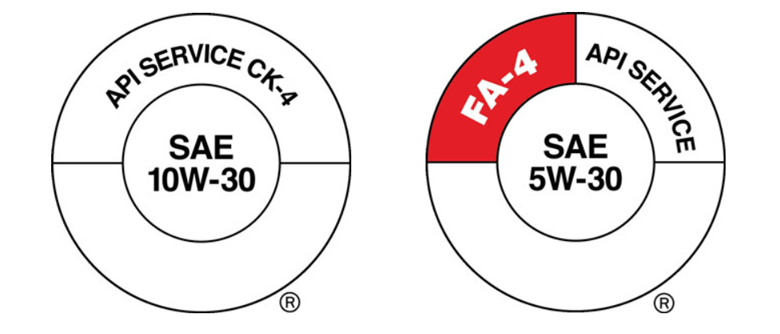
Figure 1 shows the API donut for both specifications as detailed by (API, 2016). This API donut typically appears on every diesel engine oil that is sold (those that are original and not counterfeit).

Figure 1: API donut. Source: American Petroleum Institute


Find out more in the full article, "The Evolution of Diesel Engine Oil" featured in Equipment Today Magazine by Sanya Mathura, CEO & Founder of Strategic Reliability Solutions Ltd. 

What Happens When Defoamants, Dispersants & Detergents Are Used Up?

For the three additives we spoke about earlier, each of them is sacrificial in one way or another.

Defoamants get used up when they are called upon to reduce the foam in the oil. On the other hand, detergents and dispersants use their characteristics to suspend contaminants in the oil.

In all of these scenarios, each of these additives can be considered to become depleted over time. While performing their functions, they will undergo reactions that reduce their capability to perform them more than once.

Hence, it can be concluded that these additives become depleted over time even though they may not have physically left the oil but now exist in a different form.

The air release property of the oil is affected by the loss of defoamants. This value will see a significant rise, indicating that it takes longer for air to be released from the oil. As such, air remains in the oil in either a free, dissolved, entrained, or foam state.

Consequently, this impacts the ability of the oil to lubricate the components properly and can even result in microdieseling and increased oil temperatures in the sump.

On the other hand, as the detergents and dispersants are reduced, the capacity of the oil to hold contaminants also decreases.

Therefore, one will begin noticing that deposits may start forming on the equipment’s insides, leading to valves sticking (especially in hydraulic systems) or a general increase in the system’s temperature as these deposits can trap heat.

With the introduction of an increased temperature, the oil can begin oxidizing, leading to more deposits being formed and possibly even varnish.

Essentially, these additives are essential to the health of the oil in your system. The detergents and dispersants can help to keep your system clean (free from contaminants such as soot).

The defoamants can even reduce the risk of wear, increased temperatures to the lube system, the potential to form varnish, or the possibility of succumbing to microdieseling.

References

1 Bruce, R. W. (2012). Handbook of Lubrication and Tribology – Volume II Theory and Design – Second Edition. Boca Raton: CRC Press, Taylor & Francis.

2 Mang, P., & Dresel, D. (2007). Lubricants and Lubrication – Second Edition. Weinheim: WILEY-VCH Verlag GmbH & Co KGaA.

4 Mang, P.-I., Bobzin, P.-I., & Bartels, D.-I. (2011). Industrial Tribology Tribosystems, Friction, Wear and Surface Engineering, Lubrication. Weinheim: WILEY-VCH Verlag & Co KGaA.

3 Mortier, D. M., Fox, P. F., & Orszulik, D. T. (2010). Chemistry and Technology of Lubricants – Third Edition. Dordrecht Heidelberg: Springer.

Do Detergents Really Clean?

Traditionally, detergents were given their name as it was assumed that they provided cleaning properties to the oil, similar to laundry detergents. However, these metal-containing compounds also provide an alkaline reserve used to neutralize acidic combustion and oxidation by-products.

Due to their nature, these compounds disperse particulate matter, such as abrasive wear and soot particles, rather than removing them (in a cleaning action). There are four main types of detergents: phenates, salicylates, thiophosphate, and sulfonates4.

Calcium phenates are the most common type of phenate. They are formed by synthesizing alkylated phenols with elemental sulphur or sulphur chloride, followed by neutralization with metal oxides or hydroxides. These calcium phenates have good dispersant properties and possess a greater acid-neutralization potential.

Salicylates have additional antioxidant properties and a proven efficacy in diesel engine oil formulations. They are prepared through the carboxylation of alkylated phenols with subsequent metathesis into divalent metal salts. These products are then overbased with excess metal carbonate to form highly basic detergents.

Thiophosphonates are rarely used today as they are an overbased product.

Sulfonates generally have excellent anticorrosion properties. The neutral (or over-based) sulfonates have excellent detergent and neutralization potential. These neutral sulfonates are typically formed with colloidally dispersed metal oxides or hydroxides.

Calcium sulfonates are relatively cheap and have good performance. On the other hand, magnesium sulfonates exhibit excellent anticorrosion properties but can form hard ash deposits after thermal degradation, leading to bore polishing in engines. Barium sulfonates are not used due to their toxic properties.

Detergents in ATFs are used in concentrations of 0.1-1.0% for cleanliness, friction, corrosion inhibition, and reduction of wear3. However, these values are a bit higher in manual transmission fluids, at 0.0 – 3.0%. On the other hand, no detergents are required for axle lubricants!

Why Are Dispersants Important?

Quite often, detergents and dispersants are grouped together mainly because their functions can complement each other. As noted above, the significant difference is that dispersants are ashless, while detergents are more metal-containing compounds.

However, some ashless dispersants also offer “cleaning” properties, so the two are not mutually exclusive.

A large oleophilic hydrocarbon tail and a polar hydrophilic head group can categorize detergents and dispersants. Typically, the tail solubilizes in the base fluid while the head is attracted to the contaminants in the lubricant.

Dispersant molecules envelop the solid contaminants to form micelles, and the non-polar tails prevent the adhesion of these particles onto the metal surfaces so that they agglomerate into larger particles and appear suspended.

Ashless dispersants are, by definition, those that do not contain metal and are typically derived from hydrocarbon polymers, with the most popular being polybutenes (PIBs).

For example, dispersants are typically required in concentrations of 2-6% in ATFs and are used to maintain cleanliness, disperse sludge, and reduce friction and wear3. These values in manual transmission fluids and axle lubricants vary from 1-4%.

Are Defoamants Necessary?

Defoamants, also called antifoam additives, are found in many oils. Most oils need to keep foam levels to a minimum, and it is very easy for foam to form in lube systems due to their design and flow throughout the equipment.

When foam enters the oil, it can affect its ability to provide adequate surface lubrication. This can lead to wear occurring at the surface level, damaging the equipment.
Many oils require defoamants to provide various functions and in differing ratios depending on their application. In automatic transmission fluids (ATFs), defoamants are usually needed in concentrations of 50-400ppm to prevent excessive foaming and air entrainment3. On the other hand, for manual transmission fluids and axle lubricants, defoamants are required in slightly lower concentrations, between 50 and 300 ppm.

However, OEMs must verify these concentrations. If the concentration of defoamants is too high, this can actually increase foaming. Additionally, defoamants must be properly balanced with the other additive packages to ensure they do not negatively counteract another additive.

There are two main types of defoamants: silicone defoamers and silicone-free defoamers. Silicone defoamers are considered the most efficient defoamants, especially at low concentrations of around 1%. These defoamants are typically pre-dissolved in aromatic solvents to provide a stable dispersion.

However, there are two significant disadvantages associated with silicone defoamers. Due to their insolubility, they can easily transition out of the oil and have a powerful affinity to polar metal surfaces.

On the other hand, silicone-free defoamers are another alternative, especially for applications that require silicone-free lubricants. Such applications include metal-working fluids and hydraulics, which are used close to silicone-free ones, and even those involved in applying paints or lacquers to these pieces.

Some silicone-free defoamers include poly(ethylene glycol)s (PEG), polyethers, polymethacrylates, and organic copolymers. Tributylphosphate is also another option for defoamers4.