Tagged: lubrication

Determining the Root Causes of Oxidation in Lubricants

Finally, we’ve arrived at the point where we can effectively determine the root cause. It is critical that the analyst understands oxidation and has knowledge of the evidence needed before embarking on the root cause journey. As noted in the first part of this article, the question we should ask is, “How could?”.

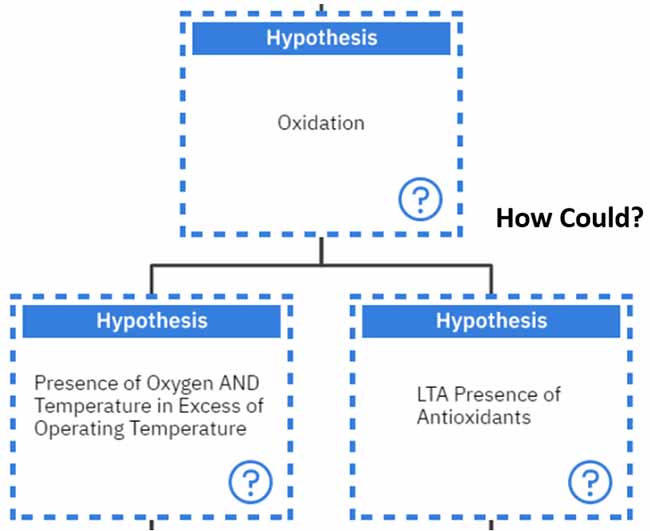
We hypothesize that oxidation is occurring. In a complete root cause analysis, we should hypothesize the occurrence of all the degradation mechanisms and eliminate them with evidence-based data.

There are two main ways in which oxidation can occur either through the presence of oxygen and temperature over the normal operating temperature of the system or if there is a less-than-adequate presence of antioxidants.

flow-1

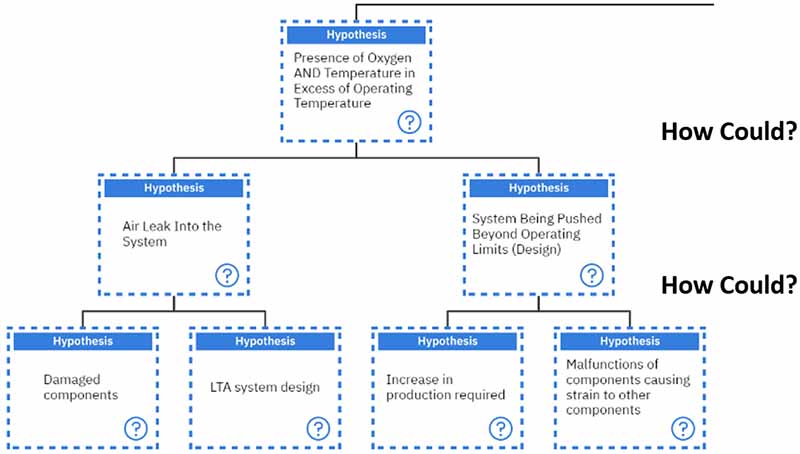
If we follow our line of questioning with the presence of oxygen and temperature and again ask, “How could?” we can get two primary responses. Either there was an air leak in the system, or the system was being pushed beyond its operating limits.

flow-2

If we further investigate the air leak into the system, we ask, “How could it?” again. There are two main ways: either there are damaged components, or a less-than-adequate system design allows air to enter the system.

If we follow the pathway of investigating “how could” the system be pushed beyond its operating limits, then we can come up with two hypotheses. Either an increase in production was required, or there was a malfunction of the components, which caused strain on the other components.

Both of these hypotheses are physical and can be investigated further, but we will focus on the lubricant aspect of this article. Hence, we will follow the questioning surrounding the less-than-adequate presence of antioxidants.

We begin with the question, “How could we have a less-than-adequate presence of antioxidants?”. From the information gathered in this article, we know this can result from free radicals or less than adequate lubricant specifications.

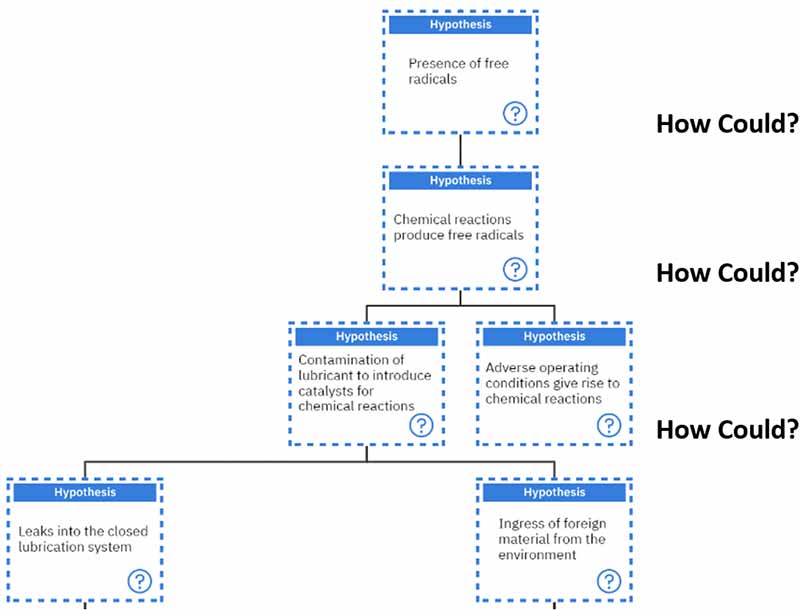
We will investigate the “Presence of free radicals” first.

flow-3

“How could we have the presence of free radicals?” Free radicals can emerge as a result of chemical reactions.

“How could these chemical reactions produce free radicals?” There are two main ways in which this can occur. Either the lubricant got contaminated, which introduced catalysts for these chemical reactions, or adverse operating conditions gave rise to these chemical reactions.

Then, we must ask again, “How could we have contamination?” Contamination can occur if leaks are getting into a closed lubrication system or if there is ingress of foreign material from the environment.

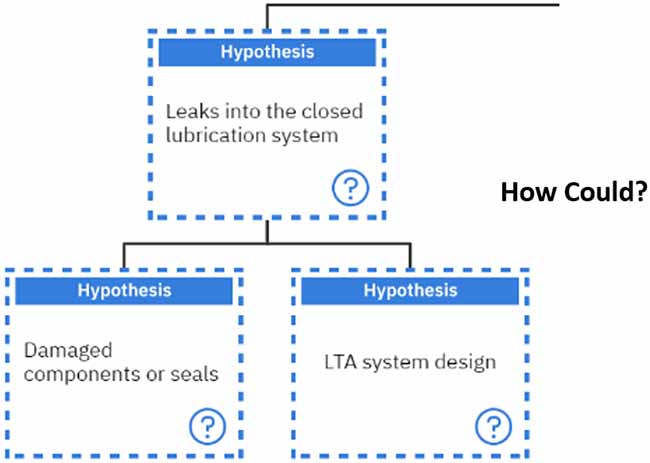
flow-4

Our line of questioning continues when we ask, “How could we have leaks in a closed lubrication system?”. These can result from damaged components or seals allowing leaks into the system or if the system is less than adequately designed.

These are physical attributes of the system, so we will go back to investigating the lubricant aspect.

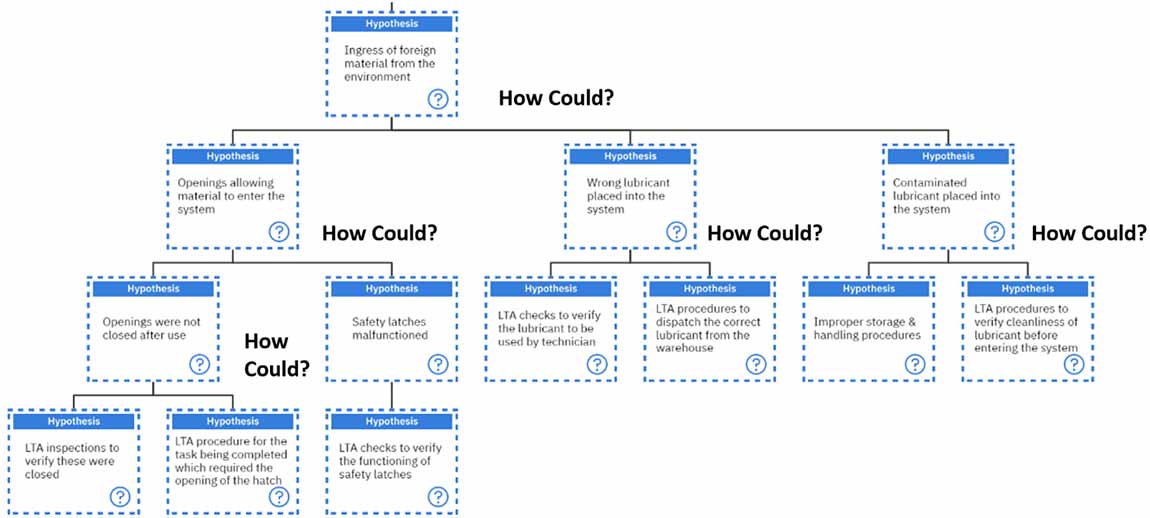
This is where we get to ask our famous question, “How could we have ingress of foreign material from the environment?”. Ideally, this can be classified in three ways;

  1. There are openings which are allowing materials to enter the system or
  2. Wrong lubricant was placed in the system or
  3. Contaminated lubricant was placed in the system
flow-5

Let’s investigate all three aspects, starting with the openings allowing foreign material to enter the system. There are two main ways in which this can occur. Either the openings were not closed after use, or the safety latches malfunctioned.

Suppose the openings were not closed after use. In that case, there is a possibility that there were less than adequate inspections to verify that these were closed after use or a less than adequate procedure for the task being completed which required the opening of the hatch.

On the other hand, if the safety latches malfunctioned, this could result from less than adequate checks to verify the functioning of the safety latches.

In these cases, the root causes are not the physical elements but rather the systemic reasons for these procedures not being adequately performed.

Now we investigate the second central hypothesis, “How could the wrong lubricant be placed in the system?” While there are many ways in which this can occur, we have narrowed it down to two main areas.

Either there were less than adequate checks to verify that the technician received the correct lubricant, or there were less than adequate procedures to dispatch the correct lubricant from the warehouse. We will not go further into these two as they are now systemic causes that must be addressed.

Onto the third hypothesis of “How could a contaminated lubricant be placed in the system?”. There are two main avenues for this to occur. Either there were improper storage and handling procedures, or there needed to be more adequate procedures to verify the cleanliness of the lubricant before entering the system.

The other hypothesis stemming from the “less than the adequate presence of antioxidants” is having “less than adequate lubricant specifications.” Let’s investigate this one a bit further.

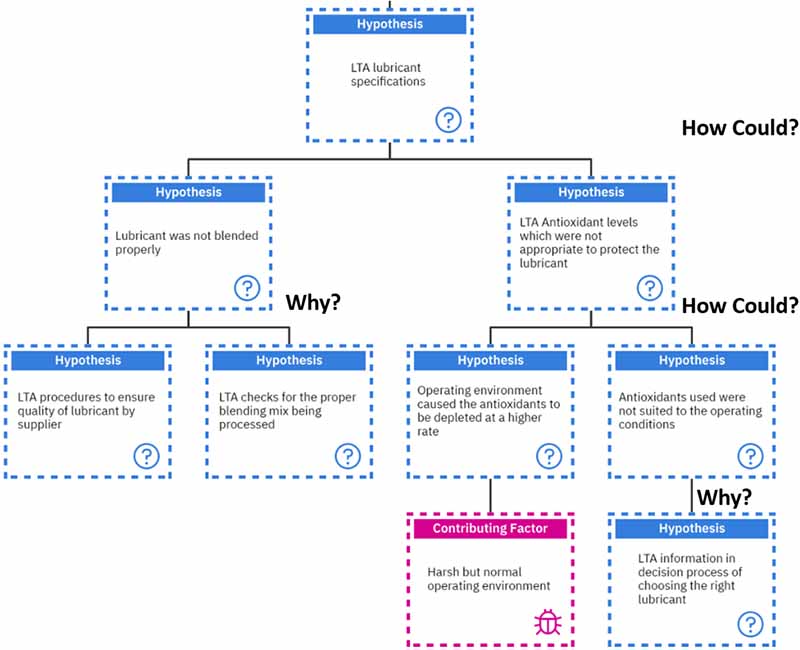
flow-6

“How could we have a less than adequate lubricant specification?” Typically, this can result from the lubricant not being blended properly or less than adequate antioxidant levels, which were inappropriate to protect the lubricant.

Now, the line of questioning changes to “Why?” as we have gone past the physical element and some decision-making was involved in this hypothesis. We must ask, “Why wasn’t the lubricant blended properly?”

This can result from less than adequate procedures to ensure the quality of the lubricant by the supplier or less than sufficient checks for the proper blending mix being processed.

These are factors one should consider when receiving any lubricant from their supplier.

On the other hand, if we follow the line of questioning of “How could there be a less than adequate antioxidant level to protect the lubricant?” we can come up with the following.

Either the operating environment caused the antioxidants to be depleted at a higher rate. This would be as a result of a harsh but normal operating environment. In this case, we may be unable to make those environmental changes (without the OEM’s consent).

Or the antioxidants used were not suited to the operating conditions. This is where the line of questioning again shifts to “Why were they not suited?”. This could result from inadequate information in choosing the right lubricant suited for the system.

What Is the Real Root Cause of Oxidation?

From the logic tree that we have created, we can see that there is no sole root cause for oxidation. It can stem from various causes, including physical, human, and even systemic roots. The main takeaway from this exercise is to acknowledge that root causes are not limited to physical causes, such as leaks in the system.

Instead, the actual root causes can be linked to systemic areas of concern where there may not have been enough information to guide the analyst in choosing the most ideally suited lubricant for the application. There are also root causes related to the lubricant not being appropriately blended.

It is critical to thoroughly investigate the real root causes when the lubricant becomes degraded to avoid being stuck in the loop of constantly experiencing degradation.

For more info on other methods, check out the book Bob Latino, and I authored called “Lubrication Degradation – Getting Into the Root Causes,” published by CRC Press.


References:

Ameye, Jo, Dave Wooton, and Greg Livingstone. 2015. Antioxidant Monitoring as Part of a Lubricant Diagnostics – A Luxury or Necessity. Rosenheim, Germany. February 2015.

Latino, Bob, Sanya Mathura. 2021. Lubrication Degradation – Getting into the Root Causes. CRC Press, Taylor & Francis.

How do I know if Oxidation is occurring?

What Evidence is needed to prove that oxidation has occurred / is occurring?

However, understanding the oxidation process is just one part of the puzzle. When performing an investigation, we also need to know what factors or characteristics should be present. Additionally, we need to prove that their presence confirms our hypothesis of whether or not oxidation is occurring. This is where the line of evidence-based questioning plays a significant role.

When oxidation occurs, it is usual to see the presence of aldehydes, ketones, hydroperoxides, and even carboxylic acids. These can be confirmed using the FTIR (Fourier Transform Infrared test).

Typically, one will also find some deposits in the system. These deposits can be further characterized and tested to determine their nature using FTIR. Their presence, however, may be confirmed using the MPC (Membrane Path Colorimetry, ASTMD7843) test.

Identifying the presence of the deposits and/or the compounds listed above can lead to the conclusion that oxidation has occurred.

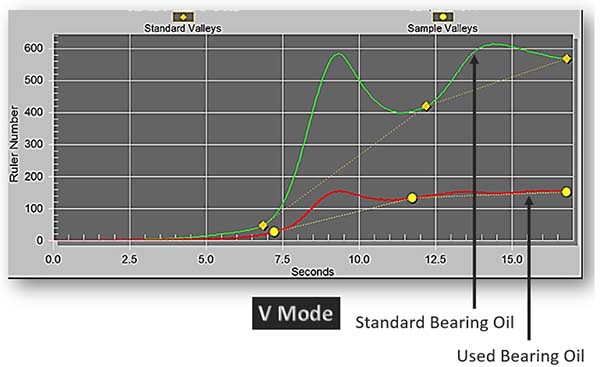
Another critical characteristic of oxidation is the depletion of antioxidants. This can be easily identified by utilizing the RULER® (Remaining Useful Life Evaluation Routine) test. This test quantifies the remaining antioxidants in the oil and gives the value for the amines and phenols (which is very important, especially in synergistic mixtures).

As such, one can detect the trend in the depletion of antioxidants and implement measures to prevent this before they become depleted.

The main tests to assist in determining the presence of Oxidation include:

RULER (Remaining Useful Life Evaluation Routine) levels less than 25% compared to new oil. This value represents the level of antioxidants in the oil. Hence, low levels indicate that the antioxidants are decreasing, possibly due to oxidation. This test can accurately give information on whether oxidation is currently occurring in the oil before deposits are formed.

An increase in acid number indicates the presence of acids resulting from oxidation. However, it must be noted that this change in acid number only occurs after oxidation has taken place. Hence this test is not a good indicator to determine if oxidation is occurring; instead, it is more definitive in letting us know that oxidation has already occurred.

Rapid color changes – darkening of the oil due to the deposits being present. While color is not the best indicator, in some instances, the darkening of the oil can provide a bystander to ask whether something is occurring in the oil. It is not a definitive test for the presence of oxidation.

FTIR test (Fourier Transform Infrared) for the presence of insolubles formed during the oxidation reaction. This can accurately determine the presence of any compound to assist us in determining whether oxidation is occurring.

MPC (Membrane Patch Colorimetry) levels outside the normal range (above 20). This lets us know that insoluble deposits are present in the oil. One must note that there may be instances where the deposits might not appear in the MPC test. As such, this should not be a standalone test to determine the presence of deposits.

RPVOT (Rotating Pressure Vessel Oxidation Test) levels are less than 25% compared to new oil (this is the warning limit). This is the industry standard, but this test does not have a high repeatability value in that if the same test were performed on identical samples, the values would be different. Additionally, the value (reported in minutes) is not easily translated into the environment of the components.

These tests provide us with the evidence we need to determine the presence of oxidation when performing the root cause analysis on the component’s failure.

How Can Oxidation Occur in Lubricants?

Typically, when an oil undergoes degradation, the first culprit to be blamed is oxidation. We often hear that the oil has oxidized, producing varnish, leading to its degradation. While this simple statement may seem plausible, it is not the only way oil can degrade.

If an oil has undergone oxidation, the real question we should be asking is not how much varnish has been produced but what caused the oxidation in the first place?

In this article, we will explore the various ways in which an oil can degrade via oxidation. However, as you know from previous articles, other degradation methods exist.

How Can Oxidation Occur?

Before diving further into the root cause of oxidation, one must first fully understand how oxidation occurs. When truly investigating a root cause for a failure, we should start with the question “How could?” rather than “Why?”.

This line of questioning heavily influences the answers. The “How could?” responses stem from a more evidence-based approach.

On the contrary, if we question “Why?” this is more opinionated and can mislead the investigation towards a biased opinion rather than the facts.

This leads us to the main question, “How can oxidation occur?”.

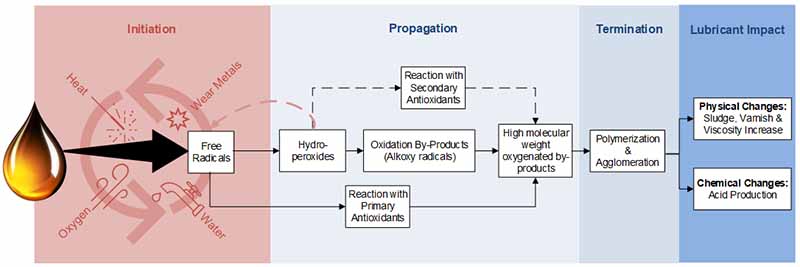
According to Ameye, Wooton, and Livingstone, 2015, oxidation occurs when there is any reaction in which electrons are transferred from one molecule. Ideally, in oxidation, during the initiation phase, free radicals are formed, which in turn produce more free radicals.

A free radical is a molecular fragment with one or more unpaired electrons which are accessible and can easily react with other hydrocarbons, as explained by Ameye, Wooton, and Livingstone, 2015.

After the initiation phase, which has the free radicals, the propagation phase follows, in which the antioxidants react with these free radicals to make them more stable. This is part of the reaction in which there is usually a drastic depletion of antioxidants or where the oil becomes sacrificial.

The antioxidants act as a barrier to protect the base oil from oxidizing. However, they can no longer protect the base oil once they become depleted. This leads to the termination phase, where the remaining free radicals attack the base oil.

As a result, this gives rise to the condensation phase, where we begin to physically notice the changes in the oil’s viscosity and the presence of insoluble by-products. These are the deposits that are known are lube oil varnish to some but can further be defined by their chemical composition.

Understanding how oxidation occurs can assist us in determining the root cause when an oil degrades. It allows us to identify the different stages to further help us determine if it is indeed oxidation that is occurring or not.

How Do Lubricant Additives Work?

Each additive works differently to produce its function on the base oil and the overall finished lubricant. This section will explore how each of the lubricant additives works and some of the challenges they may experience.

Pour Point Depressants

As noted above, the pour point depressants help control the flow of the lubricant. This is achieved by modifying the wax crystals present in the lubricant’s base oil. At lower temperatures, the liquid usually has trouble being poured due to the presence of wax molecules in the base oil1.

There are two main types of pour point depressants, namely;

  • Alkylaromatic polymers adsorb on the wax crystals as they form, thus preventing them from growing and adhering to each other. This effectively controls the crystallization process and ensures the lubricant can be poured.
  • Polymethacrylates co-crystallize with wax to prevent crystal growth.

While these additives do not entirely prevent wax crystal growth, they lower the temperature at which these rigid structures are formed. These additives can achieve a pour point depression of up to 28°C (50°F); however, the common range is typically between 11-17°C (20-30°F).

Solubility thresholds may limit the use of this type of additive to achieve the desired effect on the base oil.

VI Improvers

These additives are typically long-chain, high-molecular-weight polymers that change their configuration in the lubricant based on temperature4. When the lubricant is in a cold environment, these polymers adopt a coiled form to minimize the effect on viscosity. On the other hand, in a hot environment, they will straighten out, allowing the oil to produce a thickening effect.

While it is more desirable to use high molecular weight polymers (since they provide a better thickening effect), these long-chain molecules are also subject to degradation due to mechanical shearing. Therefore, a balance must be reached between the molecular weight and shear stable service condition.

Another challenge for formulators is to balance the polymer’s tendency to shear with the expected viscosity thickening due to oxidative processes and the viscosity thinning due to the dilution of fuel1.

Friction Modifiers

These usually compete with the antiwear and extreme pressure additives (and other polar compounds) for surface room. However, they become activated at temperatures when the AW and EP additives are not yet active. Thus, they form thin mono-molecular layers of physically adsorbed polar soluble products or tribochemical friction-reducing carbon layers, which exhibit a lower friction behavior than AW and EP additives2.

There are different groups of friction modifiers based on their function. Some are mechanically working FMs (solid lubricating compounds, e.g., Molybdenum disulfide, graphite, PTFE, etc.), adsorption layers forming FMs (e.g., fatty acid ester, etc.), tribochemical reaction layers forming FMs, friction polymer forming FMs and organometallic compounds.

Defoamants (Antifoam)

When foam forms in the lubricant, tiny air bubbles become trapped either at the surface or on the inside (called inner foam). Defoamants work by adsorbing on the foam bubble and affecting the bubble surface tension. This causes coalescence and breaks the bubble on the lubricant’s surface1.

For the foam that forms at the surface, called surface foam, defoamants with a lower surface tension are used. They are usually not soluble in base oil and must be finely dispersed to be sufficiently stable even after long-term storage or use.

On the other hand, inner foam, which is finely dispersed air bubbles in the lubricant, can form stable dispersions. Common defoamants are designed to control surface foam but stabilize inner foam2.

Oxidation Inhibitors

As noted above, antioxidants are usually deployed during the propagation phase to neutralize the scavenging radicals or decompose the hydroperoxides3. There are two main forms of antioxidants: primary and secondary antioxidants.

Primary antioxidants, also known as radical scavengers, remove radicals from oil. The most common types are amines and phenols.

Secondary antioxidants are designed to eliminate peroxides and form non-reactive products in the lubricant. Some examples include zinc dithiophosphate (ZDDP) and sulphurized phenols.

Mixed antioxidant systems also exist where two antioxidants have a synergistic relationship. One example is the relationship between phenols and amines, where phenols deplete early during oxidation while amines deplete later. Another example is using primary and secondary antioxidants to remove radicals and hydroperoxides.

Rust and Corrosion Inhibitors

Rust and Corrosion inhibitors are usually long alkyl chains and polar groups that can be adsorbed on the metal surface in a densely packed formation of hydrophobic layers.

However, this is a surface-active additive, and as such, it competes with other surface-active additives (such as antiwear or extreme pressure additives) for the metal surface. There are two main groups for corrosion additives: antirust additives (to protect ferrous metals) and metal passivators (for non-ferrous metals2).

Rus inhibitors have a high polar attraction to metal surfaces. They form a tenacious, continuous film that prevents water from reaching the metal surface. It must also be noted that contaminants can introduce corrosion into an oil, just as organic acids are produced.

Detergents and Dispersants

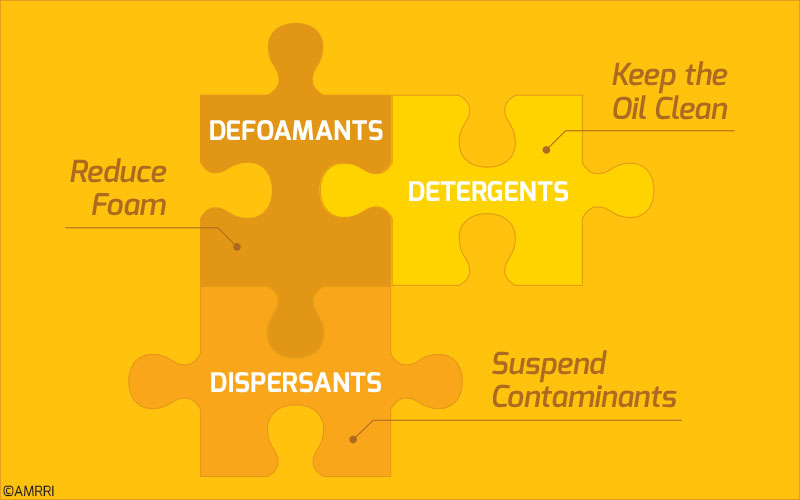
Detergents are polar molecules that remove substances from the metal surface, similar to a cleaning action. However, some detergents also provide antioxidant properties. The nature of a detergent is particularly important as metal-containing detergents produce ash (typically calcium, lithium, potassium, and sodium)1.

On the other hand, dispersants are also polar, and they keep contaminants and insoluble oil components suspended in the lubricant. They minimize particle agglomeration, which in turn maintains the oil’s viscosity (compared to particle coalescing, which leads to thickening). Unlike detergents, dispersants are considered ashless. They typically work at low operating temperatures.

Antiwear Additives

These are typically polar with long chain molecules that adsorb onto the metal surfaces to form a protective layer. This can reduce friction and wear under mild sliding conditions. Usually, these additives are formed from esters, fatty oils, or acids, which can only work at low or moderate levels of stress within the system.

The most common form of antiwear is ZDDP, which is used in engine or hydraulic oils. On the other hand, an ashless phosphorus type of antiwear also exists for systems that require that characteristic, and tricreysl phosphate is the usual choice.

Extreme Pressure Additives

Since extreme pressure additives only become active when higher temperatures or heavier loads are on a system, they have earned the name “Anti-scuffing additives.”

Unlike antiwear additives, extreme pressure additives react chemically with the sliding metal surfaces to form relatively insoluble surface films. This reaction only occurs at higher temperatures, sometimes between 180-1000°C, depending on the type of EP additive used1.

It must be noted that even with the presence of EP additives in a lubricant, there will still be some wear during the break-in period as the additives have yet to form their protective layers on the surfaces.

EP additives must also be designed for the system they protect as different metals have varying reactivity (EP additives designed for steel-on-steel systems may not be appropriate for bronze systems as they are not as reactive with bronze).

EP additives also contribute to polishing the sliding surfaces as they experience the most significant chemical reaction when the asperities are in contact and the localized temperatures are at their highest. They tend to be created from compounds containing sulphur, phosphorus, borate, chlorine, or other metals4.

Do Lubricant Additives Degrade Over Time?

As noted earlier, most additives can deplete over time as they get used up in their various functions. Antiwear and rust protection additives continuously coat the surfaces of the interfacing metals.

This can cause their initial concentrations to decrease over time until it reaches a point where the concentration of the additive is too low to offer any protection. In this case, it has not degraded but depleted.

In earlier years, there used to be prevalent issues with the separation of additives from the finished lubricant due to filtration. However, with the evolution of technology and better practices, this is no longer a common problem operators face.

In the past, operators would notice frequent clogging of their filters and subsequent reduction of additive concentrations, rendering the oil unprotected. It was common to notice additives settling to the bottom of a drum of oil after standing still for some time.

In essence, lubricant additives do not really degrade over time; rather, their concentrations get depleted, which assists in the lubricant degrading faster than a finished lubricant with higher additive concentrations.

Innovation and Future Trends for Additives

What does the future look like for additives within our industry? Will they go away completely?

From my estimations, we’re a long way from that happening. The lubricant industry has evolved over the years, with many advances from the chemical side, which has developed better-suited additives, and the OEM side, which has pushed the chemists to develop lubricant additives that can adapt to equipment changes.

OEMs are creating more components that can withstand higher temperatures, increased pressures, and more demanding environments. Lubricants must also be developed for this specific use, and additive technology will continue to evolve as these boundaries are pushed.

We are also being driven towards more environmentally friendly products, and additives are also on that list. Most of the metals used in the production of additives (such as EP or AW additives) are toxic to the environment, and alternatives are being discovered.

In the field of tribology, there has also been continued research into ways of reducing friction and wear. This is coupled with research into the interaction of varying surfaces and ways lubricants can effectively reduce the coefficient of friction, leading to increased energy efficiency and fuel efficiency in some cases.

Lubricant additives will be around for some time as everything that moves needs to be lubricated, and base oils do not have all the required properties to handle varying temperatures and other conditions that the machine encounters.

While their structure will change to adapt to provide a more environmentally friendly impact, their functions will also evolve based on their future requirements.

References

1 Bruce, R. W. (2012). Handbook of Lubrication and Tribology, Volume II Theory and Design, Second Edition. Boca Raton: CRC Press.

2 Mang, T., & Dresel, W. (2007). Lubricants and Lubrication – Second Completely Revised and Extended Edition. Weinheim: WILEY-VCH GmbH.

3 Livingstone, G., Wooton, D., & Ameye, J. (2015). Antioxidant Monitoring as Part of Lubricant Diagnostics – A Luxury or a Necessity?

4 Pirro, D. M., Webster, M., & Daschner, E. (2016). Lubrication Fundamentals – Third Edition Revised and Explained. Boca Raton: CRC Press.

Find out more in the full article, "Lubricant Additives: A Comprehensive Guide" featured in Precision Lubrication Magazine by Sanya Mathura, CEO & Founder of Strategic Reliability Solutions Ltd. 

What are the types of Lubricant Additives?

There are many types of lubricant additives, and various formulations exist from different suppliers. In this section, we will cover the most common additives found in finished lubricants.

Pour Point Depressants

All liquids have a particular temperature at which they can effectively flow. The liquid’s viscosity and current temperature determine how quickly it moves. As the name implies, this type of additive can assist in lowering the temperature at which the lubricant flows1.

VI Improvers

This should not be confused with Pour Point Depressants. Viscosity Index Improvers are also known as Viscosity Modifiers2. They assist the lubricant in increasing its viscosity at higher temperatures, allowing lubricants to operate in wider temperature ranges.

Friction Modifiers

When two surfaces rub against each other, friction is formed. Depending on the type and extent of friction, some surfaces can experience welding and even adhesive wear. This is where friction modifiers can help by reducing frictional forces associated with stick-slip oscillations and noises.

Defoamants (Antifoam)

Some lubricants succumb to foam being created in their systems. When foam is made, it significantly impacts the functions of the lubricant and can lead to excessive wear due to lack of lubrication (they disrupt the surface of the lubricant), cavitation (due to the presence of air bubbles), and even increased oxidation (due to presence of air trapped in the system). Foam can also affect the ability of a liquid to transfer heat or cool. Defoamants or antifoam additives reduce the amount of foam being produced.

Oxidation Inhibitors (Antioxidants)

Oxidation occurs in most lubricants. During the oxidation process, free radicals emerge, propagating to form alkyl or peroxy-radicals and hydroperoxides, which eventually react with others to form oxidation by-products. During the propagation phase, antioxidants are usually deployed to neutralize the free radicals or decompose the hydroperoxides3. As such, these additives are sacrificial in nature, as they protect the base oil from oxidation by being depleted.

There are many types of antioxidants, including phenolics and aromatic nitrogen compounds, hindered phenols, aromatic amines, zinc dithiophosphates, and a couple of others.

Rust and Corrosion Inhibitors

If oxygen and water are present at a location containing iron, then rust can be formed. Corrosion affects the non-ferrous metals in the presence of acids in the lubricant1. Most pieces of equipment succumb to rust and corrosion quite easily, so these inhibitors were developed to mitigate these effects by forming protective layers on the surfaces of the equipment.

Detergents and Dispersants

These two often get confused as they usually work together to prevent deposits from accumulating in the oils. Detergents neutralize deposit precursors (especially in engine oils), while dispersants suspend the potential sludge or varnish-forming materials4.

Antiwear Additives

Antiwear additives reduce friction and wear, especially during boundary lubrication conditions. They are designed to reduce wear when the system is exposed to moderate stress2.

Extreme Pressure Additives

Extreme Pressure additives are usually confused with antiwear additives, or the names are used interchangeably. However, extreme pressure additives begin to work when the system experiences high stress and try to prevent the welding of moving parts, unlike antiwear additives, which work when the system experiences moderate stress.


Find out more in the full article, "Lubricant Additives: A Comprehensive Guide" featured in Precision Lubrication Magazine by Sanya Mathura, CEO & Founder of Strategic Reliability Solutions Ltd. 

What is the Difference Between Antiwear and Extreme Pressure Additives?

The terms antiwear additives and extreme pressure additives are often used interchangeably, suggesting that they provide the same functions in a lubricant. This is not exactly true. While there are many similarities in how they function, both additives have distinct functions in protecting lubricants.

Both are film-forming additives (Bruce, 2012). Their functions are to reduce wear between two contacting surfaces or reduce friction to lower the heat produced between the two rubbing surfaces.

They can also be classified as boundary additives that can be temperature-dependent (EP additives) or non-temperature-dependent (Antiwear additives). They both function to mitigate against wear, which is usually caused during boundary lubrication where higher speeds, loads, or temperatures can cause contact with the asperities.

One of the significant differences, as noted by Mang & Dresel, 2007 is that antiwear additives are designed to reduce wear when the system is exposed to moderate stress. On the other hand, EP additives are much more reactive. These are used when the system’s stress is very high to prevent the welding of moving parts.

According to (Bruce, 2012), there are four main groups of commercially available EP additives based on the structures containing phosphorus, sulphur, chlorine, and overbased sulfonates. He explains that the phosphorus, sulphur, and chlorine-containing EP additives are activated by heat over a range of temperatures.

For instance, chlorine-containing EP additives are usually activated between 180-240°C, phosphorus-containing additives are activated at higher temperatures, and sulphur-containing additives operate at 600-1,000°C.

On the other hand, overbased sulfonates contain a colloidal carbonate that reacts with iron to form a thin-film barrier layer between tribocontacts. This protects the surface from direct contact and welding.

As we can see, antiwear and EP additives protect the surfaces between which the lubricant exists. However, they are activated differently and subsequently perform two different functions.

Antiwear additives protect against wear and are not temperature dependent, while EP additives are activated by high stress to prevent the welding of moving parts.

Both functions are essential to protecting the system from additional wear and ensuring it remains operational.


References

Bloch, H. (2009). Practical lubrication for industrial facilities, Second edition. Lilburn: Fairmont Press Inc.

Bruce, R. W. (2012). Handbook of Lubrication and Tribology, Volume II, Theory and Design, Second Edition. Boca Raton: CRC Press Taylor and Francis Group.

Coyle, C. L., Greaney, M. A., Stiefel, E. I., Francis, J. N., & Beltzer, M. (1991, Feb 26). United States of America Patent No. 4,995,996.

Mang, T., & Dresel, W. (2007). Lubricants and Lubrication, Second, Completely Revised and Extended Edition. Weinheim: WILEY-VCH Verlag GmbH & Co. KGaA.

Mortier, R. M., Fox, M. F., & Orszulik, S. T. (2010). Chemistry and Technology of Lubricants, Third Edition. (C. Bovington, Ed.) Dordrecht Heidelberg: Springer Science+Business Media B.V. doi:10.1023/b105569_3

Pirro, D. M., Webster, M., & Daschner, E. (2016). ExxonMobil, Lubrication Fundamentals, Third Edition, Revised and Explained. USA: CRC Press Taylor and Francis Group.

Zhang, J., & Spikes, H. (2016). On the Mechanism of ZDDP Antiwear Film Formation. Tribol Lett, pp. 1–2.


Find out more in the full article, "Antiwear Additives: Types, Mechanisms, and Applications" featured in Precision Lubrication Magazine by Sanya Mathura, CEO & Founder of Strategic Reliability Solutions Ltd. 

Types Of Antiwear Additives and How They Work

There are many types of antiwear additives, but they typically all fall under the category of polar materials such as fatty oils, acids, and esters, according to Pirro, Webster & Daschner, 2016. According to Mortier, Fox, & Orszulik, 2010, several compounds can form surface films to help protect against friction and wear.

These include:

  • Oxygen-containing organic compounds (with a polar head that can adsorb to surfaces). These can include alcohols, esters, and carboxylic acids.
  • Organic compounds containing nitrogen groups
  • Organic sulphur compounds which can form reacted films at surfaces
  • Organic phosphorus compounds which can form reacted films at surfaces
  • Organic boron compounds which may form reacted films at surfaces
  • Organic molybdenum compounds which can form MoS2 film on surfaces
  • ZDDPs, which can form polymeric films on surfaces

While this is an exhaustive list, the more popular ones are listed below. In this next part of the article, we will also dive into how they function.

Organic Oxygen Compounds

According to Mortier, Fox, & Orszulik, 2010, these compounds usually include esters, alcohols and acids. These are generally responsible for improving the “oiliness” or reducing the friction for most lubricants. However, how does this work?

Carboxylic acids form metallic soaps with the contacting surfaces. According to Mortier, Fox, & Orszulik, 2010, some evidence suggests that the upper limit of friction coincides with the melting point of the metal soap. As such, when the upper limit of friction is reached, the metallic soap melts, protecting the surface and performing its antiwear function.

Interestingly, there has been a debate concerning whether these long-chain surfactant friction modifiers reduce friction by forming adsorbed films of monolayer thickness or if they form thick films equivalent to several or many multilayers.

Again, as per Mortier, Fox, & Orszulik, 2010, after experimenting, it was concluded that some of these types of additives form thick boundary films while others do not.

The thick boundary films result from the formation of insoluble iron (II) oleate on the rubbing surfaces. For metal oleates, this will only occur for metals lower than iron in the electrochemical series.

Thus, when speaking about organic oxygen compounds, they help to reduce the friction in lubricants by forming layers on the contacting surfaces.

Organophosphorus Esters

These types of esters have long been used as antiwear additives, according to Mortier, Fox, & Orszulik, 2010. There are two different types of reaction films which are typically formed:

  • Films derived from tricresyl phosphate which form thin films (0.1-2nm) consisting of low shear strength FePO4 and FePo4.2H2O
  • Films consisting of iron (III) monoalkyl/aryl phosphate oligomers are thicker (approximately 100-300nm) and polymeric.

It is important to note that for the tricresyl phosphate (TCP) to be effective, the presence of oxygen, water, and other polar impurities is necessary to form the reaction film. Typically, the hydrolysis of the ester occurs initially, which releases phosphoric acid. This is then critical in the formation of the surface oxide film.

Another noteworthy function of the ester of phosphoric acid is that it helps ensure the solubility of the product in the oil. It can also aid in rust protection by hydrolysis to the phosphoric acid.

During the formation of the film, there is a loss of an alkyl group by hydrolysis, which generates two P-O ligands for coordination. This phosphate anion, which was formed, has reduced oil solubility, which allows for the boundary layer of oil covering the metal surface.

Eventually, as the polymer continues growing, the film moves from a soft, viscous liquid to that of a glass-like solid. This glass-like solid allows the surfaces to stay separated, thus reducing wear.

Essentially, organophosphorus esters form films that can either be very thin or thicker and glass-like, depending on their nature. While they act as antiwear additives, they can also perform the function of rust inhibition in the appropriate environments.

Molybdenum Sulfur

Coyle et al., Patent No. 4,995,996, 1991 recognize Molybdenum disulphide as a lubricant additive and discuss its origins. They mention that molybdic xanthine typically decomposes under particular conditions to form the molybdenum sulfide on protected materials. The use of thiosulfenyl xanthates has also been formulated for particular ashless lubricants.

As per Mortier, Fox, & Orszulik, 2010, compounds such as MoDTC (molybdenum dithiocarbamate) or MoDDP (molybdenum dithiophosphate) typically react with the surfaces to produce the famous molybdenum disulphide. In this compound, there is an ease of shearing, which leads to unusually low coefficients of friction.

A synergistic relationship exists between MoDTC and ZDDP. While MoDTC does not form low friction layers independently, these layers are only formed when ZDDP is present. The layer of MoS2 is only formed on top of the glass of ZDDP reaction products. The ZDDP layer acts as a source of sulphur, reduces the oxidation of MoS2 and limits the diffusion of sulphur from MoS2 into the ferrous substrate.

Interestingly, Molybdenum disulphide (also commonly known as “Moly”) is extremely popular in grease applications especially in the mining industry. “Moly” is known for being a solid additive to grease thickeners for specific applications.

As seen above, it may not exactly be “Moly” added to the lubricant, but rather, it is only created when its parent compound decomposes and is formed.

Zinc Dialkyldithiophosphates (ZDDP)

These are the most commonly used antiwear additives on the market and are known by their chemical abbreviation ZDDP. Originally, ZDDP was developed as an antioxidant additive. However, it has been used in many applications, such as engine, hydraulic, and even circulating oils, as both an antiwear and antioxidant additive.

According to Bruce, 2012, The Ecole Centrale de Lyon / Shell Corporation collaboration made significant conclusions on ZDDP performance. This study shows that ZDDP produces a thin film of iron sulfide and zinc sulfide nearest to the metal surface. Next, there is a zinc polyphosphate layer, made up of long-chain zinc polyphosphates and then soluble alkylphosphates, closest to the oil layer.

According to Zhang & Spikes, 2016, at very high temperatures (above 150°C), ZDDP reacts slowly to form films on solid surfaces. This occurs despite the absence of rubbing and is called “thermal films .” However, at lower temperatures (below 25°C) in the presence of rubbing films in a ZDDP lubricant, these ZDDP films are generated more rapidly. These are called “tribofilms”. Based on analysis, it is suggested that both films have similar structures.

It has also been shown (through inelastic electron tunneling spectroscopy, IETS with Yamaguchi and Ryason) that secondary ZDDP is adsorbed much more readily than primary ZDDP. On the other hand, alkaryl ZDDP is hydrolyzed on adsorption onto aluminum oxide surfaces.

According to Mortier, Fox, & Orszulik, 2010, ZDDP reduces wear by forming relatively thick boundary lubrication films. These are usually 50-150nm thick and are based on a complex glass-like structure (as mentioned earlier). The figure below, taken from Mortier, Fox, & Orszulik, 2010, shows the structure of this ZDDP glass film.

Structure and composition of a ZDDP glass film (taken from Mortier, Fox, & Orszulik, 2010)

The strength of the ZDDP’s antiwear function lies in the structure of the alkyl groups. Chain branching and chain length have critical roles in this determination. Short-chain primary alkyl groups are more reactive than long primary alkyl groups.

As Mortier, Fox, & Orszulik, 2010, explain, the ZDDPs most efficient at antiwear film formation typically suffer depletion due to thermal effects. Under very high temperatures and/or long drain service, the most active ZDDP may not provide the best wear protection.


Find out more in the full article, "Antiwear Additives: Types, Mechanisms, and Applications" featured in Precision Lubrication Magazine by Sanya Mathura, CEO & Founder of Strategic Reliability Solutions Ltd. 

What Are Antiwear Additives?

As the name suggests, antiwear additives help to prevent wear in one way or another. However, what makes them unique compared to other additives in lubricants? Why are they used more predominantly in specific applications than other applications? This article explores antiwear additives, why they are needed, and how they work.

What Are Antiwear Additives?

According to (Bloch, 2009), antiwear agents can also be called mild EP (Extreme Pressure) additives. In some cases, they may also act as antioxidant additives (depending on their chemical structure). In essence, antiwear additives protect against friction and wear when the surfaces experience moderate boundary conditions.

During moderate boundary conditions, the full film of the lubricant has not yet formed, and asperities on both surfaces can come into contact with each other. As such, antiwear additives can also be called boundary lubrication additives.

antiwear-addtives-work-2

Usually, these antiwear additives react chemically with the metal to form a protective layer. This layer or coating will allow the two surfaces to slide over each other with low friction and minimal metal loss. As such, antiwear additives have also adopted the nickname “anti-scuff” additives.

According to Pirro, Webster, & Daschner, 2016, the adsorbed film on metal surfaces is formed from long-chain materials. In these cases, the polar ends of the molecules attach to the metal while the projecting ends of the molecules remain between the surfaces.

Under mild sliding conditions, wear is reduced; however, under severe conditions, molecules can be rubbed off such that the wear-reducing effect is lost. When this happens, it is evident in the oil analysis data with the presence of wear metals in large quantities.

In essence, antiwear additives help protect the oil while reducing friction, protecting the surfaces, and, in some cases, enhancing the oil to be more resistant to oxidation. While they can perform these functions, it must be noted that there are many different types of antiwear additives.


Find out more in the full article, "Antiwear Additives: Types, Mechanisms, and Applications" featured in Precision Lubrication Magazine by Sanya Mathura, CEO & Founder of Strategic Reliability Solutions Ltd. 
How do you Measure Oil Viscosity?

The viscosity of oil is one of its most essential characteristics. Thus, it is important to understand how this is measured and quantified. There are two main types of viscosity, dynamic (or absolute) and kinematic viscosity.

The dynamic viscosity measures the force required to overcome fluid friction in a film and is reported in centipoise (cP) or in SI units Pascal Seconds (Pa s) where 1 Pa s = 10 P (Poise). It can also be considered the internal friction of a fluid. This is usually used for calculating elastohydrodynamic lubrication related to rolling element bearings and gears.

On the other hand, the kinematic viscosity of a fluid is the relative flow of a fluid under the influence of gravity. Its unit of measure is centistokes (cSt) which in SI units is mm2/s, 1cSt = 1 mm2/s. (Mang & Dresel, 2007).

Kinematic Viscosity = Dynamic Viscosity / Density

Other units of measure for viscosity include; Saybolt, Redwood, and Engler, but these are less widely used than the cSt or cP, especially for lubricants.

Oil Viscosity Grades and Standards

One of the best-kept secrets about viscosity is that a particular grade often represents a range. When oils are classified, one may see an ISO 32 or ISO 220 and believe that the oil will have this exact viscosity (32 cSt or 220 cSt). However, this is not the case.

There are three general classifications where viscosity grades have particular ranges based on the fluid type. The fluid may behave differently in each application, hence the need for these three scales. However, there is a chart that allows users to convert the various scales into the one needed.

Engine Oil Classification (SAE J300)

As per the Society of Automotive Engineers (SAE), the SAE J300 standard classifies oils for use in automotive engines by viscosities determined at low shear rates and high temperature (100°C), high shear rate and high temperature (150°C) and both low and high shear rates at low temperature (-5°C to -40°C) (Pirro, Webster, & Daschner, 2016).

Engine manufacturers have widely used this system to aid in designing lubricants suited for these applications. As such, oil formulators also adhere to these classifications when engineering lubricants.

One will note the use of the suffix letter “W” in some of the grades below. These oils are intended for low ambient conditions, whereas those without the “W” are intended for oils that will not encounter low ambient conditions.

These are commonly described as multigrade (where the “W” is found between two numbers) and monograde oils (where the “W” is at the end or the grade is identified by a number only) in the table below.

The table shows that the viscosities must fall within a particular range to be classified. For instance, a 5W30 oil should meet the specifications of:

  • Low temperature, Cranking viscosity of 6600 cP at -30°C
  • Low temperature, Pumping Viscosity Max with No Yield Stress of 60,000 cP at -35°C
  • Low shear rate Kinematic viscosity at 100°C should be between 9.3 -12.5 cSt
  • High Shear rate viscosity at 150°C Max at 2.9 cP

One will notice the range of 9.3 to 12.5 cSt (at 100°C). This is where oils can be blended to either end of this scale but still achieve the classification of a 5w30 oil.

Axle and Manual Transmission Lubricant Viscosity Classification (SAE J306)

As per the SAE recommended practice J306, automotive manual transmissions and drive axles are classified by viscosity, measured at 100°C (212°F), and by the maximum temperature at which they reach the viscosity of 150,000 cP (150 Pa s) when cooled and measured in accordance to ASTM D2983 (Method of Test for Apparent Viscosity at Low Temperature Using Brookfield Viscometer). (Pirro, Webster, & Daschner, 2016).

The table below shows that for an SAE grade of 190, the kinematic viscosity must fall within the range of 13.5 to 18.5 cSt at 100°C. While most viscosities tend to fall mid-range of these values, it also indicates that if the lubricant achieves 18 cSt at 100°C, it can still be classified at an SAE grade 90.

The most common multigrade lubricants within this grade fall within the 80w90 or 75w140 classifications.

Another factor for these types of lubricants is API GL4 or GL5 ratings. It must be noted that a GL5 lubricant is recommended for hypoid gears operating under high-speed, high-load conditions.

On the other hand, a GL4 lubricant is usually recommended for the helical and spur gears in manual transmissions and transaxles operating under moderate speeds or loads. These should not be used interchangeably as the GL5 lubricants tend to adhere to the surfaces and may cause more damage in a GL4 application.

Figure 5: Automotive Gear Lubricant Viscosity Classification. Source: Lubrication Fundamentals, Third Edition Revised and Expanded by Pirro D. M., Webster M., and Daschner E. pg 52

Viscosity System for Industrial Fluid Lubricants

This classification was jointly developed by the ASTM and STLE (Society for Tribologists and Lubrication Engineers). Initially, the system was based on viscosities measured at 100°F but converted to viscosities measured at 40°C.

ASTM D2422 and ISO 3448 are the references for this system. In this system, it is clearer to see the variances in the ranges of viscosities. In this case, the mid-point of the range is used as the ISO viscosity. To determine the range of any ISO viscosity, one can calculate ±10% of the mid-point value to get the minimum and maximum values of the range.

Figure 6: Viscosity System for Industrial Fluid Lubricants. Source: Lubrication Fundamentals, Third Edition Revised and Expanded by Pirro D. M., Webster M., and Daschner E. pg 52

All of these systems can be represented in the figure below, where it is easy to calculate the oil viscosity using another system:

Figure 7: Various viscosity systems in one chart.


Find out more in the full article, "Oil Viscosity - A Practical Guide" featured in Precision Lubrication Magazine by Sanya Mathura, CEO & Founder of Strategic Reliability Solutions Ltd. 
What is Oil Viscosity?

Oil viscosity is the internal friction within an oil that resists its flow. It measures the oil’s resistance to flow and is one of the most important factors in lubricants. Viscosity is also defined as the ratio of shear stress (pressure) to shear rate (flow rate).

Understanding Oil Viscosity

Imagine walking through a swimming pool filled with water. While walking through the pool, your body experiences some resistance from the water. Now imagine walking through the same swimming pool, filled with molasses this time!

It takes someone much longer to wade through a molasses-filled pool than one filled with water. In this case, the molasses is more viscous than the water. Thus, it has a higher viscosity than water.

Viscosity_600x300_AMRRI

You can also apply this to using a straw for drinking water from a glass. Pulling the liquid from the cup will be easy using a big straw. However, getting the same liquid to the person using the straw would take longer if a thinner straw were used.

Engine Oil Analogy

We can draw this analogy to car engines over the last 30-40 years. These engines had larger clearances for the oil to flow throughout the engine. As such, most of these engines used a 50-weight (or straight 50) oil.

As the technology evolved, the size of the engines got smaller. The clearances also got smaller, and the engine oil was now required to flow faster, control the transfer of heat and contaminants and keep the engine lubricated.

A straight 50 oil could not pass through the smaller straw at the speed it should. This would be equivalent to the user using a smaller straw for drinking molasses. It could take a while!

However, if a lighter weight (or less viscous) engine oil was used (such as a 0w20 or 10w30), then this is like someone trying to drink water (0w20) with a smaller straw.

It will flow much faster than molasses (straight 50) with the same straw! The lighter-weight oil would also transfer heat and flow much faster than the heavier-weight (more viscous) oil.


Future Developments and Research in Oil Viscosity

As explained at the beginning of this article, the changes in technology (such as smaller engines) will demand more from lubricants, especially in viscosity. Thirty years ago, a 0w16 engine oil was unfathomable, but today, it is being integrated into our newer model vehicles.

Some of the concepts which will continue in the future can include:

  • Reducing viscosity – as seen in the examples above, with most pieces of equipment getting smaller, the need for lighter weight (lower viscosity) oils will continue as OEMs constantly evolve and push the boundaries of their equipment.
  • Measuring viscosity – traditionally, viscometers have always been used where the difference in the height of the liquid at particular temperatures (or under certain conditions) is measured. Given the advancements in technology, this may be subject to change very shortly into a more reliable and even more accurate method.
  • Viscosity-dependent parameters – temperature and pressure have the most significant impacts on the oil’s viscosity. However, some of these challenges can be overcome with the advent of viscosity index improvers. With enhancements in the formulation of viscosity index improvers, one can expect oils of varying viscosities to be used in parameters they could not have used in the past.
  • Alternative oils – more sustainable options are constantly being explored. Whether this lies in using plant-based oils or other alternative bio-based oils, these may introduce new ways or conditions under which different viscosities can exist.

Overall, viscosity is one of the most important characteristics of a lubricant. It can easily influence the impact of the oil on the internal surfaces of the equipment and its overall energy efficiency.

It is important to remember that oil viscosity should be determined by the application in which it is being used. Parameters such as temperature, pressure, and shear rate should all be considered when selecting the lubricant’s viscosity.


Find out more in the full article, "Oil Viscosity - A Practical Guide" featured in Precision Lubrication Magazine by Sanya Mathura, CEO & Founder of Strategic Reliability Solutions Ltd.