Tagged: storage and handling of lubricants

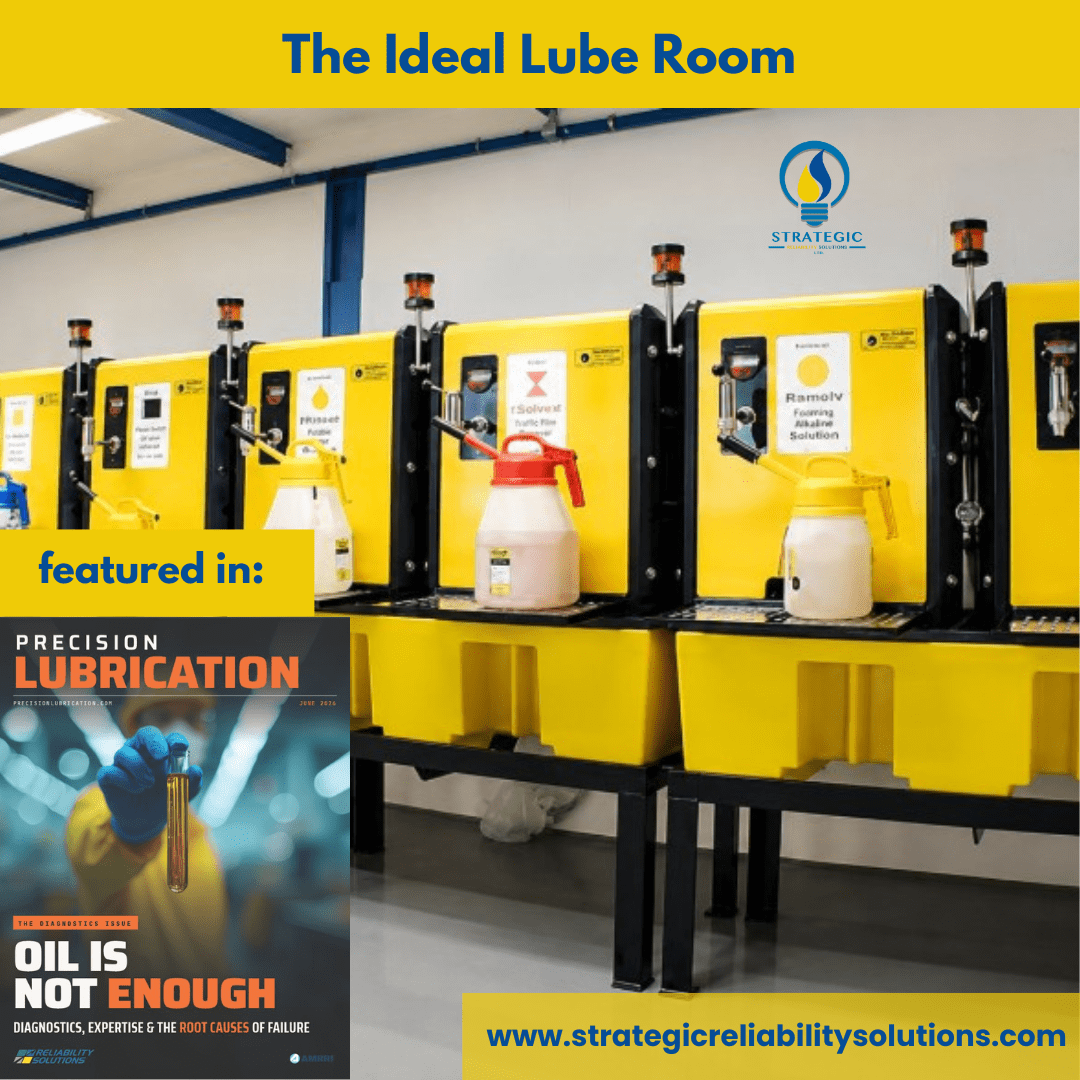
The Ideal Lube Room

While many may think it is costly or impossible to transform their current lube room, there are a few low-cost adjustments which can be made to help reduce the initiation of failure in this area.

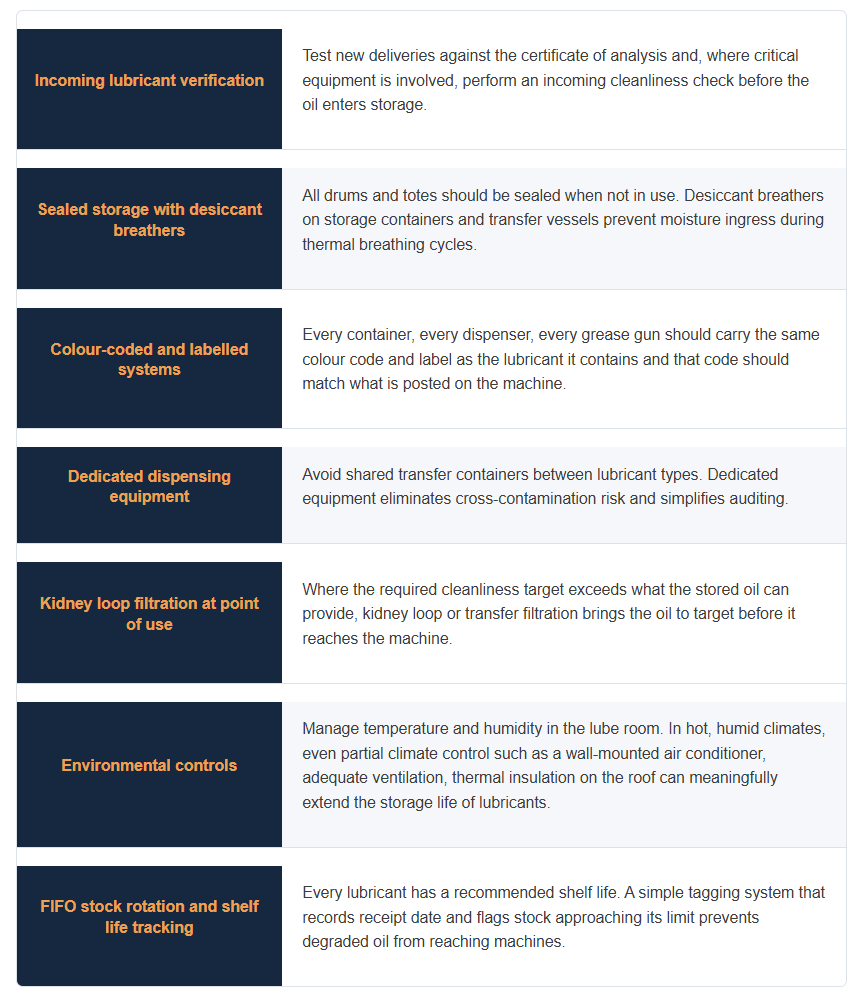
As shown in Figure 2, these small changes can have big impacts on reducing the contaminants which get into the oils before they are added to the machines.

ideal-lube-room
Figure 2: Strategies for an Ideal Lube Room.

By implementing some of the aforementioned strategies, we can see an immediate reduction in the number of failures which occur at a facility. While many think about investing in predictive technologies which may range to the higher cost bracket, these simple adjustments to the lube room can easily solve a large percentage of the issues.

If we were to think about this in terms of the cost of the failures for gearboxes or other critical pieces of equipment, the investment in these strategies to upgrade your lube room is minimal. When investigating your next failure, perform a full root cause analysis and determine whether it’s stemming from your lube room. Chances are that you have the opportunity to prevent a lot more failures than you would expect.

Find out more in the full article, "Why Asset Failures Often Start in the Lube Room" featured in Precision Lubrication Magazine by Sanya Mathura, CEO & Founder of Strategic Reliability Solutions Ltd

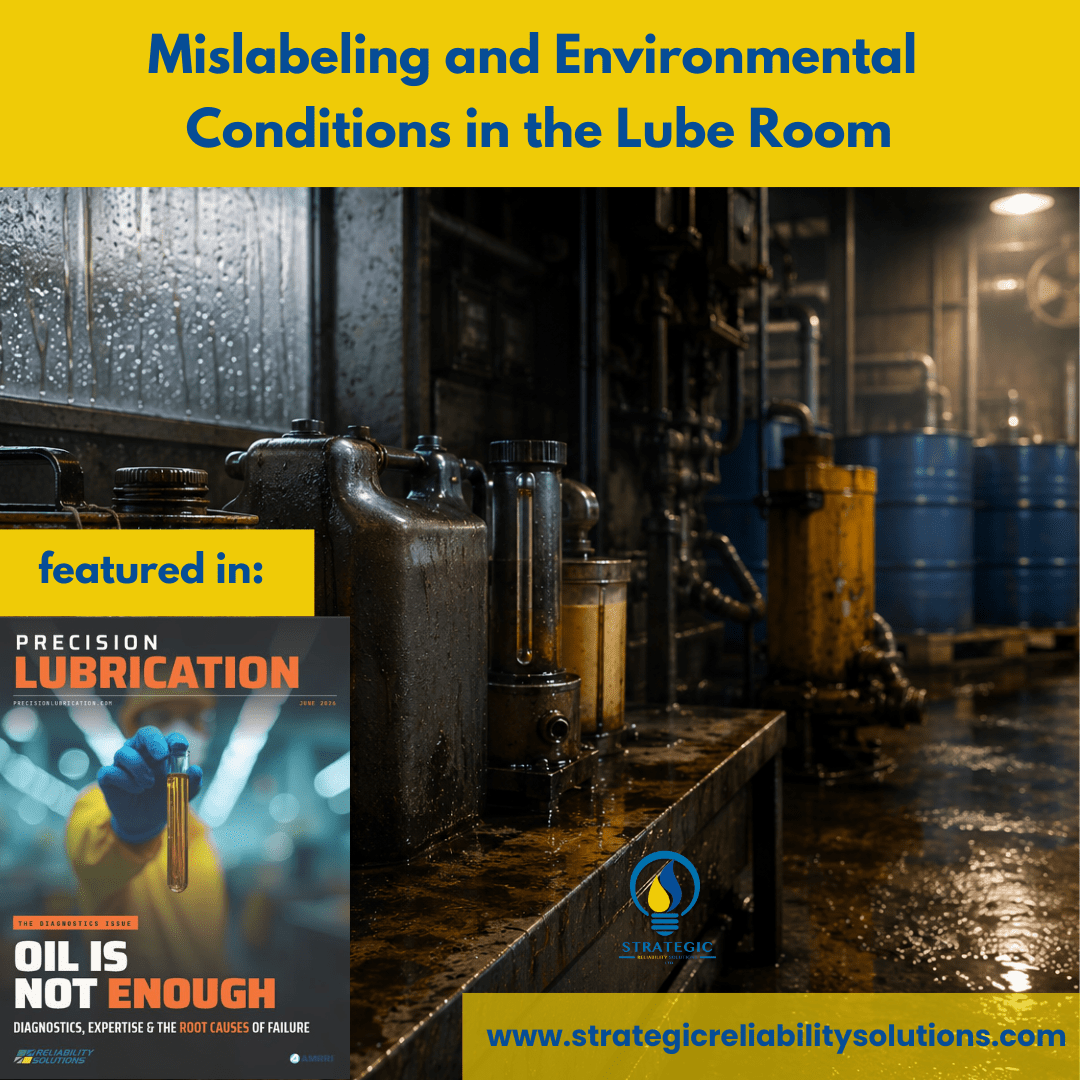
Mislabeling and Environmental Conditions in the Lube Room

Thus far, we’ve spoken about the effects of mainly physical contamination but quite a number of things also happen in the lube room. One major aspect of compromise is proper labelling of the lubricants. Many times, technicians are in a rush to get their lube route underway and will often not double check that they have the correct lubricant for the application that they are working on. In these cases, they may have picked up the wrong lubricant which is not the appropriate viscosity or suited for the application either!

This can lead to incompatible lubricants being mixed causing a series of failures. It can also lead to incorrect viscosity being applied to the equipment causing wear and tear or efficiency losses. Additionally, if the wrong type of oil is used, this can also lead to severe bleaching of the additives out of the oil.

For instance, if a motor oil (which contains 30% additives) was placed in a hydraulic oil sump, this can lead to catastrophic events where the additives in the motor oil may trap water getting into the hydraulic oil making it emulsify rather than allowing the water to drop out.

As such, we need to ensure that there are adequate labeling systems in place to minimize the occurrence of a mix up with the lubricants. Colour coding can also help as this reduces the errors of “picking up” the wrong dispensing container especially when our technicians are in a hurry.

The environment has a huge role to play regarding the integrity of lubricants. If lubricants are stored outside in drums, they have the tendency to collect rainwater. They can breathe and draw in this rainwater which gets collected at the top of the drum. This breathing action occurs due to changes in temperature such as the change from a bright sunny environment to a rainstorm. This introduces water into the oil and contaminates it before it reaches the equipment. Lubricants should be stored at controlled temperatures between 0–25°C and in a sheltered area.

Find out more in the full article, "Why Asset Failures Often Start in the Lube Room" featured in Precision Lubrication Magazine by Sanya Mathura, CEO & Founder of Strategic Reliability Solutions Ltd

Addressing Contamination in the Lube Room

When we think about the lube room, there can be a few images which come to mind. Either a pristine environment, with everything colour coded, neatly packed on the assigned shelves, dedicated storage and handling containers and a temperature-controlled environment (everyone’s dream!).

Or we can have a mix of dirty, oily rags, creatively designed dispensing containers where the welders were definitely showing off their skills and mislabeled (or no labels) on the lubricants. We can also have many images in between since there is a range of things which can be done (or not done) by those in charge of the lube rooms given their environmental conditions and constraints (budgetary or operational).

Unfortunately, the lube room is the place where many failures can begin if the conditions are not appropriate. It should ideally be the first line of defense for our assets but is often overlooked. Typically, this is the starting point of the journey for any lubricant and if it carries contaminants then we are exponentially decreasing the life of our lubricated assets before they have a chance to operate in our facility. This article explores the ways in which we can reduce these effects and some areas of improvement for any lube room.


Addressing Contamination

The ISO 4406 test is one that the industry is very familiar with as it governs the cleanliness of the oil. Typically, every system / OEM has a targeted cleanliness level. But how does the cleanliness level actually impact the lubricant and its functions? It is often said that the industry runs on a film of oil that is between 1–10 microns. Essentially, that means that any particle which is larger than this range interrupts the film and can cause damage and wear to the components.

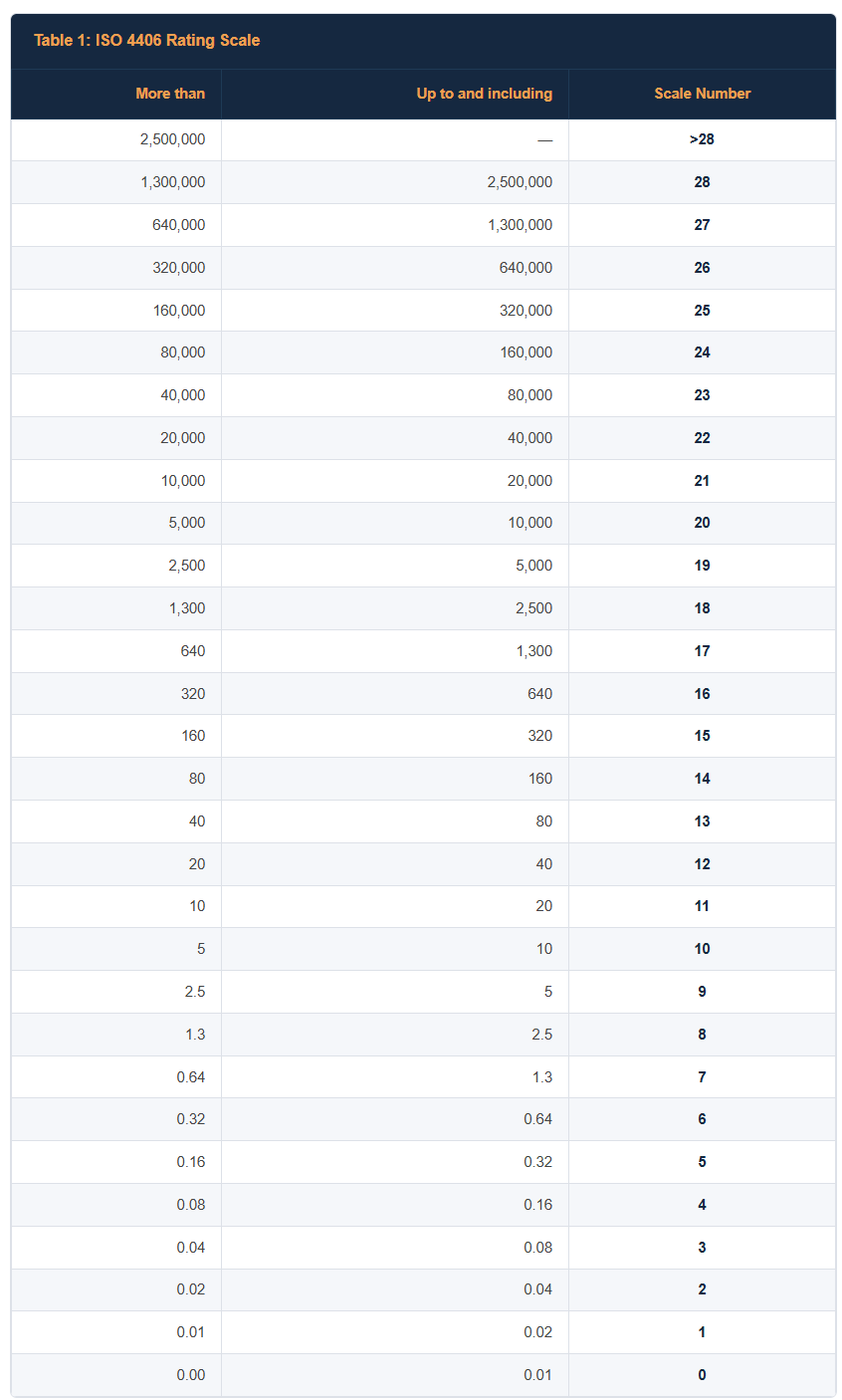
For those not familiar with ISO 4406, this quantifies the number of particles into three categories, ≥4μm / ≥6μm / ≥14μm particles per milliliter of fluid. Each category measures the quantity of particles that fit the size bracket and then these are translated to a scaled number. As such, the numbers represented are not the actual quantity of the particles of that size.

ISO-4406
Table 1: ISO 4406 rating scale.

Therefore, an ISO code of 20/15/13 represents:

20 between 5,000 – 10,000 particles larger than 4μm in one milliliter of fluid
15 between 160 – 320 particles larger than 6μm in one milliliter of fluid
13 between 40 – 80 particles larger than 14μm in one milliliter of fluid

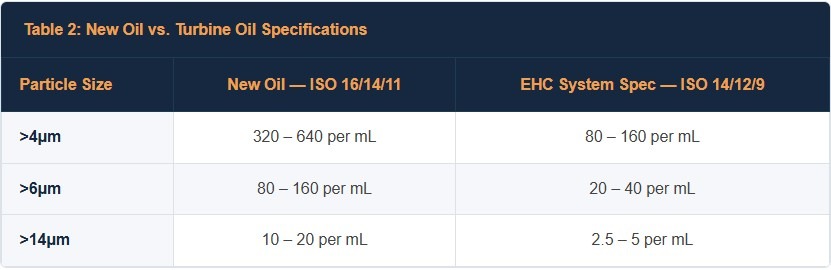
New oil delivery in container sizes between a pail or a truck load, the cleanliness value can be excellent. Sometimes these values can be as clean as ISO 16/14/11, but can also be quite poor. A 16/14/11 score is great, but perhaps our turbines or hydraulic systems particularly those with EHC systems require something more stringent (due to their tighter clearances) such as ISO 14/12/9. The table below shows a comparison of what that actually means as it relates to the number of particles in the oil for these ratings.

table2
Table 2: Comparing new oil to Turbine oil specifications for EHC systems.

As we see in Table 2, there is a major difference between the number of particles at the 4 micron level between what is being delivered to the facility as new oil versus what the turbine actually requires. When we translate that to the fact that bearings in turbines may run on a film of oil which is between 1–10 microns, and our new oil has potentially 640 particles that are bigger than 4 microns, then we can conceptualize that the oil film will most definitely be disrupted!

This ISO cleanliness level starts off from the entry of the “clean” lubricant into the plant. If we factor in drums which have been exposed to the atmosphere, dirty transfer containers which already contain contaminants or bad practices (leaving hoses open to the atmosphere), then the ISO contaminant ratings will significantly increase. This means we are literally pouring contaminants into our oils and our assets.

Thus far, we have only described the contaminants in the form of solid particles, but contaminants can also exist in the liquid form (fuel, water, other lubricants, process liquids) or gaseous form (air, process gases). These can all affect the lubricant either acting as catalysts or fouling the system.


The Unseen Failure Chain

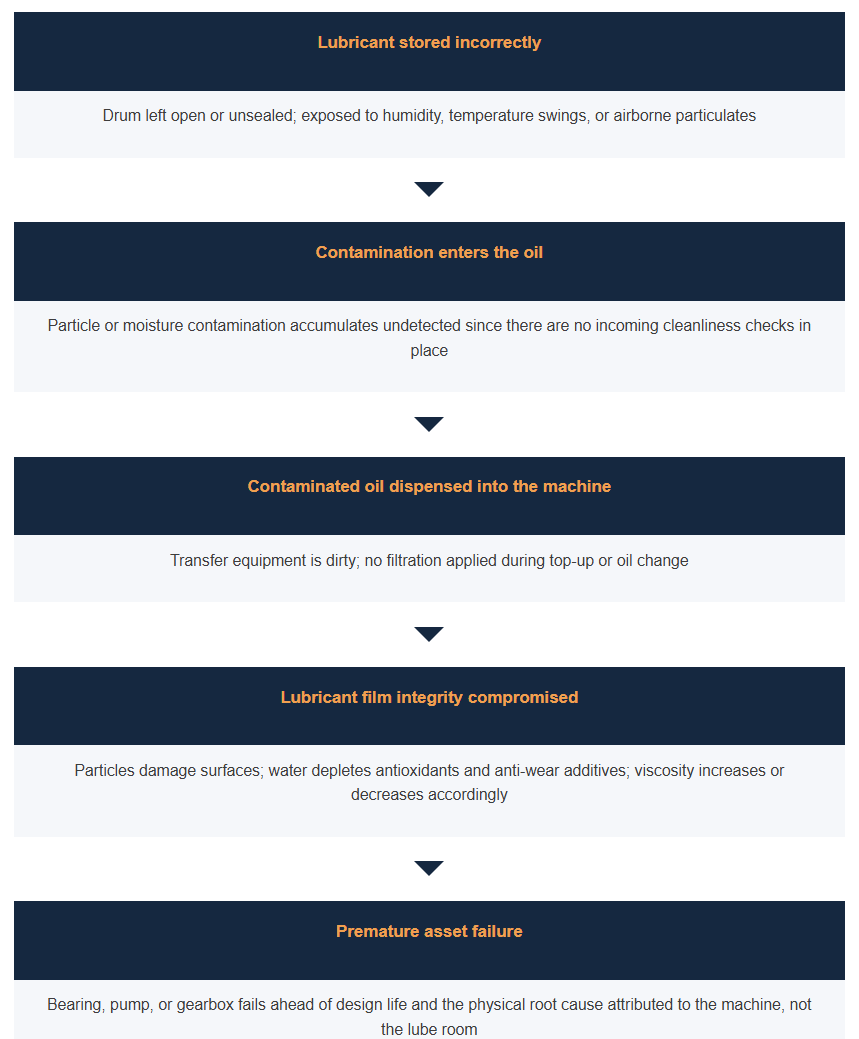
When we think about starting from the lube room and tracing the chain of events which leads to failure, it will look similar to Figure 1 below.

failure-chain
Figure 1: Chain of failure events.

In this case, contaminants start off in the lube room, and they enter the equipment, wreak havoc and then lead to failure. During many failure investigations, the analyst stops at the physical root causes and can easily blame the component. Since they did not investigate further, they missed that the source of contamination actually came from the lube room and possibly bad storage and handling practices.

Find out more in the full article, "Why Asset Failures Often Start in the Lube Room" featured in Precision Lubrication Magazine by Sanya Mathura, CEO & Founder of Strategic Reliability Solutions Ltd

Hidden Failures in Lubrication programs: The Illusion of a Good Lubrication Program – Part 1

Typically, when lubrication programs are developed and implemented, everyone automatically believes that all lubrication issues have been solved and will never occur again. This is furthest from the truth! In this 3-part series, we will explore some of the hidden failures in lubrication programs. We will start off with dispelling the illusion of a good program then dive deeper into the failure modes which are not being monitored and finally, ways to design a resilient lubrication strategy.

How “good’ is good?

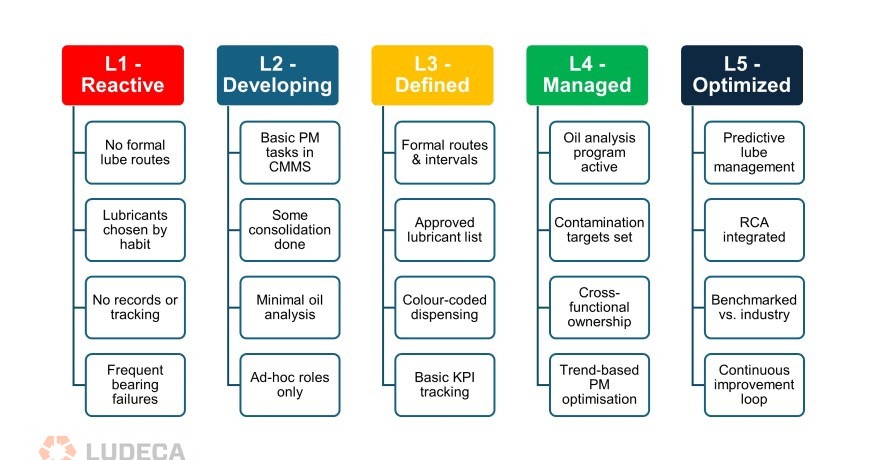
Many manufacturing plants have some form of a lubrication program in place. But many are not familiar with how to gauge this against best practices or industry standards. The following figure gives a brief description of the various stages of a lubrication program that can exist.

Figure 1: Varying levels of Maturity for Lubrication Programs

Although many plants may fall within the L2-L4 stages (and some in the L1 stage), there is still a lot of data missing on the documentation on lubrication failures and how these are being addressed (if they are being addressed at all). As such, there are no direct actionable items that link failures to strategies for preventing these in the future.

Industry standards attribute that around 33% of bearing failures are due to lubrication challenges. However, if our lubrication program is not capturing these lubrication related failures then the real root causes are not being addressed directly for these issues. As such, they are not being solved and we are adding to the overall unreliability of the plant. In these instances, our lubrication program is not adding value from a reliability perspective and is actually hiding some failures.

The real failures

Lubrication can account for a significant number of failures, but contamination also plays a crucial role. As per a study carried out by NRCC & STLE (National Research Council Canada & Society of Tribologists and Lubrication Engineers), particle induced failures are responsible for approximately 82% of failures. This means that our equipment is majorly failing because of contamination.

In our “Defined” maturity level 3 program, contamination is not even addressed. Hence, we could be missing the opportunity to remove this from our system and by extension reduce failures associated with contamination. With our level 3 program, we also do not have alarm limits for our oil tests to help us understand if we are approaching dangerous levels or not. This will cause us to miss opportunities where we could have prevented components from failure.

Even with a moderately tiered lubrication program, we are missing a lot of opportunities for improvement of the overall reliability of our plant. This can lead to the lubrication program being viewed as unsuccessful when in fact, it just didn’t capture the right data.

Apart from capturing data, we also need to act on that data. Even if we have an oil analysis program in place, if we are not trending the data or coordinating with our maintenance teams to troubleshoot potential issues, then the lubrication program is not helping to raise the reliability of the plant. The program is in fact hiding some of these inefficiencies.

When was your last audit?

Even though we may have built a lubrication program, have we audited it? Creating a lubrication program may be an easy feat for many but implementing it is another story in itself. This is where some programs fail because they exist on paper but not in practice. If our technicians are not collecting the right data or observing proper storage and handling techniques, then the lubrication program is just another piece of paper in the drawer collecting dust.

For those who have managed to get the lubrication program off the ground and have the right people integrated into it, an audit on the program is still a good idea. Sometimes when these programs are launched, the personnel responsible are excited to implement the new strategies but complacency can easily step in. This is when the quality of the results of the program can erode.

Your program may no longer be catching your failures in advance, and this can lead to a loss in production, emergency repairs and even unplanned shutdowns. Performing annual audits on your lubrication program to ensure that it is delivering actionable results is highly recommended.

Many failures and incompetencies can hide behind a “good lubrication program” but with proper auditing and identification of where your lubrication program actually measures up, you can take actions to make it a successful program.

Stay tuned for part 2 where we will be diving deeper into the failure modes that are not being monitored.

What are the Benefits of Oil Consolidation?

There are many benefits to the consolidation of lubricants, but here are a few that stand out:

Reduced Cost of Inventory

For warehouses that stock many types of lubricants, there is a cost attached to holding these high stock levels, especially when the lubricants will not be consumed as quickly. However, with a consolidated stock, these levels can deplete at a faster rate than the specialty one or two lubricants, which may be used occasionally by certain assets. This helps to reduce the overall holding cost of the stock.

Reduced Human Error

With lubricants from many different suppliers, it is very easy for someone to get confused and use the wrong lubricant in the wrong application. This can lead to unplanned downtime and a possible flush of the entire system, depending on the level of cross-contamination. However, with a consolidated stock, the risks associated with humans utilizing the wrong lubricant become minimized.

Reduced HSE Risks

When removing a drum of oil from storage, a forklift may be required (depending on the location). If there were different products from various suppliers, it may be difficult to access the ones needed or may require extra work to remove the additional drums from the other suppliers before the operators gain access to the lubricant they need. With a consolidated stock, it would be easier to access the lubricant needed, and there would be less risk associated with removing it from stock.

There are various types of handling procedures associated with the different lubricants. As such, more procedures will be involved for disposing and handling various oils. This can also increase the HSE risk if someone is not fully aware of how to handle specific lubricants. With a consolidated stock, the HSE personnel will not have as many procedures to be aware of when handling these lubricants.

Reduced Operational Costs

Personnel would no longer be required to handle all the invoicing and payments of several lubricant suppliers for the various brands. This will reduce the hours the accounting department spends on the necessary paperwork and bank transactions for several vendors. Additionally, warehouse personnel will not be tasked with receiving products several times a day from the various suppliers and producing the accompanying paperwork. This can reduce the overall operational costs.

There are many benefits to the consolidation of lubricants, especially in our facilities, but it begins with understanding if we are using them in the correct application or if we’re using an over-specified lubricant in a lower-tiered application. Auditing your facility will assist in making this process easier, as noted above. We all have our role to play in consolidating lubricants to ensure that we have a safer, more efficient plant.

References

ASQ. (2024, October 19). What are the Five S’s (5S) of Lean. Retrieved from American Society for Quality: https://asq.org/quality-resources/lean/five-s-tutorial

What are the Other S Factors: The 5S Methodology?

The remaining 4 S factors can also be included in our journey to improve the overall quality of our approach to machinery lubrication. Once we have “Sorted” our lubricants by making sure we have what is necessary, we can move on to “Set these in order.”

In this step, we can ensure that all the types of lubricants are stored in a clean, dry, cool place away from water, direct sunlight, or drastic temperature changes. We can also observe the “FIFO” rules, where the first lubricant that enters the warehouse is also the first to leave and be used in the equipment. Additionally, we can have lists stating the assets in which the assigned oils are to be used and place matching tags on the equipment and dispensing containers to reduce mix-ups of the wrong lubricant being used.

The third “S” talks about “Shine,” which relates to keeping the work area clean. We can also apply this to our oils with the dispensing equipment, making sure we use clean, dedicated dispensing bottles, not the fancy, galvanized, open-top containers where someone showed off their welding skills. Those galvanized containers are huge sources of contamination, which will degrade our lubricants at a faster rate.

With the fourth “S”, the process of “Standardizing” is used. This was incorporated in the first “S” during our sorting session, where we grouped similar lubricants and standardized them for various applications.

The last “S” is to “Sustain” or make the 5S process a habit. This would involve performing audits every year to ascertain if any new lubricants entered the facility and if they, in turn, should be consolidated with others that perform the same function.

Let’s “Sort’ This Out: The 5S Methodology

When walking into many facilities, there are usually a lot of oil drums, buckets, or items used for lubrication scattered all over the facility. However, some facilities are fully equipped, nicely stocked, and have dedicated lube rooms. The first step in our process is determining what is needed and what is not.

In this case, the best place to start is with an inventory list developed by physically identifying the items on the plant. If this is the first time this exercise is being conducted, then it is critical to perform this check in person rather than rely on the information entered into the CMMS (if one exists). Sometimes, not all the information may have been captured in the CMMS when it was entered initially.

A good idea would be to divide the plant into various sections and perform your audit one section at a time. It would be ideal to note the following during your audit:

  • Name of the lubricant (for example, Turbo S4GX)
  • OEM (for example, Shell)
  • Viscosity grade (ISO 46)
  • Expiry date (use this opportunity to find out if you have expired lubricants in stock)
  • Quantity (use this opportunity to find out if the inventory levels are accurately reflected in your CMMS).

Armed with this information, we can correlate this to the equipment needing the associated lubricant. In this instance, we can compile an asset listing and assign which lubricants are used for the respective assets. With the asset listing, we should also identify the oil requirements for the specified component. This way, we can develop a table similar to Table 2 below.

Table 2: Sample table to compile asset and lubricant information

With the information collected in Table 2, we can easily sort through the lubricants we have in use and match them back to the requirements of the assets. This is where we can identify if we have duplicated products or products that serve the same function but are represented by different brands. This is the beginning of the consolidation process.

If you enter this information electronically, it will be easy to sort. You can group similar applications together and then compare the application’s requirements to the current lubricant. This will help you determine if you are using a highly specialized lubricant for an ordinary application or if the incorrect lubricant was used from inception!

This exercise will be fundamental in gauging your lubrication requirements and then allow you to consolidate some of the lubricants in use. For instance, if there are five different applications of gear oil and many types of oil, we would need to determine if all the listed lubricants are entirely necessary. See Table 3 below and determine if we need these five types of gear oil.

Table 3: Listing of various gear oils and their assets

We can begin with the types of oils listed; some have varying viscosities, while others are food grade, and the rest are not. We can include this in a summary table, as seen in Table 4:

Table 4: List of gear lubricants and their descriptions

Table 4 shows that GB 1005, GB-4005 & GB-4008 all require the same type of oil, a food-grade ISO 220 mineral gear oil. Then why do we have three different types of oils that match the exact description? We can consolidate this oil into just one food-grade ISO 220 mineral gear oil brand. Ideally, the choice will be based on the supplier relationship, the availability of the product, and other cost factors, including delivery to the site.

We can also see that GB-2009 and GB-3003 require a non-food grade ISO 460 oil; however, one is synthetic, and the other is mineral. In this case, we can review our asset specifications and determine if a synthetic was required or if a mineral oil is preferred for these applications.

In this case, we could be using a higher-specification product and paying a lot more when the asset does not require it. This decision could have occurred in the past when synthetic oil was the only available grade of oil for that component, and it was ordered from the supplier to keep the plant running. However, if we consolidate these two, then we could go with a regular mineral non-food grade ISO 460 oil for both applications.

By understanding our applications and where we’re using these oils, we’ve just cut down our list of 5 gear lubricants to 2 gear lubricants! These will be much easier to manage in our inventory than keeping track and ordering from 5 different suppliers.

Additionally, your staff will have less to worry about as they know which specific oil is for the ISO 220 grades and which one is for the ISO 460 grades, making it less complicated and reducing some human errors.

Oil Consolidation Reimagined: The 5S Method for Smarter Lubrication Practices

When we walk into a pharmacy, there are thousands of items. Some of them do the same job but have different names and price points, while others are specialty items designed to solve a particular problem at a slightly elevated price point. Some of these may not be readily available in all pharmacies. Machinery lubricants adopt a similar type of pattern.

There are various OEMs on the market that all produce finished lubricants. Some of the majors are Shell lubricants, ExxonMobil, Total, and Castrol, while there are other niche producers who handle very specific markets. Like the pharmacy, where numerous choices solve the same issue, we have machinery lubricants from different suppliers who meet most of the standard specifications or specialty-grade products.

Each supplier will have a proprietary blend that comes from an invested amount of Research and Development into their product to produce something that meets international equipment specifications and regulatory standards.

Does this mean that one product is better than the other, or does it mean that all hydraulic oils (for instance) are the same? This depends on the application.

The hydraulic oil used to top up the compactor of a garbage truck with several leaks will not be the same hydraulic oil that we use for a critical hydraulic system in a power plant, which requires fire-resistant oil. We can also compare the engine oil used for a 40-year-old regular car to that of the engine oil used in a McLaren race car on race day.

Different applications have varying risks associated with them, as well as performance expectations; this is what sets certain lubricants apart.

The 5S Methodology

While some may be familiar with the 5S methodology of lean principles, this may be the first time others have heard of its existence. In essence, these principles help to maintain quality standards within the workplace. As per (ASQ, 2024), 5S is a quality tool derived from 5 Japanese terms used to create a workplace suited for visual control and lean production. The 5 pillars and their translations are listed in Table 1 below.

Table 1: 5S definitions (ASQ, 2024)

We can use these principles to adopt a leaner approach to lubricant consolidation in our facilities. This way, we ensure that our operators have a clean, manageable workplace when handling lubricants. The 5S method can give us a better overall view of what happens in our lubricant storage areas.

Storage and Handling & Advancements in Hydraulic oils

Hydraulic systems have smaller clearances than many. As such, it is imperative that these oils be kept clean and free from any debris. Most hydraulic components have a required ISO 4406 rating that should be met to ensure that the oils do not allow foreign particles to enter as these can easily clog the clearances and cause the system to stop working.

Chevron Lubricants produced a document that compiles some ISO 4406 codes for various types of industrial off highway equipment, which also includes the hydraulic standards. It noted the recommended ISO Cleanliness for John Deere hydraulic Excavators can be ≤23/21/16, this can be found here (Chevron Lubricants, 2015).

Hydraulic oils should be pre-filtered before being placed in your equipment even though there are filters on the inside of the equipment by reducing the amount of contamination entering the system from the onset, you can ensure a longer life for your hydraulic oil. Hydraulic oils should also be stored in closed containers not those that are left open to the atmosphere!

Advancements in Hydraulic Oils

According to (Fitzpatrick & Thom, 2021), the hydraulic oil market was approximately worth USD 77.5 billion by the end of 2021. Mobile hydraulics account for 65% of the market while industrial equipment represents 35% of the market. Clearly, the larger market share exists for mobile hydraulics. However, OEMs are also moving towards smaller oil sumps with longer oil drain intervals that can impact on the volume of hydraulics needed periodically.

Changes by OEMs also impact the formulation of hydraulic oils. For instance, if a smaller sump is used then, the hydraulic oil must now be able to cool faster, transport the same (or larger) force and maintain the intended viscosity of operation while being under greater stress. In these cases, the additive packages involving the antiwear, thermal stability, viscosity index improvers, defoamants and dispersants must be formulated to work in unison without compromising the other.

There have been changes in additive technology that allow for larger tolerances for various characteristics but while additives are evolving, the refining of base oils is also trying to keep up. With all of these evolutions, the chemical composition of hydraulic oil today vastly differs from one created in the 1950s. The requirements of hydraulic oil have also greatly evolved, forcing these changes in formulation.

Hydraulic oils today need to provide longer oil drain intervals, better stick/slip characteristics, increased efficiency, improved conductivity and wear performance and an added level of sustainability. Formulators need to create hydraulic oils that can adhere to these characteristics while also not infringing on regulatory requirements. This makes hydraulic oils one of the most powerful types of oils because they must conform to these requirements while also transferring force from one place to another.

References

Chevron Lubricants. (2015, January 24). Chevron Lubricants Latin America. Retrieved from Chevron Lubricants: https://latinamerica.chevronlubricants.com

Fitzpatrick, A., & Thom, M. (2021, November 08). How the Global Hydraulic Fluid Market Is Changing—And What It Means for the Future. Retrieved from Power Transmission Engineering: https://www.powertransmission.com/blogs/1-revolutions/post/189

Mang, T., & Dresel, W. (2007). Lubricants and Lubrication Second Edition. Weinheim: WILEY-VCH.

Pirro, D. M., Webster, M., & Daschner, E. (2016). Lubrication Fundamentals, Third Edition Revised and Expanded, ExxonMobil. Boca Raton: CRC Press, Taylor & Francis Group.

Find out more in the full article, "Are Hydraulic oils the most Powerful oils?" featured in Equipment Today Magazine by Sanya Mathura, CEO & Founder of Strategic Reliability Solutions Ltd. 

Is Oil Contamination Affecting the Performance of Your Equipment?

Often, the particles we don’t see are the ones that affect us most. For instance, we can’t see bacteria or germs but those can easily get into our body and make us sick. Something similar occurs with our equipment and the lubricants which are used to help them work more efficiently. SKF notes that contamination and ineffective lubrication are responsible for 51% of bearing, coupling, chain and other machine component failures in equipment.

Logically, if we control the amount of contamination, we can control the number of failures and all the resulting consequences, such as unscheduled downtime and rush expenses (for called out or specialized labor and parts). In this column, we explore how contamination can impact the performance of your equipment, ways to combat contamination and some examples.

What Is Contamination?

Contamination is anything that is foreign to the environment. For machinery lubricants, these are usually classified in three main groups: Gases, liquids and solids. When speaking about gases, this can be air or other gases (such as ammonia or methane) that encounter the lubricant. For liquids, this includes water, fuel or any other liquid that can enter the lubricant, particularly other lubricants or liquids that can be added knowingly or unknowingly. Lastly, solids can mean dirt (from outside the process), metals (from inside the machine) or any other solid particle in the lubricant.

Gases

Gases are the most unsuspected forms of contamination since many people believe that a gas will not affect the lubricant or by extension the machine. However, if air gets trapped in a closed loop system, this can lead to foaming (if the oil makes its way to the surface) or to microdieseling if it remains entrained in the oil.

With foaming, this typically occurs in gearboxes or equipment that are subjected to high churn rates of oil. Foam can settle at the top of the oil and cause the lubricant to not form a full film to separate the contacting surfaces. As such, this can lead to wear of the equipment.

On the other hand, microdieseling or the entrainment of air in the system can also prove to be dangerous because the trapped air bubbles can give rise to temperatures in excess of 1,000°C if they move between different pressure zones. This will lead to oil degradation, often producing some coke or tar insoluble as final deposits. Additionally, this trapped air/gas can also advance to cavitation inside the equipment.

Additionally, if the gas trapped is not air but a catalyst to a chemical reaction, this can incite further or more rapid degradation of the oil making it no longer able to protect the equipment. Therefore, identifying the presence of unwanted gases in your lube oil systems or preventing their entry in the first place is important.


Liquids

Liquids are trickier than gases because they somehow seem to enter the lubricant more easily or get mixed in unknowingly. When a liquid enters a lubricant, it can directly impact the viscosity of the lubricant, either increasing it or decreasing it. In either of these cases, this can be detrimental to the equipment.

If the lubricant’s viscosity increases above the essential value, then the machine will demand more energy to execute its required functions. This will directly impact its efficiency and energy consumption. On the other hand, if the lubricant’s viscosity decreases outside of the essential value, then the lubricant may not be able to adequately protect the contacting surfaces. Therefore, this increases the amount of wear that may occur on the inside of the machine.

Typically, water and fuel are the most common culprits of liquid contamination. These can easily get into your lubricants through poor storage and handling practices. Water can increase the viscosity of your lubricant and cause some additives to drop out of it, reducing its level of protection. Fuel will decrease the viscosity and possibly add to the fire risk of the system. Both can severely damage your equipment.

Another common culprit is the mixing of different types of oil. On an average day, things are busy, and people can get confused and pick up the wrong oil to perform a top up on a system. If we add gear oil or hydraulic oil to an engine oil system, we can have a catastrophe! These oils would have different viscosities, and their additive packages (or even base oils) may not be compatible. This can cause the equipment to stop working, leading to unplanned downtime and then exorbitant resources to get the machine operating again.

Solids

Solids can easily get into our equipment either from the outside or the inside. If there are openings to allow solids to enter then they will. However, sometimes solids enter our lubrication systems without us knowing. This can happen through poor storage and handling practices.

Once solids enter the system, they can:

  • Increase the viscosity of the oil
  • Increase the amount of wear occurring inside the equipment
  • Act as a catalyst (depending on their nature)
  • Block smaller clearances causing unwanted downtime in the equipment

Typically, solids are usually dirt, which can enter from outside the equipment. However, these hard particles can cause some metal to be damaged on the inside the equipment which can then lead to the metal being a catalyst for another degradation mode.

Some solids are formed inside the equipment as deposits. These deposits can occur if another contaminant (liquid, gas or another solid) enters the system and reacts with the oil to produce them. As such, these deposits may clog injectors, other valves or tight clearances causing the equipment to malfunction.