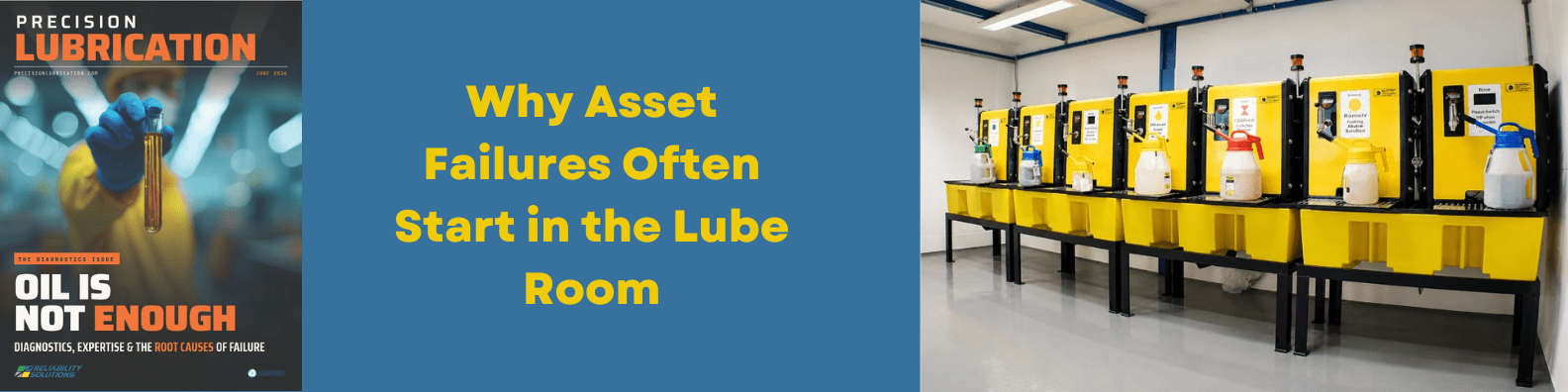
When we think about the lube room, there can be a few images which come to mind. Either a pristine environment, with everything colour coded, neatly packed on the assigned shelves, dedicated storage and handling containers and a temperature-controlled environment (everyone’s dream!).
Or we can have a mix of dirty, oily rags, creatively designed dispensing containers where the welders were definitely showing off their skills and mislabeled (or no labels) on the lubricants. We can also have many images in between since there is a range of things which can be done (or not done) by those in charge of the lube rooms given their environmental conditions and constraints (budgetary or operational).
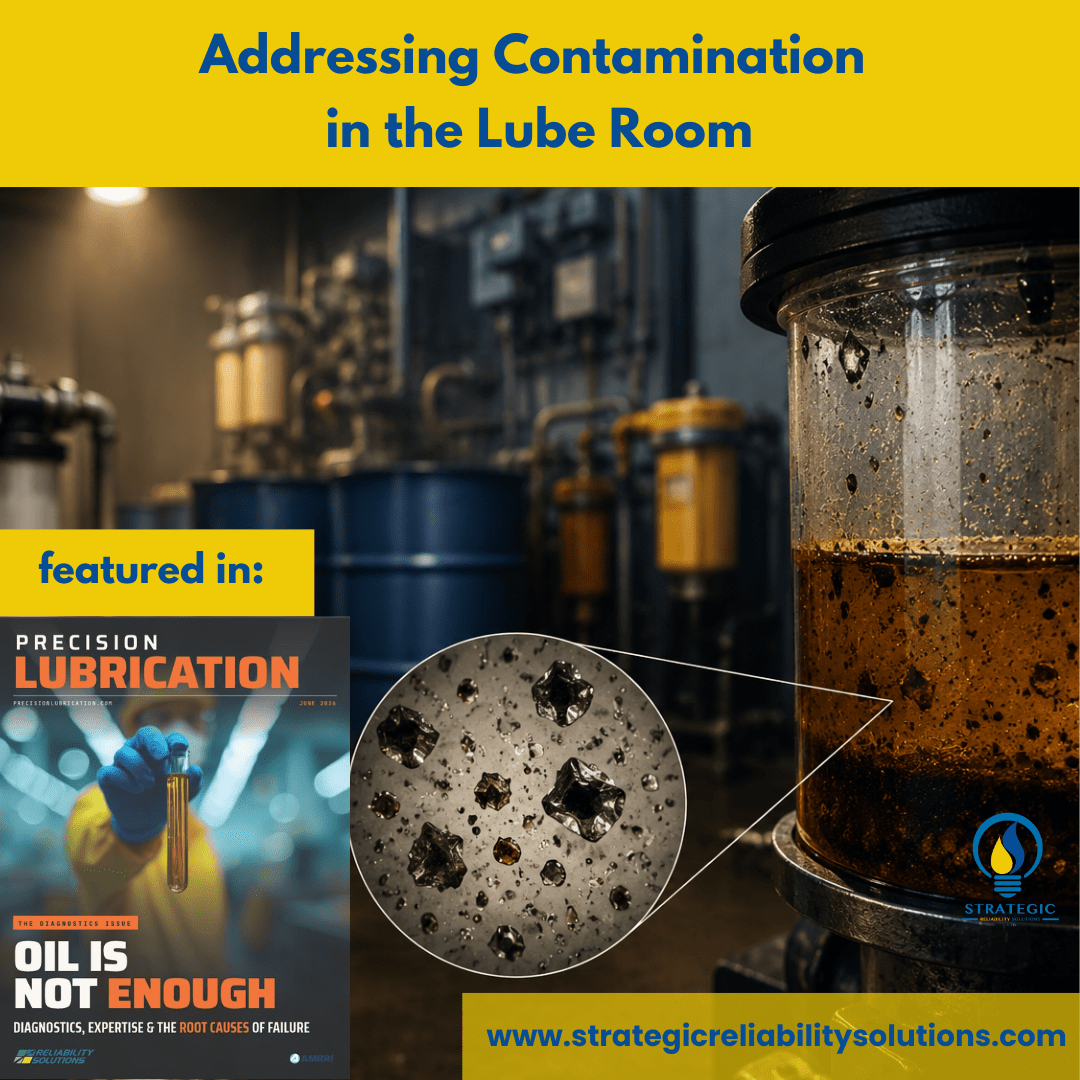
Unfortunately, the lube room is the place where many failures can begin if the conditions are not appropriate. It should ideally be the first line of defense for our assets but is often overlooked. Typically, this is the starting point of the journey for any lubricant and if it carries contaminants then we are exponentially decreasing the life of our lubricated assets before they have a chance to operate in our facility. This article explores the ways in which we can reduce these effects and some areas of improvement for any lube room.
Addressing Contamination
The ISO 4406 test is one that the industry is very familiar with as it governs the cleanliness of the oil. Typically, every system / OEM has a targeted cleanliness level. But how does the cleanliness level actually impact the lubricant and its functions? It is often said that the industry runs on a film of oil that is between 1–10 microns. Essentially, that means that any particle which is larger than this range interrupts the film and can cause damage and wear to the components.
For those not familiar with ISO 4406, this quantifies the number of particles into three categories, ≥4μm / ≥6μm / ≥14μm particles per milliliter of fluid. Each category measures the quantity of particles that fit the size bracket and then these are translated to a scaled number. As such, the numbers represented are not the actual quantity of the particles of that size.
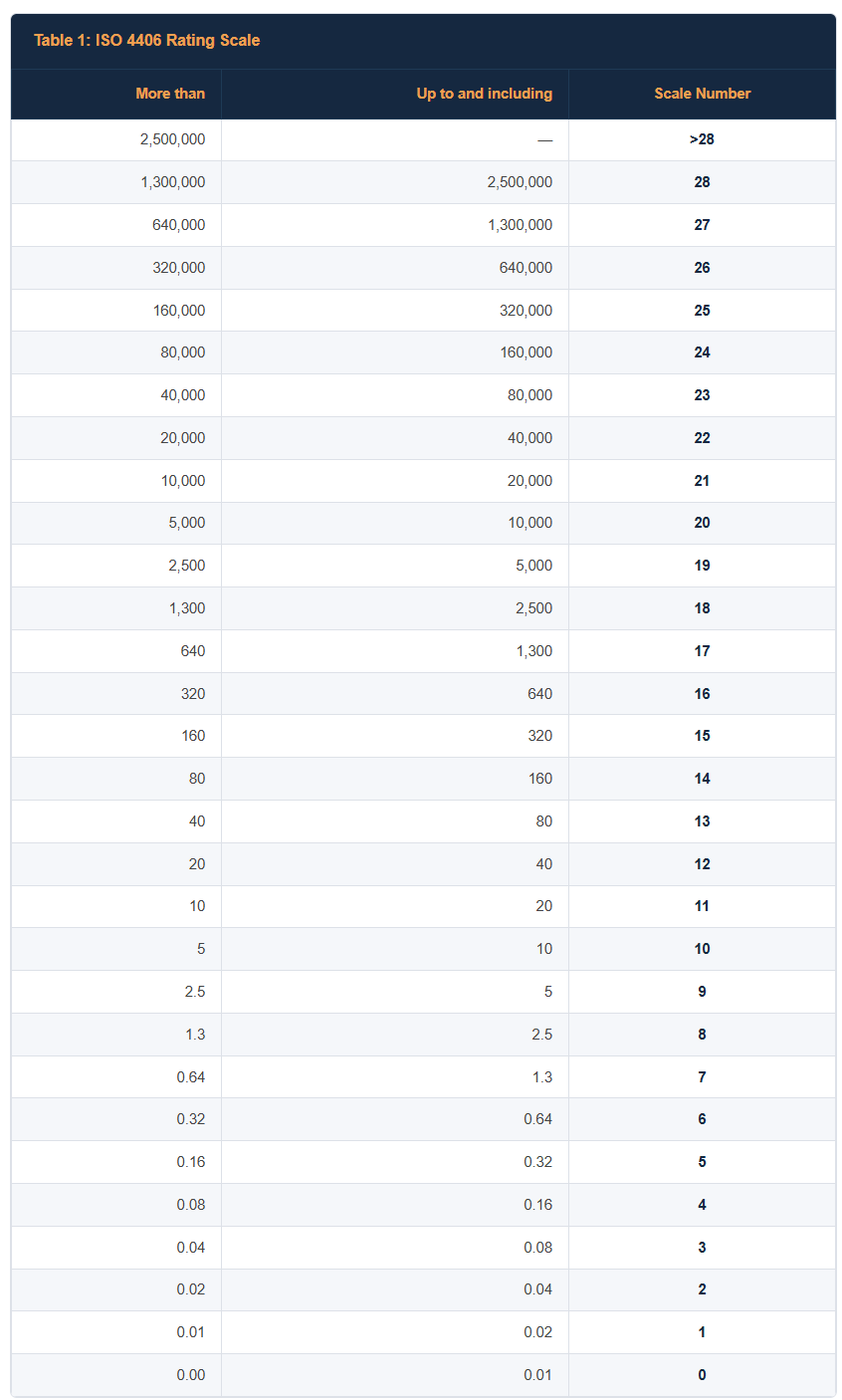
Therefore, an ISO code of 20/15/13 represents:
| 20 | between 5,000 – 10,000 particles larger than 4μm in one milliliter of fluid |
| 15 | between 160 – 320 particles larger than 6μm in one milliliter of fluid |
| 13 | between 40 – 80 particles larger than 14μm in one milliliter of fluid |
New oil delivery in container sizes between a pail or a truck load, the cleanliness value can be excellent. Sometimes these values can be as clean as ISO 16/14/11, but can also be quite poor. A 16/14/11 score is great, but perhaps our turbines or hydraulic systems particularly those with EHC systems require something more stringent (due to their tighter clearances) such as ISO 14/12/9. The table below shows a comparison of what that actually means as it relates to the number of particles in the oil for these ratings.
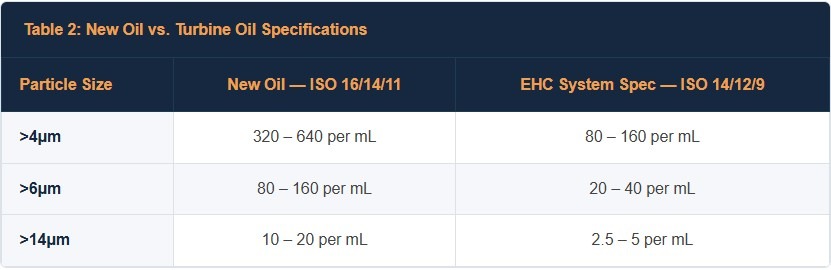
As we see in Table 2, there is a major difference between the number of particles at the 4 micron level between what is being delivered to the facility as new oil versus what the turbine actually requires. When we translate that to the fact that bearings in turbines may run on a film of oil which is between 1–10 microns, and our new oil has potentially 640 particles that are bigger than 4 microns, then we can conceptualize that the oil film will most definitely be disrupted!
This ISO cleanliness level starts off from the entry of the “clean” lubricant into the plant. If we factor in drums which have been exposed to the atmosphere, dirty transfer containers which already contain contaminants or bad practices (leaving hoses open to the atmosphere), then the ISO contaminant ratings will significantly increase. This means we are literally pouring contaminants into our oils and our assets.
Thus far, we have only described the contaminants in the form of solid particles, but contaminants can also exist in the liquid form (fuel, water, other lubricants, process liquids) or gaseous form (air, process gases). These can all affect the lubricant either acting as catalysts or fouling the system.
The Unseen Failure Chain
When we think about starting from the lube room and tracing the chain of events which leads to failure, it will look similar to Figure 1 below.
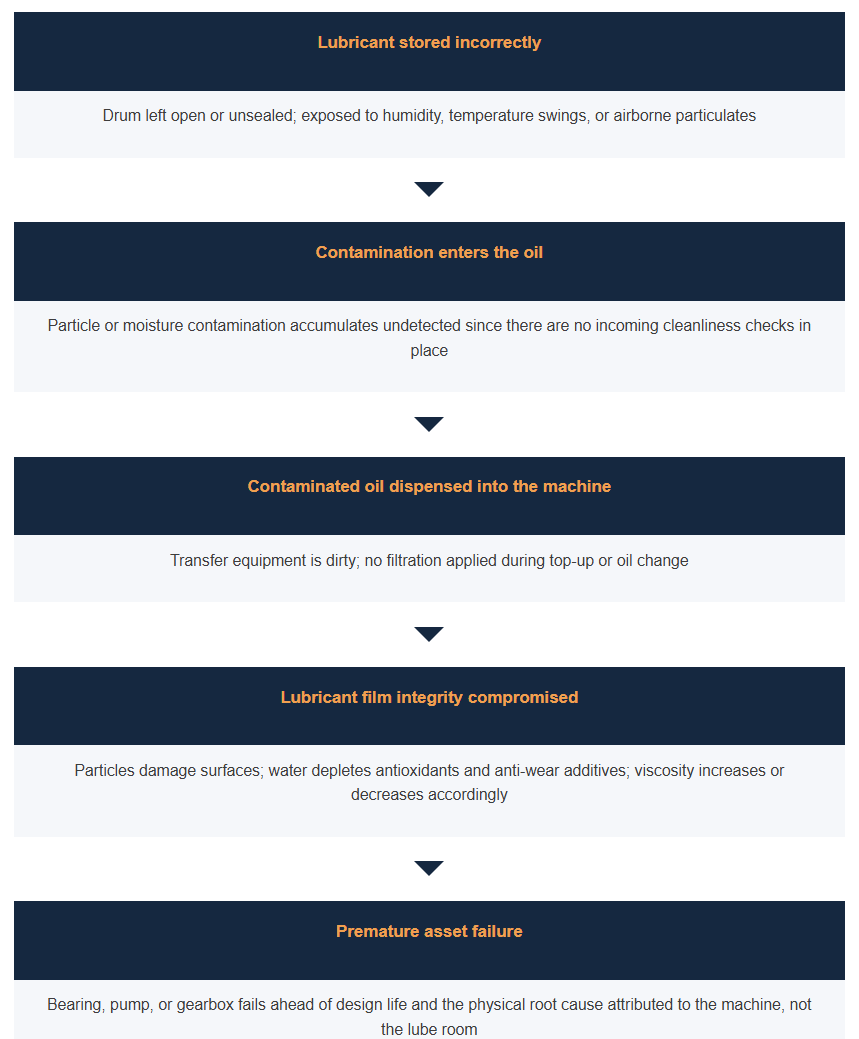
In this case, contaminants start off in the lube room, and they enter the equipment, wreak havoc and then lead to failure. During many failure investigations, the analyst stops at the physical root causes and can easily blame the component. Since they did not investigate further, they missed that the source of contamination actually came from the lube room and possibly bad storage and handling practices.
Find out more in the full article, "Why Asset Failures Often Start in the Lube Room" featured in Precision Lubrication Magazine by Sanya Mathura, CEO & Founder of Strategic Reliability Solutions Ltd