Tagged: used oil analysis

How Do Lubricant Additives Work?

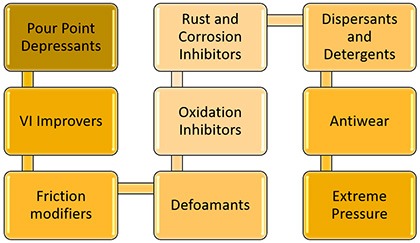
Each additive works differently to produce its function on the base oil and the overall finished lubricant. This section will explore how each of the lubricant additives works and some of the challenges they may experience.

Pour Point Depressants

As noted above, the pour point depressants help control the flow of the lubricant. This is achieved by modifying the wax crystals present in the lubricant’s base oil. At lower temperatures, the liquid usually has trouble being poured due to the presence of wax molecules in the base oil1.

There are two main types of pour point depressants, namely;

  • Alkylaromatic polymers adsorb on the wax crystals as they form, thus preventing them from growing and adhering to each other. This effectively controls the crystallization process and ensures the lubricant can be poured.
  • Polymethacrylates co-crystallize with wax to prevent crystal growth.

While these additives do not entirely prevent wax crystal growth, they lower the temperature at which these rigid structures are formed. These additives can achieve a pour point depression of up to 28°C (50°F); however, the common range is typically between 11-17°C (20-30°F).

Solubility thresholds may limit the use of this type of additive to achieve the desired effect on the base oil.

VI Improvers

These additives are typically long-chain, high-molecular-weight polymers that change their configuration in the lubricant based on temperature4. When the lubricant is in a cold environment, these polymers adopt a coiled form to minimize the effect on viscosity. On the other hand, in a hot environment, they will straighten out, allowing the oil to produce a thickening effect.

While it is more desirable to use high molecular weight polymers (since they provide a better thickening effect), these long-chain molecules are also subject to degradation due to mechanical shearing. Therefore, a balance must be reached between the molecular weight and shear stable service condition.

Another challenge for formulators is to balance the polymer’s tendency to shear with the expected viscosity thickening due to oxidative processes and the viscosity thinning due to the dilution of fuel1.

Friction Modifiers

These usually compete with the antiwear and extreme pressure additives (and other polar compounds) for surface room. However, they become activated at temperatures when the AW and EP additives are not yet active. Thus, they form thin mono-molecular layers of physically adsorbed polar soluble products or tribochemical friction-reducing carbon layers, which exhibit a lower friction behavior than AW and EP additives2.

There are different groups of friction modifiers based on their function. Some are mechanically working FMs (solid lubricating compounds, e.g., Molybdenum disulfide, graphite, PTFE, etc.), adsorption layers forming FMs (e.g., fatty acid ester, etc.), tribochemical reaction layers forming FMs, friction polymer forming FMs and organometallic compounds.

Defoamants (Antifoam)

When foam forms in the lubricant, tiny air bubbles become trapped either at the surface or on the inside (called inner foam). Defoamants work by adsorbing on the foam bubble and affecting the bubble surface tension. This causes coalescence and breaks the bubble on the lubricant’s surface1.

For the foam that forms at the surface, called surface foam, defoamants with a lower surface tension are used. They are usually not soluble in base oil and must be finely dispersed to be sufficiently stable even after long-term storage or use.

On the other hand, inner foam, which is finely dispersed air bubbles in the lubricant, can form stable dispersions. Common defoamants are designed to control surface foam but stabilize inner foam2.

Oxidation Inhibitors

As noted above, antioxidants are usually deployed during the propagation phase to neutralize the scavenging radicals or decompose the hydroperoxides3. There are two main forms of antioxidants: primary and secondary antioxidants.

Primary antioxidants, also known as radical scavengers, remove radicals from oil. The most common types are amines and phenols.

Secondary antioxidants are designed to eliminate peroxides and form non-reactive products in the lubricant. Some examples include zinc dithiophosphate (ZDDP) and sulphurized phenols.

Mixed antioxidant systems also exist where two antioxidants have a synergistic relationship. One example is the relationship between phenols and amines, where phenols deplete early during oxidation while amines deplete later. Another example is using primary and secondary antioxidants to remove radicals and hydroperoxides.

Rust and Corrosion Inhibitors

Rust and Corrosion inhibitors are usually long alkyl chains and polar groups that can be adsorbed on the metal surface in a densely packed formation of hydrophobic layers.

However, this is a surface-active additive, and as such, it competes with other surface-active additives (such as antiwear or extreme pressure additives) for the metal surface. There are two main groups for corrosion additives: antirust additives (to protect ferrous metals) and metal passivators (for non-ferrous metals2).

Rus inhibitors have a high polar attraction to metal surfaces. They form a tenacious, continuous film that prevents water from reaching the metal surface. It must also be noted that contaminants can introduce corrosion into an oil, just as organic acids are produced.

Detergents and Dispersants

Detergents are polar molecules that remove substances from the metal surface, similar to a cleaning action. However, some detergents also provide antioxidant properties. The nature of a detergent is particularly important as metal-containing detergents produce ash (typically calcium, lithium, potassium, and sodium)1.

On the other hand, dispersants are also polar, and they keep contaminants and insoluble oil components suspended in the lubricant. They minimize particle agglomeration, which in turn maintains the oil’s viscosity (compared to particle coalescing, which leads to thickening). Unlike detergents, dispersants are considered ashless. They typically work at low operating temperatures.

Antiwear Additives

These are typically polar with long chain molecules that adsorb onto the metal surfaces to form a protective layer. This can reduce friction and wear under mild sliding conditions. Usually, these additives are formed from esters, fatty oils, or acids, which can only work at low or moderate levels of stress within the system.

The most common form of antiwear is ZDDP, which is used in engine or hydraulic oils. On the other hand, an ashless phosphorus type of antiwear also exists for systems that require that characteristic, and tricreysl phosphate is the usual choice.

Extreme Pressure Additives

Since extreme pressure additives only become active when higher temperatures or heavier loads are on a system, they have earned the name “Anti-scuffing additives.”

Unlike antiwear additives, extreme pressure additives react chemically with the sliding metal surfaces to form relatively insoluble surface films. This reaction only occurs at higher temperatures, sometimes between 180-1000°C, depending on the type of EP additive used1.

It must be noted that even with the presence of EP additives in a lubricant, there will still be some wear during the break-in period as the additives have yet to form their protective layers on the surfaces.

EP additives must also be designed for the system they protect as different metals have varying reactivity (EP additives designed for steel-on-steel systems may not be appropriate for bronze systems as they are not as reactive with bronze).

EP additives also contribute to polishing the sliding surfaces as they experience the most significant chemical reaction when the asperities are in contact and the localized temperatures are at their highest. They tend to be created from compounds containing sulphur, phosphorus, borate, chlorine, or other metals4.

Do Lubricant Additives Degrade Over Time?

As noted earlier, most additives can deplete over time as they get used up in their various functions. Antiwear and rust protection additives continuously coat the surfaces of the interfacing metals.

This can cause their initial concentrations to decrease over time until it reaches a point where the concentration of the additive is too low to offer any protection. In this case, it has not degraded but depleted.

In earlier years, there used to be prevalent issues with the separation of additives from the finished lubricant due to filtration. However, with the evolution of technology and better practices, this is no longer a common problem operators face.

In the past, operators would notice frequent clogging of their filters and subsequent reduction of additive concentrations, rendering the oil unprotected. It was common to notice additives settling to the bottom of a drum of oil after standing still for some time.

In essence, lubricant additives do not really degrade over time; rather, their concentrations get depleted, which assists in the lubricant degrading faster than a finished lubricant with higher additive concentrations.

Innovation and Future Trends for Additives

What does the future look like for additives within our industry? Will they go away completely?

From my estimations, we’re a long way from that happening. The lubricant industry has evolved over the years, with many advances from the chemical side, which has developed better-suited additives, and the OEM side, which has pushed the chemists to develop lubricant additives that can adapt to equipment changes.

OEMs are creating more components that can withstand higher temperatures, increased pressures, and more demanding environments. Lubricants must also be developed for this specific use, and additive technology will continue to evolve as these boundaries are pushed.

We are also being driven towards more environmentally friendly products, and additives are also on that list. Most of the metals used in the production of additives (such as EP or AW additives) are toxic to the environment, and alternatives are being discovered.

In the field of tribology, there has also been continued research into ways of reducing friction and wear. This is coupled with research into the interaction of varying surfaces and ways lubricants can effectively reduce the coefficient of friction, leading to increased energy efficiency and fuel efficiency in some cases.

Lubricant additives will be around for some time as everything that moves needs to be lubricated, and base oils do not have all the required properties to handle varying temperatures and other conditions that the machine encounters.

While their structure will change to adapt to provide a more environmentally friendly impact, their functions will also evolve based on their future requirements.

References

1 Bruce, R. W. (2012). Handbook of Lubrication and Tribology, Volume II Theory and Design, Second Edition. Boca Raton: CRC Press.

2 Mang, T., & Dresel, W. (2007). Lubricants and Lubrication – Second Completely Revised and Extended Edition. Weinheim: WILEY-VCH GmbH.

3 Livingstone, G., Wooton, D., & Ameye, J. (2015). Antioxidant Monitoring as Part of Lubricant Diagnostics – A Luxury or a Necessity?

4 Pirro, D. M., Webster, M., & Daschner, E. (2016). Lubrication Fundamentals – Third Edition Revised and Explained. Boca Raton: CRC Press.

Find out more in the full article, "Lubricant Additives: A Comprehensive Guide" featured in Precision Lubrication Magazine by Sanya Mathura, CEO & Founder of Strategic Reliability Solutions Ltd. 
What are the types of Lubricant Additives?

There are many types of lubricant additives, and various formulations exist from different suppliers. In this section, we will cover the most common additives found in finished lubricants.

Pour Point Depressants

All liquids have a particular temperature at which they can effectively flow. The liquid’s viscosity and current temperature determine how quickly it moves. As the name implies, this type of additive can assist in lowering the temperature at which the lubricant flows1.

VI Improvers

This should not be confused with Pour Point Depressants. Viscosity Index Improvers are also known as Viscosity Modifiers2. They assist the lubricant in increasing its viscosity at higher temperatures, allowing lubricants to operate in wider temperature ranges.

Friction Modifiers

When two surfaces rub against each other, friction is formed. Depending on the type and extent of friction, some surfaces can experience welding and even adhesive wear. This is where friction modifiers can help by reducing frictional forces associated with stick-slip oscillations and noises.

Defoamants (Antifoam)

Some lubricants succumb to foam being created in their systems. When foam is made, it significantly impacts the functions of the lubricant and can lead to excessive wear due to lack of lubrication (they disrupt the surface of the lubricant), cavitation (due to the presence of air bubbles), and even increased oxidation (due to presence of air trapped in the system). Foam can also affect the ability of a liquid to transfer heat or cool. Defoamants or antifoam additives reduce the amount of foam being produced.

Oxidation Inhibitors (Antioxidants)

Oxidation occurs in most lubricants. During the oxidation process, free radicals emerge, propagating to form alkyl or peroxy-radicals and hydroperoxides, which eventually react with others to form oxidation by-products. During the propagation phase, antioxidants are usually deployed to neutralize the free radicals or decompose the hydroperoxides3. As such, these additives are sacrificial in nature, as they protect the base oil from oxidation by being depleted.

There are many types of antioxidants, including phenolics and aromatic nitrogen compounds, hindered phenols, aromatic amines, zinc dithiophosphates, and a couple of others.

Rust and Corrosion Inhibitors

If oxygen and water are present at a location containing iron, then rust can be formed. Corrosion affects the non-ferrous metals in the presence of acids in the lubricant1. Most pieces of equipment succumb to rust and corrosion quite easily, so these inhibitors were developed to mitigate these effects by forming protective layers on the surfaces of the equipment.

Detergents and Dispersants

These two often get confused as they usually work together to prevent deposits from accumulating in the oils. Detergents neutralize deposit precursors (especially in engine oils), while dispersants suspend the potential sludge or varnish-forming materials4.

Antiwear Additives

Antiwear additives reduce friction and wear, especially during boundary lubrication conditions. They are designed to reduce wear when the system is exposed to moderate stress2.

Extreme Pressure Additives

Extreme Pressure additives are usually confused with antiwear additives, or the names are used interchangeably. However, extreme pressure additives begin to work when the system experiences high stress and try to prevent the welding of moving parts, unlike antiwear additives, which work when the system experiences moderate stress.


Find out more in the full article, "Lubricant Additives: A Comprehensive Guide" featured in Precision Lubrication Magazine by Sanya Mathura, CEO & Founder of Strategic Reliability Solutions Ltd. 

Why Do We Need Lubricant Additives?

Lubricants keep the world turning. Once something moves, a lubricant should be present to reduce friction or wear between the surfaces. But what makes lubricants so unique in our industry? Is it just the base oil?

No, this is where the power of lubricant additives truly shines, an area many overlook.

Why Do We Need Lubricant Additives?

Before getting into the world of additives, let’s step back to the basics: why are they needed? A lubricant is composed of base oil and additives. Depending on the type of oil, different ratios of additives will be used for the various applications. Additionally, each Lubricant OEM will have its unique formula for its lubricant.

To simplify this, we can think of making a cup of tea. The first thing we need is some hot water in a cup. This can be our base oil. It can be used on its own (some people drink hot water or use it for other purposes), but if we want to make a cup of tea, we must add stuff.

Depending on the purpose for which you’re drinking the tea, you may choose a particular flavor. Perhaps peppermint for improved digestion or to help improve your concentration or chamomile to keep you calm.

These flavors can represent the various types of oils: gear oils, turbine oils, or motor oils. Different blends are suited for different applications.

Now, while we’ve added the tea bag to the hot water (and some people can drink tea like this), others need to add sweetener or milk. These are the additives to the base oil (hot water).

Depending on the preference of the person drinking the tea, there will be varying amounts of sweetener (honey, stevia, or sugar) and varying amounts of milk (regular, low-fat, oat, dairy-free). The combinations are endless!

The same can be said of additives in finished lubricants. Depending on the type of oil (tea flavor, think gear or turbine oil) and its application (the person drinking the tea, with dietary preferences of being dairy-free or sugar-free), the combination of lubricant additives and their ratios will differ. The percentage of additives can vary from 0.001 to 30% based on the type of oil.

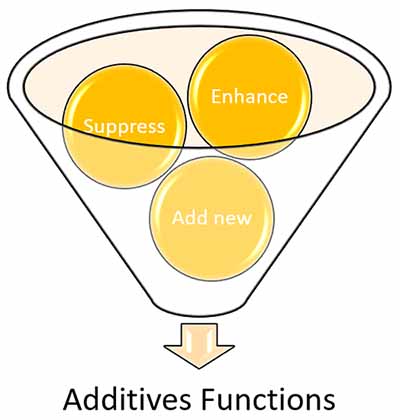
Additives have three main functions in a finished lubricant. They can;

  • Enhance – improve some of the properties of the base oil
  • Suppress – reduce some of the characteristics of the base oil
  • Add new properties – introduce new features to the base oil

The finished lubricant will have properties from the base oil and additives combined.

Find out more in the full article, "Lubricant Additives: A Comprehensive Guide" featured in Precision Lubrication Magazine by Sanya Mathura, CEO & Founder of Strategic Reliability Solutions Ltd. 
 

What are the factors that affect Oil Viscosity?

Similar to the molasses and water examples above, different factors can affect the viscosity of a liquid. For instance, water can assume other states depending on the temperature.

If water is at its freezing point (0°C), it can turn to ice but remains liquid at room temperature (around 20-30°C). Then, at 100°C, it can turn into a vapor. Its viscosity can change depending on the influencing factors.

Four factors affect oil viscosity:

  • Temperature
  • Pressure
  • Shear rate
  • Oil type, composition, and additives

Temperature

As seen with the example of the water above, when the temperature decreases, the water can turn to ice. Similarly, for lubricants, as the temperature drops, the viscosity increases. This means the oil will get thicker or more resistant to flow at lower temperatures. Likewise, as the oil heats up, it can become thinner.

This is similar to a block of ice melting as temperatures increase. Its viscosity will decrease, and the ice will turn to water. In this case, the internal molecules gain more energy with the increase in temperature, lowering the internal friction within the fluid. As such, the viscosity also decreases.

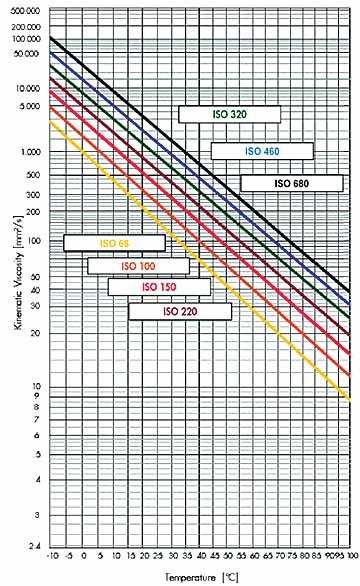
Since the oil’s viscosity will change with temperature, most OEMs will supply a temperature–viscosity chart for their equipment to help ensure the correct viscosity is used depending on the operating temperature.

In the figure below, gear oils of varying viscosities are plotted against the temperature for a particular piece of equipment. OEMs will typically specify the optimum operational viscosity range for their equipment.

It is then up to the lubrication engineers to determine the ideal viscosity based on the conditions of their equipment (this can vary depending on the application).

Figure 1: Temperature – Viscosity chart for Shell Omala S2 G (Source: Shell Lubricants TDS)

From the figure above, one can see that at 40°C, most of the gear oil grades correspond with their viscosities (ISO 68 corresponds with a 68 viscosity). However, at 0°C, an ISO 68 gear oil can become 1000 cSt, while at 90°C, this same grade of oil is around 11cSt.

Interestingly, all of the oils listed here can achieve a viscosity of 100cSt but at different temperatures, as shown below:

  • 32°C – ISO 68
  • 40°C – ISO 100
  • 47°C – ISO 150
  • 55°C – ISO 220
  • 63°C – ISO 320
  • 68°C – ISO 460
  • 75°C – ISO 680

Temperature is a significant influencing factor of viscosity, but it is not the only factor.

Pressure

The effects of pressure on a lubricant’s viscosity are often overlooked. However, the viscosity-pressure behavior has become part of the calculation for elastohydrodynamic films. In these cases, oil viscosity can rapidly increase with pressure.

One such instance occurs with metal-forming lubricants, which are subjected to high pressures such that the oil’s viscosity can increase tenfold (Mang & Dresel, 2007). As the pressure increases, viscosity also increases, protecting the surface in these lubricant films.

The very definition of viscosity alludes to pressure’s impact on Newtonian and non-Newtonian fluids. For example, with Newtonian fluids (regular lubricating oils), the shear rate is proportional to the applied shear stress (pressure) at any given temperature.

As seen above, the viscosity can be determined once the temperature remains the same. However, Non-Newtonian fluids, such as greases, only flow once a shear stress exceeding the yield point is applied (Pirro, Webster, & Daschner, 2016).

Hence, this is why the observed viscosity of grease is called its apparent viscosity and should always be reported at a specific temperature and flow rate.

Shear Rate

For Newtonian fluids, viscosity does not vary with shear rate (Pirro, Webster, & Daschner, 2016). In fact, per the definition of viscosity for Newtonian fluids (regular lubricating oils), viscosity is a constant proportionality factor between the shear force and shear rate. Thus, even when subjected to greater shear forces, the viscosity will not change for Newtonian fluids.

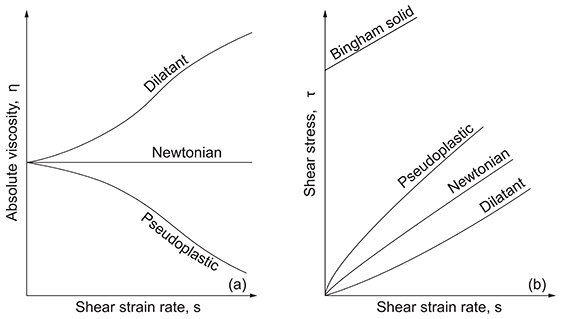
On the other hand, for non-Newtonian fluids, the viscosity is influenced by the shear rate. Some non-Newtonian fluids can include; pseudoplastic fluids, dilatant fluids, and a Bingham solid, the effects of shear rate on these fluids are shown in the figure below.

A Bingham solid is a plastic solid such as grease that only flows above a particular yield stress. It can be seen that pseudoplastic fluids decrease viscosity with an increasing shear rate, while dilatant fluids show an increase in viscosity with an increasing shear rate. (Hamrock, Schmid, & Jacobson, 2004)

Figure 2: Characteristics of different fluids as a function of shear rate vs. viscosity (a) and shear rate vs. shear stress (b). Source: Fundamentals of Fluid Film Lubrication by Hamrock, Schmid & Jacobson, page 102.

The shear of a lubricant can influence its shear rate. Typically, longer-chain polymer viscosity index improvers can shear over time. When this happens, it can result in a decrease in oil viscosity. Similarly, non-Newtonian fluids, such as grease, experience a decrease in viscosity as a function of shear rate (Totten, 2006).

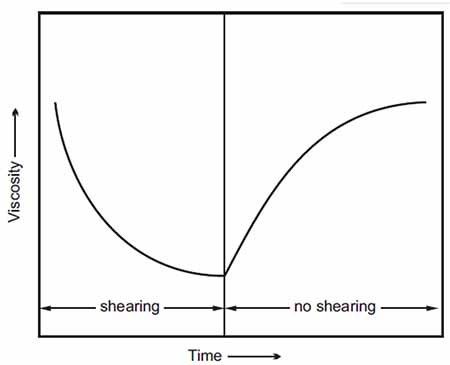
Another essential characteristic to note is whether a material is thixotropic or rheopectic. For a thixotropic material, if it is placed under a continuous mechanical load over a period of time, the viscosity will appear to decrease over this time.

However, the original viscosity is restored after a specific rest period, as shown in the figure below. On the other hand, for rheopectic materials, continuous shearing causes the viscosity to increase. (Mang & Dresel, 2007).

Figure 3: Flow characteristics of a thixotropic lubricant (Source: Lubricants and Lubrication edited by Theo Mang and Wilfried Dresel, page 30)

Oil Type, Composition, and Additives

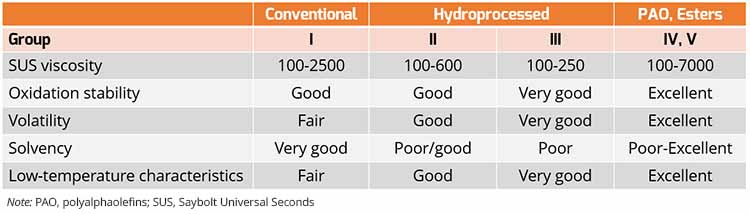
Various oil types, compositions, and additives can influence a lubricant’s viscosity. For instance, the five groups of base oils all have varying characteristics, as shown in the figure below. One can note the differing viscosities for the various groups.

Figure 4: Base Stock property comparison (Source: Lubricants and Lubrication edited by Theo Mang and Wilfried Dresel, page 13)

When a finished lubricant is made, it usually consists of a base oil and additives. Hence, the base oil will have a significant role in determining the final viscosity of the oil. However, with the advent of Viscosity Index Improvers, desired viscosities can be engineered regardless of the base oil type being used.


Find out more in the full article, "Oil Viscosity - A Practical Guide" featured in Precision Lubrication Magazine by Sanya Mathura, CEO & Founder of Strategic Reliability Solutions Ltd. 
 

Can Lube Oil Varnish be Eliminated? 

Varnish can be likened to cholesterol in the human body. It can build up in our arteries and eventually clog those, causing restrictions in blood flow to our heart which may lead to a heart attack.

Humans cannot simply change their blood to remove the cholesterol build-up. However, cholesterol is controlled through proper diet, exercise, and with some condition monitoring in the form of blood tests to help gauge the presence of it in the bloodstream. Similarly, a couple of approaches can be used to reduce the varnish build-up or eliminate it.

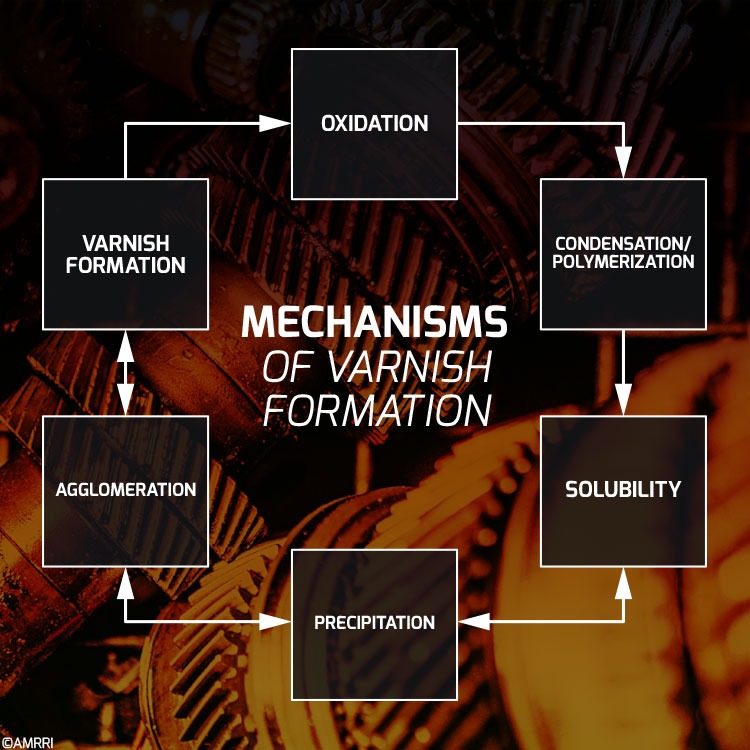
As per Livingstone et al. (2011), the lifecycle of varnish is critical. Particular attention should be paid to the double arrows between the stages of Solubility to Varnish formation in the figure below.

This means that even after varnish has been deposited, it can be solubilized back into the oil. This can only occur if conditions are met per Hansen’s Solubility principles where the solvent and degradation products meet using the three parameters of Polarity, Hydrogen Bonding, and Dispersive Forces as discussed in “The Hansen Solubility Principles and Its Relation to Varnish” (2022).

mechanisms-oil-varnish-formation

The Varnish Lifecycle as per Livingstone et al. (2011)

Varnish exists in various forms and can consist of differing compositions. Hence, it is essential to understand the characteristics of the varnish being formed in a system before attempting to eliminate it.

There are certain technologies, such as solubility enhancers or specifically engineered filtration media, which can be effective at removing lube oil varnish. However, this technology is heavily reliant on the type of varnish being formed and can be customized as per the system accordingly.

Solubility enhancers can solubilize the varnish back into the oil solution. When these deposits are reintroduced into the oil, they can be removed using resin-based filtration. In this method, the media is specifically designed to allow for the adsorption and removal of the varnish which presently exists in the oil.

When these methods are used together, they can prove quite effective and prevent manufacturing plants from experiencing unwanted downtime.

To summarize, it is of utmost importance to first understand the characteristics of the varnish being produced in your equipment before attempting to remove it from your system.

There is no cookie-cutter method to eliminate varnish from a system as it is a complex deposit. Similar to practices we observe with our bodies in the instances of cholesterol build-up, we can employ methods of dissolving the varnish and removing it while monitoring for possible recurrences in the future.


References:

Livingstone, Ameye, & Wooton. (2015.). Antioxidant Monitoring as Part of Lubricant Diagnostics – A Luxury or a Necessity? OilDoc, Rosenheim, Germany.

Livingstone, Overgaag, & Ameye. (2011). Advanced removal Techniques for Turbine oil Degradation Products. Powergen Milan.

Mathura, S. (2020). Lubrication Degradation Mechanisms (CRC Press Focus Shortform Book Program) (1st ed.). CRC Press.

The Hansen Solubility Principles and its Relation to Varnish. (2022, July 31). Fluitec International. https://www.fluitec.com/the-hansen-solubility-principles-and-its-relation-to-varnish/


Find out more in the full article, "Lube Oil Varnish Detection and Control" featured in Precision Lubrication Magazine by Sanya Mathura, CEO & Founder of Strategic Reliability Solutions Ltd. 

Is Oil Analysis the Only Method of Varnish Detection?

Varnish will deposit in layers and adhere to the metal surfaces inside the equipment. As it continues to deposit, the layers will eventually accumulate until it reaches a point whereby it can cause significant changes to the clearances of the components.

There have been instances where shafts in rotating pieces of equipment have been moved due to the build-up varnish. This is where vibration analysis can be instrumental.

When the vibration analysis method is used, it can detect any small changes in the alignment of the shaft in rotating equipment. As varnish continues to build on the inside of the component, vibration analysts can detect if the shaft observes some misalignment over a period.

This may be easy to miss as sometimes the varnish which has built up can be wiped away, causing the shaft to resume its proper alignment. Thus, these technologies should be used in tandem before conclusions are made about the presence of varnish.

Another detection method that can be employed is the monitoring of temperature fluctuations. As stated earlier, varnish can form an insulating layer trapping heat. There have been case studies that demonstrate that bearings experiencing varnish tend to display temperature increases.

Typically, these temperature patterns assume a saw-tooth pattern where temperatures rise continuously as the varnish builds up. The varnish becomes wiped away, and the temperature is reduced drastically.

This saw tooth pattern of temperature variation is characteristic of varnish formation. In some cases, the formation of localized deposits on bearing surfaces may cause temperature escalations without a corresponding MPC increase. In this case, the bulk oil may not show any degradation, yet temperature excursions may be experienced at the bearing surface.


Find out more in the full article, "Lube Oil Varnish Detection and Control" featured in Precision Lubrication Magazine by Sanya Mathura, CEO & Founder of Strategic Reliability Solutions Ltd. 

What does it mean if the TBN decreases?

TBN_drop

The TBN has dropped significantly, can I still use the oil?

The TBN (Total Base Number) is usually seen in diesel engines. Most modern (smaller) diesel engines have TBNs within the range of 9-15 (especially if they are using ULSD).

The TBN gets depleted when the acids in the oil start to increase.

Typically, higher sulphur levels in the fuel produce more acids. As such, as the sulphur level increases, so does the TBN level.

For instance, in power plants that use larger (older) diesel engines that require HSFO (High Sulphur Fuel Oil, 3.5% sulphur), the TBN of the lubricant can be as much as 50. Here are the different types of fuel and their sulphur ratings:

  • HFSO (High Sulphur Fuel Oil): 3.5%
  • LSFO (Low Sulphur Fuel Oil): 1.0%
  • ULSFO (Ultra Low Sulphur Fuel Oil): 0.1%


With IMO 2020, the cap has been placed on sulphur in fuel to 0.5% for marine vessels. While this cap has not yet been translated to land applications, due to the demand for HSFO declining there may be a shift to ULSFO in land based applications in the not so distant future.


Ideally, if your TBN level gets depleted by 50% then there is a cause for concern and the oil should be changed or topped up with new oil (depending on which is more convenient).

If your TBN levels get to 50% in a very short time, you may want to investigate the reasons behind the value dropping so significantly in such a short time (perhaps fuel dilution or thermal cracking?).

Always investigate the reasons behind unexpected results as these will continue to impact your lubricant in the future.

When should an oil sample be taken?

oil_sample

“When should an oil sample really be taken?”

In used oil analysis, oil samples can be taken at any time, but one should always consider the insight that they are trying to gain before testing the sample. This is crucial in deciding the type of tests and the intervals at which they should be performed.


For instance, if we are testing the quality of the oil or we want to compare a fresh batch to a used one, then we can take a sample directly from the drum.

If we are trying to decide the rate at which the additives are being depleted or wear being accumulated then we can take a sample at different operating hours to trend the data. This method can work if we are trying to determine the most appropriate run time for a lubricant in particular conditions.

However, if we are trying to track the health of the components on a regular basis as part of our PM program then taking a sample at the end of the scheduled maintenance interval is desired.

Taking an oil sample from a component is like performing a blood test by the doctor. It helps us to understand what’s really happening. It can show us if there is excessive wear, contamination or lubricant degradation which allows us to identify its “health”. However, the correct tests need to be carried out to determine these conditions.

There must be a reason behind taking the oil sample, not just a random act. When trying to establish a trend regarding a particular aspect of the oil, this should guide your choice of tests otherwise we can end up paying for tests that do not add value.

Always ensure sound reasoning behind testing rather than just checking the box!

While taking an oil sample at the end of the scheduled operating hours is very convenient, is it truly efficient?

When a piece of equipment is scheduled for maintenance, it is usually taken out of service for a couple of hours to perform the assigned
maintenance tasks.

However, if an oil sample is taken a couple days in advance of the scheduled maintenance, then when the results return the maintenance team can be on the lookout for issues highlighted by the results.

For instance, if the value for iron was significant or rising then they can perform inspections for areas which may cause this type of wear and address this challenge while the equipment is offline.

The graphic on the side can be used as a quick guide to determining when to take a sample.

Remember to always evaluate the reason behind establishing the sampling frequency before scheduling sampling.

sampling_freq

What’s the Difference between Shelf Life vs Service Life?

What the difference between Shelf Life and Service Life?

There’s a major difference between Shelf life and Service life especially when it concerns lubricants!

No one wants to put expired lubricants into their equipment! This can cause unexpected failures which can lead to unplanned downtime which can continue to spiral down the costly path of unproductivity!

shelf_life_service_life

Shelf Life

The Shelf life is usually what is stamped by the Manufacturer indicating the length of time the product can remain in its current packaging before being deemed unsuitable for use. These can typically be found on the packaging.

Service Life

The Service life however is determined by the application and conditions under which the lubricant is being used. Usually, estimated running hours / mileage are given by the equipment manufacturer in the maintenance section of the manual. (Condition monitoring can also be used to determine appropriate service intervals.)

However, how will someone know if the product has deteriorated while still in its original packaging?  What should someone typically look for?

Above are some tips for identification of deterioration in lubricants. Take a note of these for the next time you are unsure of the integrity of your lubricants.

Written by Sanya Mathura, CEO & Founder of Strategic Reliability Solutions Ltd. 

Conditions that affect lubricants

What conditions affect lubricants?

How are your lubricants currently stored?

Are you storing lubricants under the correct conditions?

These questions have come up a dozen times during audits and countless warehouse meetings!

conditions
Conditions that affect lubricants

To answer these questions, there are five main conditions that can affect lubricants. We have detailed them along with the effects of these conditions on the lubricant.

  • Temperature – if incorrect can lead to oxidation. For every 10C rise in temperature above 40C the life of the lubricant is halved.
  • Light – too much can lead to oxidation especially for light sensitive lubricants such as transformer oils. Hence the reason that most packaging is opaque.
  • Water – this usually works with additives to cause their depletion or contamination of the product. Water in any lubricant is bad (especially for transformer oils as they are involved in the conduction of electricity.
  • Particulate contamination – contamination can occur by air borne particles if packaging is left open or if dirty containers/vessels are used to transfer the lubricant from its packaging to the component.
  • Atmospheric contamination – this affects viscosity and promotes oxidation and can occur if packaging is left open. For instance, if a drum is not properly resealed or capped after usage or the most common practice of leaving the drum open with the drum pump on the inside.

Different types of lubricant degradation

Why is it important to know the types of lubricant degradation?

It’s important since it helps us to figure out why or in some instance how, the lubricant degraded! Usually degradation is the change that occurs when the lubricant can no longer execute its five main functions:

  • the reduction of friction
  • minimization of wear
  • distribution of heat
  • removal of contaminants and
  • improvement of efficiency.


lubricant_fails
Types of lubricant Degradation Mechanisms

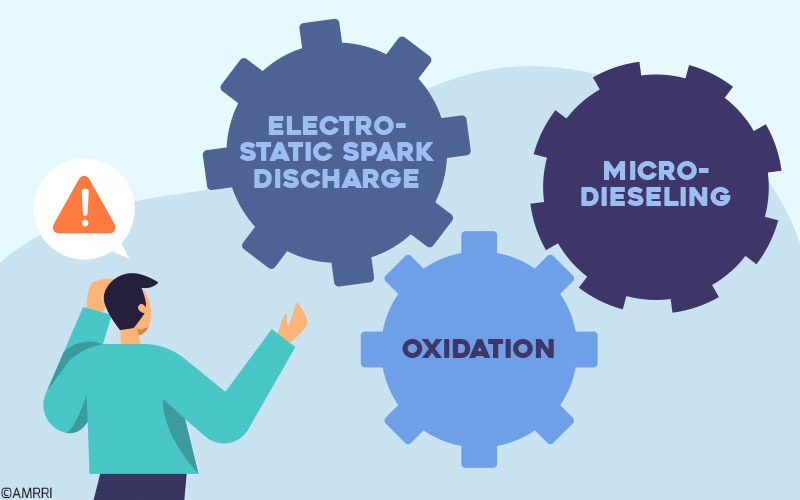
There are 6 main types of Lubricant Degradation as detailed below. Each type produces various by products which can enable us to understand the reason for the degradation and eliminate that / those reasons.

Here are the 6 main types of Lubricant Degradation:

1. Oxidation
2. Thermal Breakdown
3. Microdieseling
4. Additive Depletion
5. Electrostatic Spark Discharge
6. Contamination

As discussed, each mechanism produces distinct results which help us in their identification! Check out our article on why lubricants fail for more info!

Written by Sanya Mathura, CEO & Founder of Strategic Reliability Solutions Ltd.