There are a few ways to get lubrication results from the shop floor into the asset performance review. First, build a culture that treats lubrication as part of the analysis behind preventive decisions. Then, place oil analysis alongside the other condition monitoring methods that guide maintenance on critical equipment.
Three habits make the biggest difference.
1. Showcase the Trends, Not Just the Data Points
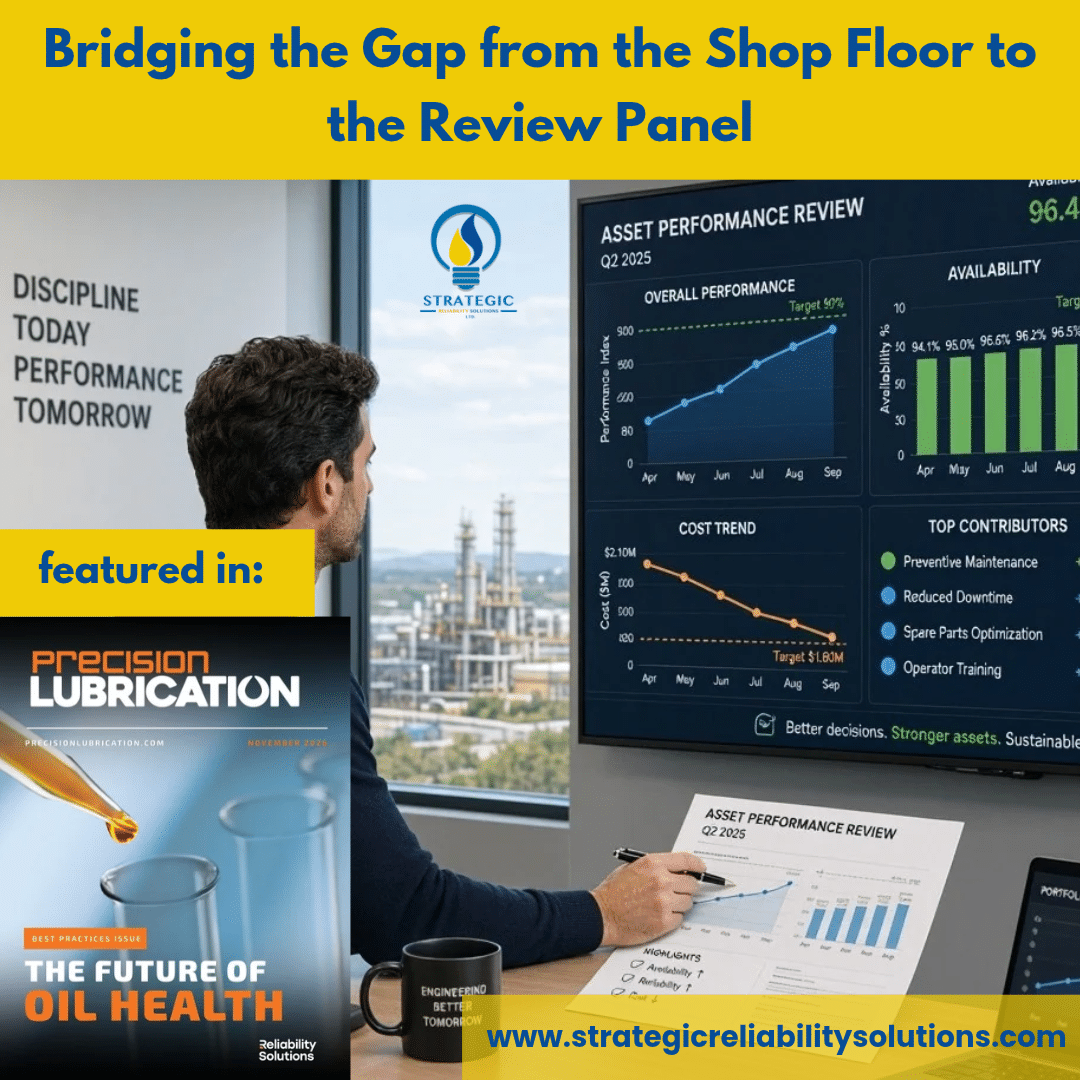
Like blood tests, oil analysis results only tell a story when you see the trend. However, the review panel may be looking at the latest oil analysis report alone. In that case, they never see how the oil has changed over time, and the trend never reaches the final review.
Now imagine the panel sees the full trend. For example, operators noticed viscosity rising over time. They then acted on it by checking for cross-contamination or oxidation. That trend and response can then form part of the review.
Meanwhile, vibration analysis checks certain health signs on a critical component. Oil analysis can then support the choice of the next planned maintenance task. Ideally, teams use both methods together to guide maintenance decisions, rather than in isolation.
2. Translate Numbers into Consequences
Many people don’t know what a number on a blood test means. Similarly, oil analysis results are just numbers to an untrained reader. For instance, reviewers may not grasp what a RULER value of 25% means.
So when you share results or a snapshot of machine health, include what each number means for the asset. For example: “A RULER value of 25% indicates that the oil is almost at the end of its life and will begin oxidizing soon, which can lead to varnish and potential downtime of the asset.” This breaks down into:
- A RULER value of 25% (test and result)
- indicates that the oil is almost at the end of its life (what the result means, in plain terms)
- and will begin oxidizing soon (what the result means, in technical terms)
- which can lead to varnish and potential downtime of the asset (its impact on the asset)
3. Avoid Silos
Many oil analysis databases sit outside the company’s connected systems. Because of this, people can overlook or forget the results.
So whoever builds the asset health overview for the review should gather all the condition monitoring data in one place. That includes oil analysis, vibration, ultrasound and infrared. Together, these methods give an accurate picture of the machine’s health. They also show when it is time to step in.
Show the trend, explain the number and keep every result in one place.
Give Lubrication Its Seat at the Table
Lubrication belongs in the asset performance review. It helps you understand the health of the machine and plan the right preventive maintenance.
After all, most machines are lubricated. If you ignore their lubrication, operations can literally grind to a halt.
Make sure lubrication and its associated monitoring get their seat at the asset performance review table.
Find out more in the full article, "Making Lubrication Visible in Asset Performance Reviews" featured in Precision Lubrication Magazine by Sanya Mathura, CEO & Founder of Strategic Reliability Solutions Ltd