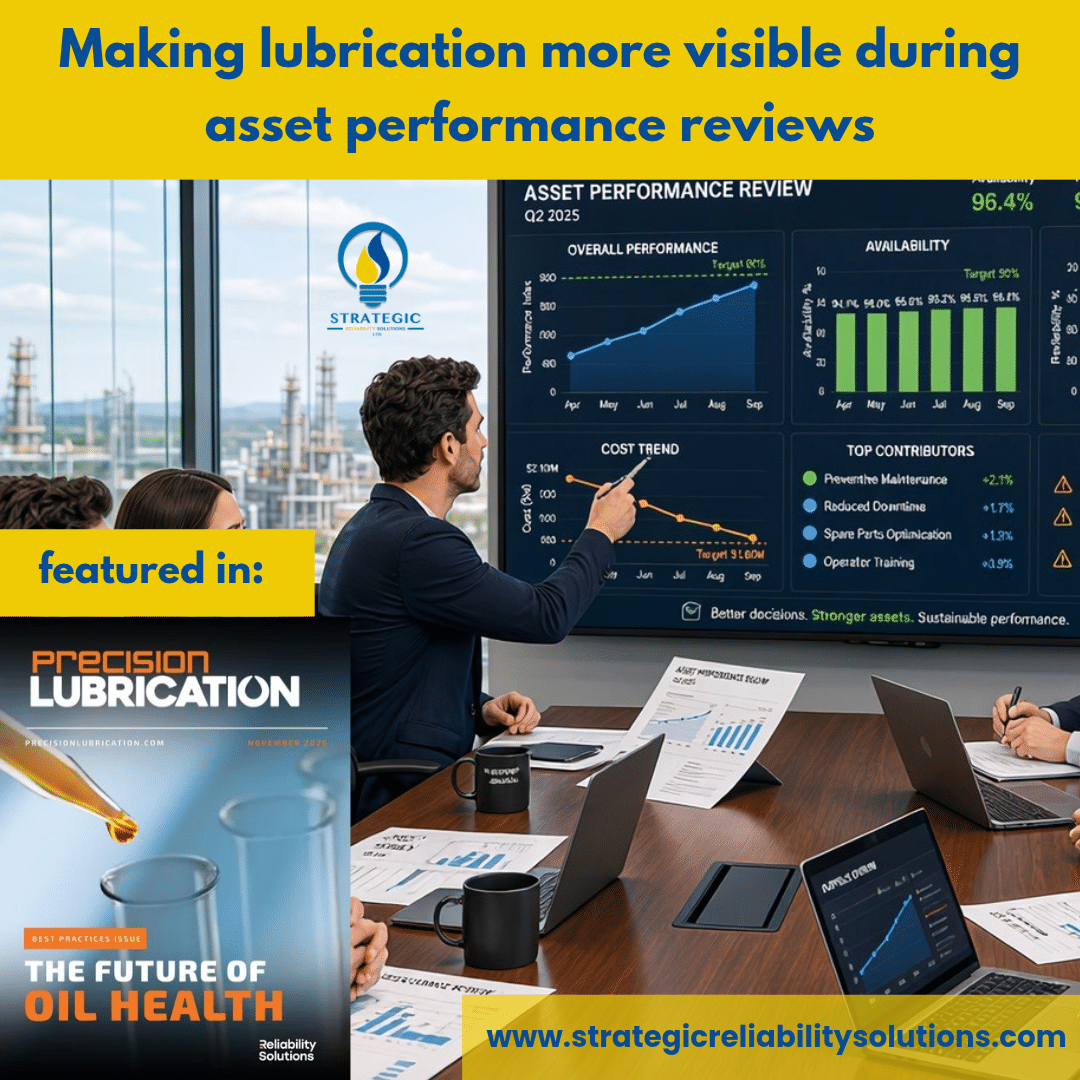
Vibration analysis gets more attention in these reviews because its findings link easily to risk. For example, the results can show whether a bearing is failing or a shaft is misaligned. Oil analysis data, on the other hand, needs some interpretation before the risks become clear.
The tests below can help. Include them in your asset performance reviews to connect oil analysis results with real risks. In turn, this gives lubrication a more visible metric.
Six Oil Analysis Tests Worth Reporting
| Test | Purpose | Risk |
|---|---|---|
| Viscosity at 40°C / 100°C | Identifies whether the lubricant is degrading (by either increasing or decreasing viscosity) or whether an incorrect viscosity grade or fluid was used. This can also identify cross-contamination. | Changes in viscosity can affect the performance of the equipment. If the viscosity gets too thick, there is a risk of lubricant channeling, a potential lag as more energy is required for the component to move, and the equipment can run hotter than expected. If the viscosity gets too thin, the surfaces inside the equipment can touch each other and wear away. |
| Water content (Karl Fischer / crackle test) | Detects the presence of water (crackle test) or the quantity of water (Karl Fischer). Its presence can indicate seal failure or condensation, or highlight storage and handling issues. Water can act as a catalyst to speed up degradation of the fluid or even leach out additives. | The presence of water can affect the viscosity of the oil, which can render the lubricant incapable of performing its functions. It can also promote corrosion and cause the lubricant to lose its ability to protect surfaces by depleting the additives. Water also greatly accelerates lubricant degradation, shortening component life. |
| Acid number | A rise in acid number indicates that acids are building up in the oil. This can be the result of oxidation occurring in the oil or the ingress of acidic process chemicals. | The acid number increases as the oil begins to degrade due to oxidation. This is accompanied by high MPC (membrane patch colorimetry) values and the occurrence of varnish, which can cause components to overheat, become misaligned and stick, leading to equipment malfunction. |
| Particle count (ISO 4406) | Components have many small clearances that can easily be clogged by larger particles. These larger particles can also indicate the presence of contaminants in the oil, which can act as catalysts and/or abrasives. | Contaminants in the oil can accelerate oil degradation or act as catalysts for chemical wear or abrasives for physical wear. Larger wear debris particles can also indicate that components are nearing the end of their life. |
| Ferrous density / elemental wear metals | Identifies which metals are present in the oil and whether they are increasing over time. | Depending on the trend of certain metals, one can determine whether a particular component is wearing or experiencing significant damage. |
| RULER® (Remaining Useful Life Evaluation Routine) | Measures the remaining antioxidants in the oil. This gives the earliest indication of oxidation occurring in the oil. | If antioxidant levels get too low (below 25%), the base oil begins to degrade, which can lead to varnish. By trending antioxidant levels and acting accordingly, one can prevent a shutdown of critical equipment and avoid emergency maintenance or unplanned downtime. |
Table 1: Oil analysis tests and associated risks
Put These Results in the Review
As Table 1 shows, these test results are key to understanding the health of the asset. In fact, many of them belong to the monthly set of basic tests on critical equipment.
So they belong in the asset performance review, next to the other condition monitoring results. After all, the risks they reveal affect how the whole plant runs.
If a test can predict a shutdown, its result belongs in the review.
Find out more in the full article, "Making Lubrication Visible in Asset Performance Reviews" featured in Precision Lubrication Magazine by Sanya Mathura, CEO & Founder of Strategic Reliability Solutions Ltd