We’re almost at the end of the year. That usually means performance reviews are starting to trickle in. Or perhaps someone is reminding you of your KPIs, and you’re trying to work out whether they are still realistic.
Many of us track operational plant KPIs. These include lower downtime, fewer emergency repairs or having the right stock on hand. At the same time, we manage our condition monitoring and lubrication programs, to name just a few.
Plant KPIs and lubrication metrics may seem to live in separate worlds. However, they can come together in the asset performance review.
What the Review Panel Never Hears
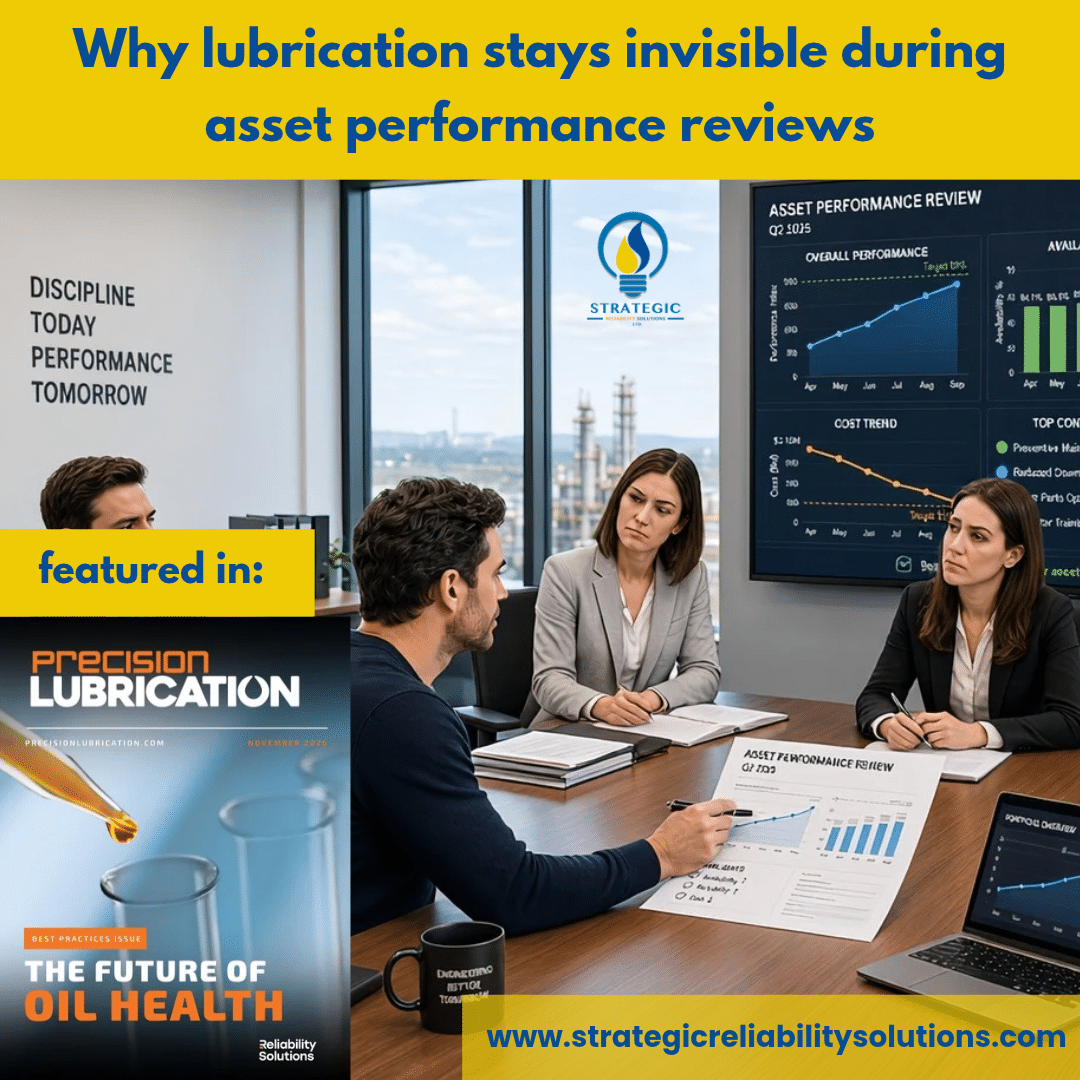
In these reviews, you’ll usually hear about vibration reports and downtime. You’ll also hear whether the machine is producing the required output. Lubrication rarely comes up. When it does, the topic is often an upcoming oil change or a major breakdown that stopped the equipment.
What doesn’t make it into the meeting? The many times oil analysis warned the maintenance team about a coming problem. Or the times it flagged a contamination issue that could have delayed production.
These items should be at the forefront of these meetings rather than sidelined.
Why Lubrication Stays Invisible
Quite often, people see lubrication as just another maintenance task. In reality, it is part of a larger ecosystem that keeps the equipment running.
Also, lubrication tasks often sit with teams who don’t own the asset performance review. As a result, lubrication becomes an outside factor. In some cases, the two teams never meet at all. Their only contact is a CMMS dashboard with a few notes about the lubrication route.
Where the Oil Analysis Data Hides
For many companies, oil analysis reports live in an external dashboard, usually the laboratory’s. That dashboard doesn’t connect to the company’s own reports. So the data stays in a silo, and it may never reach the performance review because nobody else knows it exists.
Even companies with a linked dashboard may pull out only the report highlights, not the details. Consequently, they miss the steady rise in viscosity or acid number that later led to varnish and a shutdown.
The lubrication team may have pushed for an investigation into those changes in the oil. Yet instead of getting credit, they may get the blame for not scheduling an earlier oil change.
The warning signs were in the oil analysis reports. They just never reached the room.
Find out more in the full article, "Making Lubrication Visible in Asset Performance Reviews" featured in Precision Lubrication Magazine by Sanya Mathura, CEO & Founder of Strategic Reliability Solutions Ltd