Category: Lubricant Degradation

Role of Condition Monitoring, Human & Organizational Factors in Oil Failures

Choosing the right oil for the system is just one part of the puzzle. How do we know the oil is performing when it’s......

Common Modes of Failure for Lubricants

Regardless of the oil selected, common modes of failure can occur with every lubricant. These include: contamination, improper storage and handling practices, and environmental......

Testing Methods for Detecting Antioxidants in Lubricants

Since we now have more information about the various types of antioxidants and how they function to suppress oxidation, the next step is to......

Types of Antioxidants

Different additives have successfully suppressed the degradation of finished lubricants6, 10. These include: Radical scavengers/inhibitors, also called propagation inhibitors Hydroperoxide decomposers Metal deactivators Synergistic......

How Antioxidants Combat Oxidation in Lubricants

As the name suggests, antioxidants prevent oxidation; thus, it is no surprise that they are also called Oxidation inhibitors. During the refining of the......

Understanding Oxidation: The Basis for Antioxidant Use

When speaking about antioxidants, the first thing that comes to mind is oxidation. This is the primary reason that antioxidants exist: to reduce oxidation.......

Determining the Root Causes of Oxidation in Lubricants

Finally, we’ve arrived at the point where we can effectively determine the root cause. It is critical that the analyst understands oxidation and has......

How do I know if Oxidation is occurring?

What Evidence is needed to prove that oxidation has occurred / is occurring? However, understanding the oxidation process is just one part of the......

How Can Oxidation Occur in Lubricants?

Typically, when an oil undergoes degradation, the first culprit to be blamed is oxidation. We often hear that the oil has oxidized, producing varnish,......

The Influence of Lubricant Selection on Degradation

Guidelines should always be followed when selecting a lubricant for a particular application. OEMs will have specific criteria ranges for specialty applications that must......

Which Degradation Mechanism Is Affected?

My previous article published in Precision Lubrication covered six degradation mechanisms: oxidation, thermal degradation, microdieseling, electrostatic spark discharge, additive depletion, and contamination. Upon further investigation,......

Has the Lubricant Failed the Equipment, or Has the Equipment Failed the Lubricant?

Many lubrication engineers are faced with finding the most appropriate lubricant for an application. Therefore, they are tasked with selecting the “right” lubricant; subsequently,......

Can Lube Oil Varnish be Eliminated? 

Varnish can be likened to cholesterol in the human body. It can build up in our arteries and eventually clog those, causing restrictions in......

Is Oil Analysis the Only Method of Varnish Detection?

Varnish will deposit in layers and adhere to the metal surfaces inside the equipment. As it continues to deposit, the layers will eventually accumulate......

Can Lube Oil Varnish be Detected? 

Detecting something is the first step towards formulating a solution to minimize its effects or eliminate it from a system. In the case of......

The Six Forms of Lubricant Degradation

Oxidation The most common form of degradation is oxidation. While this is the most recurrent form of degradation, the term is often misused to describe......

What is varnish or oil degradation?

Varnish is a type of deposit that forms on the surface of equipment in lubrication systems. It is caused by the oxidation of the......

Varnish Badges of Honour

Varnish is widely known as a primary culprit of equipment failure. This sticky enemy effectively finds its way into most of our equipment and......

Additives and their properties

Properties of Additives in Lubricants Each lubricant has a varying percentage of additives as not all lubricants are created equally. Lubricants are designed based......

ICML 55 – the revolution in the lubrication sector

What is ICML 55? ICML 55 is revolutionizing the lubrication industry! It is so exciting to be around at this time when it has......

What’s the Difference between Shelf Life vs Service Life?

What the difference between Shelf Life and Service Life? There’s a major difference between Shelf life and Service life especially when it concerns lubricants!......

Conditions that affect lubricants

What conditions affect lubricants? How are your lubricants currently stored? Are you storing lubricants under the correct conditions? These questions have come up a......

Oxidation

What is Oxidation? One of the major types of oil degradation is Oxidation. But what is it exactly, as applied to a lubricant? Oxidation......

Thermal Degradation vs Oxidation

What’s the difference between Thermal Degradation and Oxidation of a lubricant? The two major differences are the contributory factors and the by products that......

Microdieseling

What is Microdieseling? Microdieseling is also called Compressive Heating and is a form of pressure induced thermal degradation. The oil goes through 4 stages......

Electrostatic Spark Discharge

What is Electrostatic Spark Discharge? Electrostatic Spark Discharge is real and extremely common for turbine users! Static electricity at a molecular level is generated......

Lubrication failures in Ammonia plants

Quite often, when lubrication failures occur, the first recommended action is to change the lubricant. However, when the lubricant is changed, the real root......

Lubrication failures in Industrial plants

When failures occur in industrial plants, the first culprit to be suspected is usually the lubricant. However, should this be the first area that......

How can a lubricant fail?

How can a lubricant fail? This question has caused many sleepless nights and initiated countless discussions within the industrial and even transportation sectors. Before......

No post found

Role of Condition Monitoring, Human & Organizational Factors in Oil Failures

Choosing the right oil for the system is just one part of the puzzle. How do we know the oil is performing when it’s in the system? This is where condition monitoring can work hand in hand to help ensure that the oil does not fail the asset.

If a proper oil analysis program does not exist, operators will not know whether the oil is properly lubricating the asset. They will also not be aware of whether the oil is breaking down too quickly and failing to protect the asset. Oil analysis can also alert operators to signs of wear in the asset, so they can fix them before they turn into functional failures.

An oil analysis program that lives in a drawer protects assets about as well as no program at all.
There is also the possibility that an oil analysis program exists but is not top of mind, or that its results are put in a drawer. This can also cause the asset to fail even though the correct oil is being used. Apart from the aforementioned factors, if operators are not warned of the impending failure of the oil, this can result in production losses, increased downtime, and, in some extreme cases, the complete loss of the asset if it has failed beyond repair.

Incorrect sampling is another area in which the actual condition of the asset is not reported. Even with the correct oil used, if a sample is collected from a dead leg or an area that is not truly representative of the conditions inside the component, its actual condition will not be known. With incorrect data about the component, the asset can be misdiagnosed or treated for symptoms that do not exist, which can lead to its detriment.

Human and Organizational Factors

Not all failures occur at the equipment level; human and organizational factors can also cause the asset to fail even when the correct oil is used. If humans aren’t properly trained in oil sampling techniques or storage and handling practices, these can affect the asset’s functionality. We often forget that, at the heart of it all, lies the human factor, which is partially governed by the organization’s systems.

Training needs are an organizational factor that is often overlooked when considering how an asset can fail. However, if operators have not been trained in condition monitoring techniques, they will not be able to read oil analysis reports or take appropriate actions to protect the asset. Training can help bridge some competency gaps that directly impact asset performance.

It doesn’t matter what oil is in the system if no one is trained to monitor it – or motivated to care.

Culture is another factor swept under the rug. If the culture doesn’t exist to look after the assets, it doesn’t matter what type of oil is placed in the system; the asset will fail eventually. The performance of the asset does not only rely on using the correct oil. By implementing a culture of Asset ownership, where operators look after the asset and are accountable for its performance, assets are optimized to provide the functionality they should. This is one way to ensure the right oil is used to enable the assets’ performance.

Another area of concern is the documentation of maintenance procedures. If maintenance procedures are not adequately documented, someone new to the operation may not be aware of the correct practice. This, coupled with a lack of training, can spell disaster for the equipment. In these cases, even though the right oil was selected, the wrong practice or lack thereof can fail the asset.

Turning the “Right oil” into the “Right Outcome.”

As explained in this article, improper practices can jeopardize the asset’s health, even when the right oil is used. However, if all the right things align, we can have an asset that lasts for its expected lifetime or beyond.

This starts with selecting the right oil based on the application, environmental conditions, and OEM recommendations. If we follow this up with good storage and handling practices, proper condition-monitoring programs, documentation, and training, we can look toward a longer-lasting asset. The right oil enables reliability – but only disciplined practices deliver it.

Find out more in the full article, "When 'Right oil, Wrong practice' still fails assets" featured in Precision Lubrication Magazine by Sanya Mathura, CEO & Founder of Strategic Reliability Solutions Ltd. 
Common Modes of Failure for Lubricants

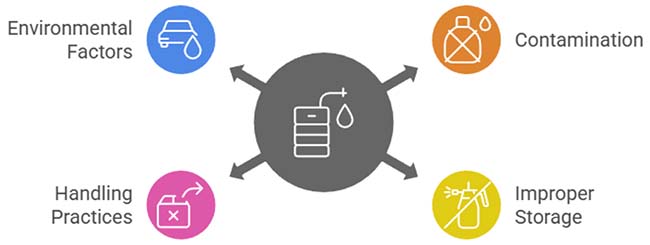
Regardless of the oil selected, common modes of failure can occur with every lubricant. These include: contamination, improper storage and handling practices, and environmental factors as shown in Figure 4.

Figure 4: Common modes of failure for lubricants

Contamination can be defined as any foreign particle entering the system. This includes any gases, liquids, or solids. Especially when the lubricant system runs alongside the process side, process gases and liquids can leak into the oil. These contaminants can influence the oil’s degradation, leading to deposits or chemical reactions that break it down. Common process contaminants include ammonia or treated water.

The biggest threat to the right oil is often what gets added to it – whether it’s process contamination or the wrong oil during a top-up.

Another liquid that can contaminate oil is another oil. During top-ups, operators can add the wrong oil to the system, causing contamination and, depending on the oil, a possible shutdown. Adding motor oil to hydraulic oil can be catastrophic, as the additive packages work differently and the motor oil additives may counteract the hydraulic additives, removing them from the oil, leaving the asset open to wear and failure. Despite selecting the correct lubricant for your system, adding the wrong oil (mistakenly) will shorten its lifecycle and cause the asset to fail.

Bad storage and handling practices can also erode your oil, regardless of the oil you choose. Turbine and hydraulic oils are used in precise equipment. As such, they need to be clean and free of dirt or other contaminants. However, if oils are not stored correctly, contaminants can enter and contaminate the oil.

Simple techniques, such as transferring oil from larger storage containers (pails, drums, or totes) into smaller, more manageable containers (2-3 liters or less), can introduce contaminants into the oil if not done correctly. If oils are to be transferred to another storage container, the storage container must be clean. The transfer process should use clean hoses (not previously used for another lubricant) and be completed in a dust-free environment.

If you wouldn’t use a dirty needle for a blood transfusion, why would you use a dirty hose for an oil transfer?

The transfer of oils from one container to the next can be thought of as a blood transfusion. Would you use dirty needles or vials to transport the blood to be placed into another human? Similarly, oil can be likened to the equipment’s lifeblood and should be treated accordingly. Just as we observe sterile practices for blood transfusions, we should also observe similar types of practices for oil transfers.

Environmental and operational factors can also influence lubricant degradation. As stated earlier, all lubricants can degrade over time under harsh conditions. The lubricant formulation largely influences this, as does whether it was blended to withstand those conditions.

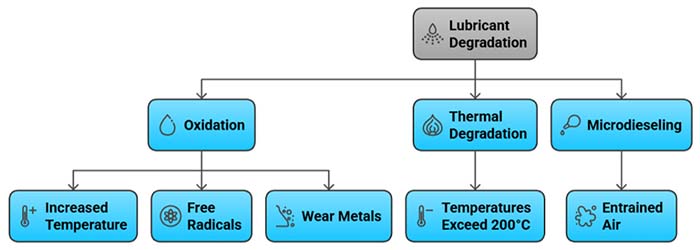
Oxidation can easily occur when temperatures increase, free radicals are present, or when wear metals are present. Thermal degradation occurs when the temperatures exceed 200°C. On the other hand, microdieseling occurs in the presence of entrained air, despite the lubricant used in the system, as shown in Figure 5.

Figure 5: Lubricant Degradation Processes

Any of these degradation mechanisms can occur regardless of the type of oil chosen. Hence, it is essential to remember that operational conditions and environmental factors can heavily influence oil degradation, even when the oil is appropriate for the system.

Find out more in the full article, "When 'Right oil, Wrong practice' still fails assets" featured in Precision Lubrication Magazine by Sanya Mathura, CEO & Founder of Strategic Reliability Solutions Ltd. 
Testing Methods for Detecting Antioxidants in Lubricants

Since we now have more information about the various types of antioxidants and how they function to suppress oxidation, the next step is to determine whether they are indeed present in our finished lubricants.

The industry tries to identify the presence of antioxidants in a couple of ways. The first way is to measure the rate of oxidation, which does not give the exact value of remaining antioxidants. Instead, it gives the user an idea of how much oxidation has taken place based on other lubricant characteristics.

Then, the user must make an informed decision on the remaining life of the oil. On the other hand, there is one direct test to determine which antioxidants are present in the oil and provide their remaining quantity.

Some common tests in the industry that measure the oxidation rate include RPVOT (Rotating Pressure Vessel Oxidation Test), Oxidation via FTIR, Viscosity, and TOST (Turbine Oil Oxidation Stability Test).

While none of these actually quantify the remaining antioxidants in the oil, they all provide the user with an indication of the rate of oxidation currently occurring in the oil. We will dive deeper into these to understand how they assess oxidation rates.

RPVOT

In the industry, RPVOT has been used for decades to provide users with an idea of the rate of oxidation occurring in their oils. However, this test is performed where the sample is placed in a sealed container with pressurized pure oxygen and rotated at a high speed in a bath with a higher temperature to promote the oil’s oxidation8.

As oxidation occurs, there is a pressure drop in the vessel, and the rate of this pressure drop is compared to that of new oil. The final result is given in minutes. Typically, if the value falls below 25% of the original value, the oil is on its way out or almost at the end of its remaining useful life.

But what happens if the value is at 75%? Since the final result is given in minutes, it isn’t easy to correlate that value to a value in the field.

For instance, if the RPVOT result was 800 minutes, we cannot easily correlate that to a particular number of years or months of life remaining for the oil. Hence, this method does not truly measure the remaining antioxidants in the oil.

Oxidation via FTIR

Another way of measuring oxidation is by identifying its presence through FTIR (Fourier Transform Infrared) Spectroscopy. In this type of test, each element produces a unique fingerprint.

As such, oxidation produces a particular peak between 1600-1800 cm-1. There is no absolute reference for oxidation peaks; therefore, these are usually compared against the new oil samples9.

This test (ASTM D 7414) is usually used for engine oils rather than industrial oils. However, it still does not provide the user with the remaining antioxidants in the oil. Instead, only that oxidation has already occurred.

Viscosity

In the past, viscosity was usually cited as a method for detecting if oxidation was occurring in the oil. However, due to more recent discoveries and technological evolution, we have noted that the oil’s viscosity only increases after oxidation has occurred.

Therefore, it is not a valid test to identify if oxidation is happening in the oil, as there can be several reasons for the increase in viscosity. In the case of oxidation, the presence of varnish and sludge would account for this increase; however, this test still doesn’t indicate the remaining antioxidants in the oil9.

TOST

This test, developed in 1943, evaluates the oil after it is subjected to very specific conditions. Typically, the oil is stressed with high temperatures (203°F / 95°C), gross contamination (17% water), and substantial air entrainment in the presence of iron and copper catalysts5.

The oil’s life is measured by the time the sample takes to achieve an Acid number of 2 mg KOH/g.

As such, this test measures the amount of acid produced by an oil under extreme conditions. Again, it does not give us a quantifiable correlation to the oil’s actual field life. It must also be noted that this test is not suited for hydraulic or gear oils but is more tailored to steam turbine oils, which may undergo those simulated conditions.

RULER® test

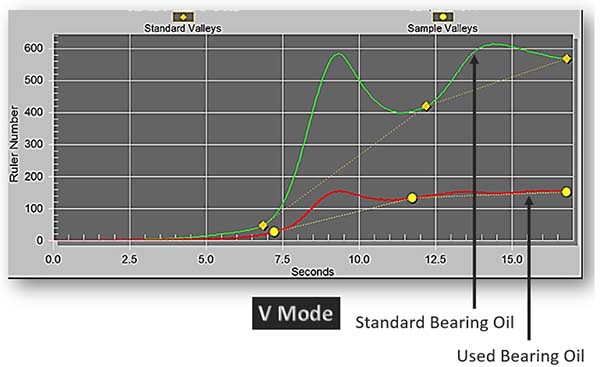
The RULER test utilizes linear sweep voltammetry to detect the quantity of antioxidants remaining in the oil. It produces a graph showing peaks at the detected antioxidants. Typically, the used oil results are compared against the baseline data to determine the quantity of antioxidants in the oil (Fluitec, 2022).

This method allows users to specifically quantify and trend the decline of antioxidants in the oil over a period of time, as seen in Figure 2. This is very valuable as users can now provide a better estimate of the remaining useful life based on the trend of the decline of antioxidants, and by extension, this helps them to understand the health of their oil.

Figure 2: RULER graph of a standard bearing oil vs. used bearing oil.

Oxidation occurs worldwide on almost every item (food, the human body, and lubricants). It is not going away anytime soon. Hence, there will always be a need for antioxidants to help protect the base oils for finished lubricants.

However, the formulations of these antioxidants may evolve over time as scientists find new, more sustainable alternatives for creating antioxidants.

OEMs also have a role to play as they advance machines and their capabilities; lubricants will have to be engineered for these new applications with varying environmental conditions. As such, there may be a greater need for more advanced antioxidants to help protect the oil.

References

  1. Bruce, R. (2012). Handbook of Lubrication and Tribology Volume II Theory and Design. Boca Raton: CRC Press.
  2. (2022, July 20). Why Choose RULER? Retrieved from Fluitec: https://www.fluitec.com/why-choose-ruler/
  3. Livingstone, G. (2024, February 15). Varnish Deposits in Bearings, Causes, Consequences and Cures. Retrieved from Precision Lubrication Magazine: https://precisionlubrication.com/articles/varnish-deposits-in-bearings-causes-consequences-and-cures/
  4. Mang, T., & Dresel, W. (2007). Lubricants and Lubrication. Weinheim: WILEY-VCH Verlag GmbH & Co. KGaA.
  5. (2016, April 17). Oil Oxidation Stability Test. Retrieved from Mobil: https://www.mobil.com/en/lubricants/for-businesses/industrial/lubricant-expertise/resources/oil-oxidation-stability-test
  6. Mortier, R. M., Fox, M. F., & Orszulik, S. T. (2010). Chemistry and Technology of Lubricants. Dordrecht: Springer.
  7. Pirro, D. M., Webster, M., & Daschner, E. (2016). Lubrication Fundamentals, Third Edition, Revised and Expanded. Boca Raton: CRC Press.
  8. (2024, March 06). Oxidation, the oil killer. Retrieved from SKF: https://www.skf.com/us/services/recondoil/knowledge-hub/recondoil-articles/oxidation-the-oil-killer
  9. Spectro Scientific. (2024, March 06). Measuring Oil Chemistry: Nitration, Oxidation, and Sulfation. Retrieved from Spectro Scientific: https://www.spectrosci.com/en/knowledge-center/test-parameters/measuring-oil-chemistry-nitration-oxidation-and-sulfation
  10. Stachowiak, G. W., & Batchelor, A. W. (2014). Engineering Tribology. Butterworth-Heinemann.


Find out more in the full article, "Antioxidants in Lubricants: Essential or Excessive?" featured in Precision Lubrication Magazine by Sanya Mathura, CEO & Founder of Strategic Reliability Solutions Ltd. 
Types of Antioxidants

Different additives have successfully suppressed the degradation of finished lubricants6, 10. These include:

  • Radical scavengers/inhibitors, also called propagation inhibitors
  • Hydroperoxide decomposers
  • Metal deactivators
  • Synergistic mixtures

Each of the above listed performs in a particular way to reduce the oxidation process in the lubricant.

Radical Scavengers

Many applications use radical scavengers as their preferred antioxidant. Radical scavengers are also known as primary antioxidants, as they are the first line of defense in the oxidation process. These are phenolic and aminic antioxidants.

They neutralize the peroxy radicals used during the initiation reaction to generate hydroperoxides4. These neutralized radicals form resonance-stabilized radicals, which are very unreactive and stop the propagation process.

Some examples of these additives are1: diarylamines, dihydroquinolines, and hindered phenols. While they may be known as simple hydrocarbons, they are often characterized by low volatility, used in quantities of 0.5-1% by weight, and have long lifetimes10.

These primary antioxidants are usually very effective at temperatures below 200°F (93°C)7. At these temperatures, oxidation occurs at a slower rate. These primary antioxidants are typically found in applications involving turbines, circulation, and hydraulic oils intended for extended service at these moderate temperatures.

Hydroperoxide Decomposers

The role of hydroperoxide decomposers is to neutralize the hydroperoxides used to accelerate oxidation. Radical scavengers (primary antioxidants) neutralize the free radicals, and these hydroperoxides are formed after the initiation stage. As such, hydroperoxide decomposers are known as secondary antioxidants.

These decomposers convert the hydroperoxides into non-radical products, which prevent the chain propagation reaction. ZDDP is one example of this type of decomposer, although organosulphur and organophosphorus additives have been used traditionally.

Metal Deactivators

Metal deactivators are usually derived from salicylic acid10. These function by entraining a metal such as copper or iron to inhibit oxidation acceleration. However, when the operating temperatures exceed 200°F (93°C), this is the stage at which the catalytic effects of metals begin to play a more important role in accelerating oxidation7.

Therefore, during these conditions, an antioxidant that can reduce the catalytic effect of the metals should be used, such as metal deactivators. These react with the surfaces of metals to form protective coatings. One such example is zinc dithiophosphate (ZnDTP), which can also act as a hydroperoxide decomposer at temperatures above 200°F (93°C).

Ethylenediaminetetraacetic acid is another commonly used example of this type of antioxidant.

Synergistic Mixtures

As explained above, there are different types of antioxidants, but one thing remains the same: They can work better when they work together. Some antioxidants can work in a synergistic manner to provide added protection to a finished lubricant. There are two types of synergism: homosynergism and heterosynergism.

Homosynergism occurs when two different types of antioxidants can be classed under the same category. One example is the use of two different peroxy radical scavengers. These both operate by the same stabilization mechanism but differ slightly in formulation.

On the other hand, heterosynergism is more common and often seen with aminic and phenolic antioxidants. Aminic antioxidants are primary antioxidants and radical scavengers, while phenolic antioxidants are secondary antioxidants and hydroperoxide decomposers.

In this case, the amnic antioxidants react faster than phenolic antioxidants, and as such, they are used up when the lubricant undergoes oxidation. However, the phenolic antioxidant regenerates a more effective aminic antioxidant, which helps suppress the rate of oxidation.

Find out more in the full article, "Antioxidants in Lubricants: Essential or Excessive?" featured in Precision Lubrication Magazine by Sanya Mathura, CEO & Founder of Strategic Reliability Solutions Ltd. 
How Antioxidants Combat Oxidation in Lubricants

As the name suggests, antioxidants prevent oxidation; thus, it is no surprise that they are also called Oxidation inhibitors. During the refining of the base oil, the natural antioxidants are typically stripped away.

Thus, additional antioxidants must be added to the finished lubricant to ensure it does not oxidize as quickly. It is important to note that antioxidants can reduce the amount of oxidation that occurs but will not stop it completely.

Some of the natural antioxidants in base oils include polycyclic aromatics and sulphur and nitrogen heterocyclics6.

During oxidation, acids, and peroxides are typically produced. Antioxidants added to finished lubricants usually contain hindered phenols and ZDDPs (zinc dialkyldithiophosphates). These will suppress the formation of the acids produced in these reactions.

Dedicated antioxidants are amines, phenols, and sometimes ZDDP, which also function as an antiwear additive. Antioxidants account for 3-7% of European and North American diesel and gasoline additive packages for finished lubricants6.

As mentioned earlier, antioxidants are not the only additives that have a role to play in protecting the equipment. Antioxidants often work together with detergents to help prevent corrosive wear, especially in engines.

Some moisture and acidic combustion by-products can enter the engine during oxidation and form acids. Detergents can help to reduce corrosive wear caused by these acids. Alkylphenols are often used as a substrate in the preparation of detergents; as such, they also exhibit some antioxidant properties.

It must also be noted that extreme pressure additives containing sulphur or phosphorus may also suppress oxidation. Contrarily, these additives decompose at very moderate temperatures, so their strength as an antioxidant is not generally promoted10.

Find out more in the full article, "Antioxidants in Lubricants: Essential or Excessive?" featured in Precision Lubrication Magazine by Sanya Mathura, CEO & Founder of Strategic Reliability Solutions Ltd. 
Understanding Oxidation: The Basis for Antioxidant Use

When speaking about antioxidants, the first thing that comes to mind is oxidation. This is the primary reason that antioxidants exist: to reduce oxidation. But what is oxidation, and why should there be antioxidants?

Oxidation occurs in everything in life (not just finished lubricants). We see oxidation regularly when we leave certain fruits exposed to the atmosphere (think about cut pears or apples). After being in the elements for some time, they are no longer fresh and have degraded slightly.

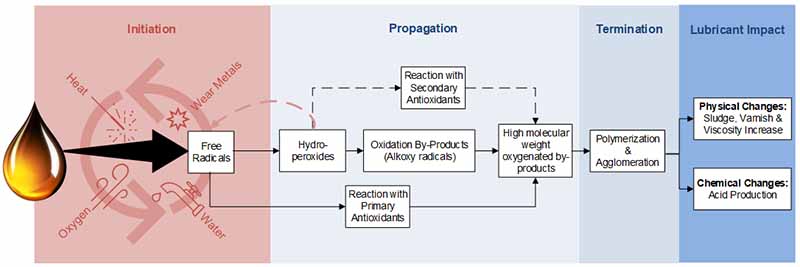
A similar reaction occurs during the oxidation of finished lubricants. Greg Livingstone provides an excellent summary of the oxidation process in his article, “Varnish, Deposits in Bearings, Causes, Consequences, and Cures.” The oxidation degradation pathway begins with initiation, where free radicals are formed in the presence of heat, wear metals, water, and oxygen as shown in Figure 1.

Afterward, during propagation, the free radicals form hydroperoxides, which can create oxidation by-products (Alkoxy radicals), eventually leading to high molecular weight oxygenated by-products.

During this process, the free radicals can also react with primary antioxidants, or the hydroperoxides can react with secondary antioxidants to slow these reactions. However, they will still form the high molecular weight oxygenated by-products once depleted.

Next in the termination phase is polymerization and agglomeration, followed by the physical and chemical changes to the lubricant. It must be noted that there are various stages to oxidation, and typically, when we see sludge or varnish, oxidation has already occurred.

Figure 1: Summary of the oxidation process.

When oxidation occurs, the oil quickly loses its antioxidants; they can no longer protect the oil. As such, the oil begins to undergo physical changes where sludge and varnish appear, and viscosity usually increases. These oils also experience a rise in acid production after these reactions occur.

Now that we have a better understanding of oxidation, whereby the antioxidants are deployed to help reduce the oxidation rate, we can dive deeper into the world of antioxidants and how they can help fight against oxidation for the finished lubricant.


Find out more in the full article, "Antioxidants in Lubricants: Essential or Excessive?" featured in Precision Lubrication Magazine by Sanya Mathura, CEO & Founder of Strategic Reliability Solutions Ltd. 
Determining the Root Causes of Oxidation in Lubricants

Finally, we’ve arrived at the point where we can effectively determine the root cause. It is critical that the analyst understands oxidation and has knowledge of the evidence needed before embarking on the root cause journey. As noted in the first part of this article, the question we should ask is, “How could?”.

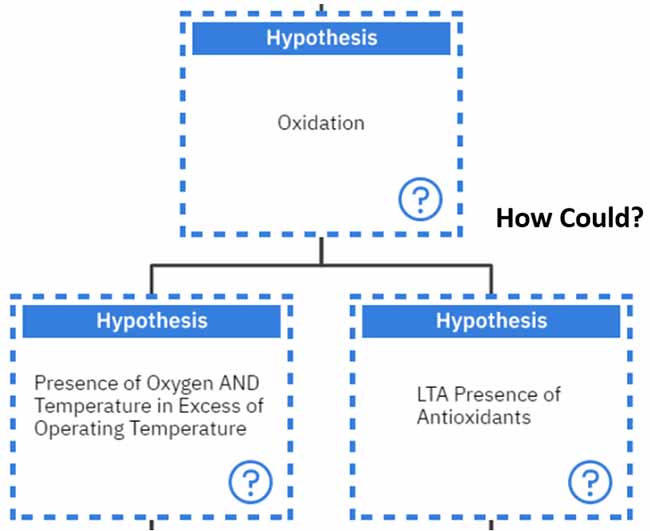
We hypothesize that oxidation is occurring. In a complete root cause analysis, we should hypothesize the occurrence of all the degradation mechanisms and eliminate them with evidence-based data.

There are two main ways in which oxidation can occur either through the presence of oxygen and temperature over the normal operating temperature of the system or if there is a less-than-adequate presence of antioxidants.

flow-1

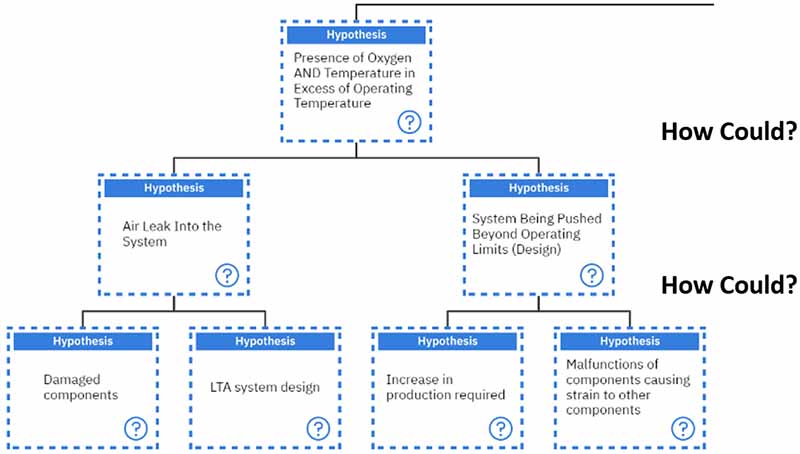
If we follow our line of questioning with the presence of oxygen and temperature and again ask, “How could?” we can get two primary responses. Either there was an air leak in the system, or the system was being pushed beyond its operating limits.

flow-2

If we further investigate the air leak into the system, we ask, “How could it?” again. There are two main ways: either there are damaged components, or a less-than-adequate system design allows air to enter the system.

If we follow the pathway of investigating “how could” the system be pushed beyond its operating limits, then we can come up with two hypotheses. Either an increase in production was required, or there was a malfunction of the components, which caused strain on the other components.

Both of these hypotheses are physical and can be investigated further, but we will focus on the lubricant aspect of this article. Hence, we will follow the questioning surrounding the less-than-adequate presence of antioxidants.

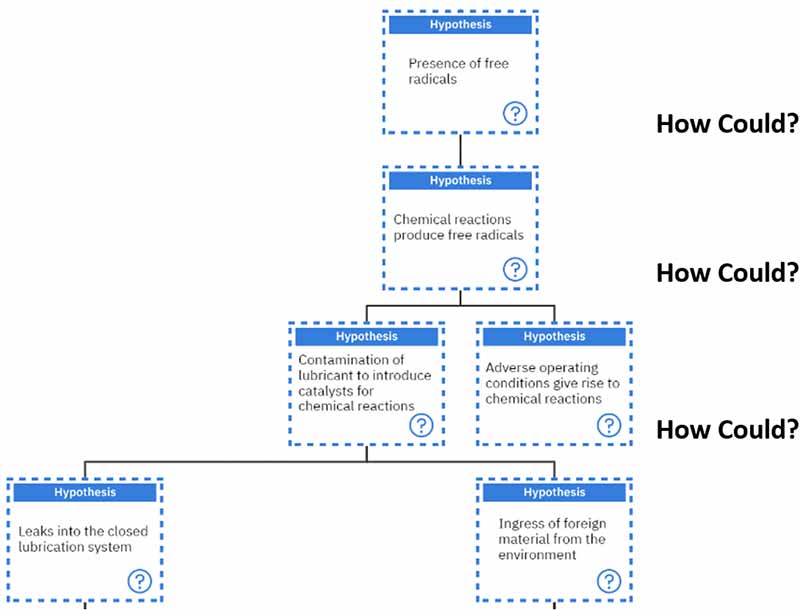
We begin with the question, “How could we have a less-than-adequate presence of antioxidants?”. From the information gathered in this article, we know this can result from free radicals or less than adequate lubricant specifications.

We will investigate the “Presence of free radicals” first.

flow-3

“How could we have the presence of free radicals?” Free radicals can emerge as a result of chemical reactions.

“How could these chemical reactions produce free radicals?” There are two main ways in which this can occur. Either the lubricant got contaminated, which introduced catalysts for these chemical reactions, or adverse operating conditions gave rise to these chemical reactions.

Then, we must ask again, “How could we have contamination?” Contamination can occur if leaks are getting into a closed lubrication system or if there is ingress of foreign material from the environment.

flow-4

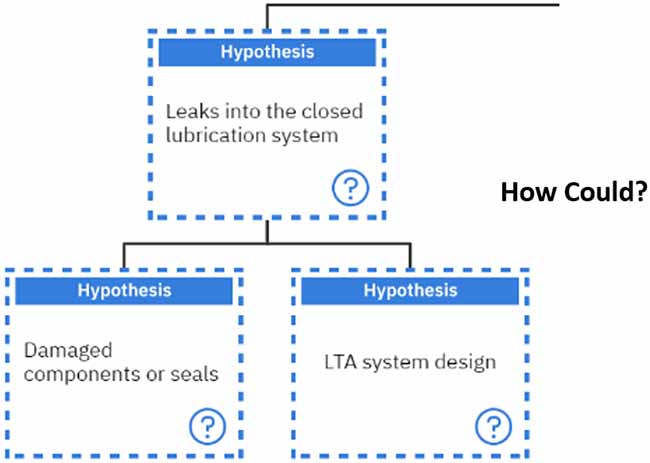
Our line of questioning continues when we ask, “How could we have leaks in a closed lubrication system?”. These can result from damaged components or seals allowing leaks into the system or if the system is less than adequately designed.

These are physical attributes of the system, so we will go back to investigating the lubricant aspect.

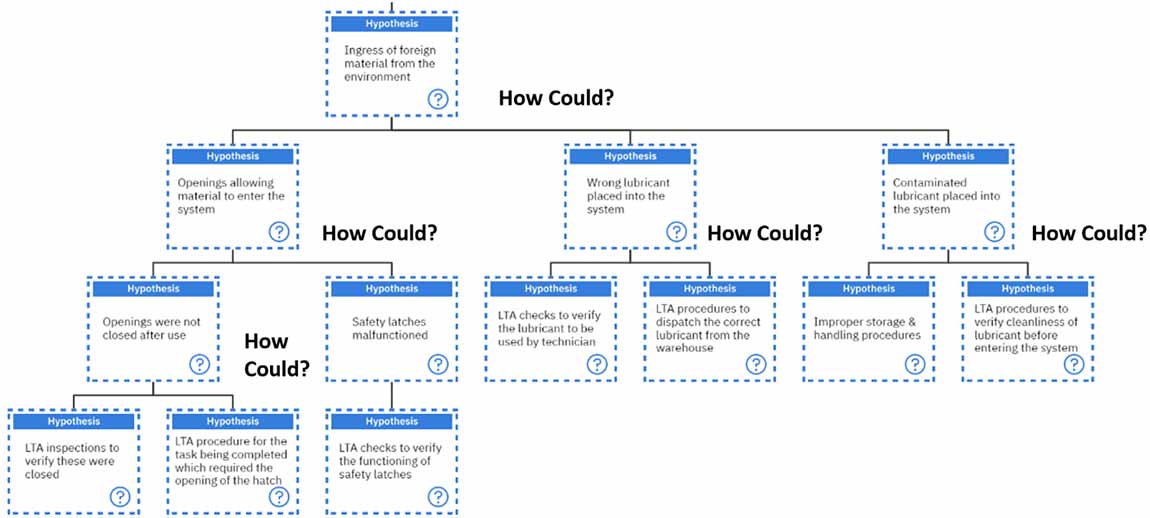
This is where we get to ask our famous question, “How could we have ingress of foreign material from the environment?”. Ideally, this can be classified in three ways;

  1. There are openings which are allowing materials to enter the system or
  2. Wrong lubricant was placed in the system or
  3. Contaminated lubricant was placed in the system
flow-5

Let’s investigate all three aspects, starting with the openings allowing foreign material to enter the system. There are two main ways in which this can occur. Either the openings were not closed after use, or the safety latches malfunctioned.

Suppose the openings were not closed after use. In that case, there is a possibility that there were less than adequate inspections to verify that these were closed after use or a less than adequate procedure for the task being completed which required the opening of the hatch.

On the other hand, if the safety latches malfunctioned, this could result from less than adequate checks to verify the functioning of the safety latches.

In these cases, the root causes are not the physical elements but rather the systemic reasons for these procedures not being adequately performed.

Now we investigate the second central hypothesis, “How could the wrong lubricant be placed in the system?” While there are many ways in which this can occur, we have narrowed it down to two main areas.

Either there were less than adequate checks to verify that the technician received the correct lubricant, or there were less than adequate procedures to dispatch the correct lubricant from the warehouse. We will not go further into these two as they are now systemic causes that must be addressed.

Onto the third hypothesis of “How could a contaminated lubricant be placed in the system?”. There are two main avenues for this to occur. Either there were improper storage and handling procedures, or there needed to be more adequate procedures to verify the cleanliness of the lubricant before entering the system.

The other hypothesis stemming from the “less than the adequate presence of antioxidants” is having “less than adequate lubricant specifications.” Let’s investigate this one a bit further.

flow-6

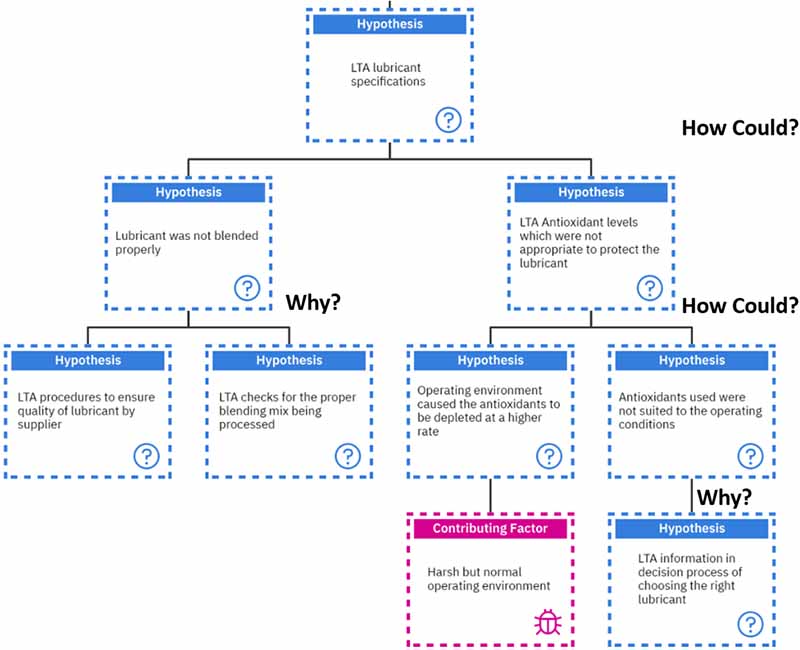
“How could we have a less than adequate lubricant specification?” Typically, this can result from the lubricant not being blended properly or less than adequate antioxidant levels, which were inappropriate to protect the lubricant.

Now, the line of questioning changes to “Why?” as we have gone past the physical element and some decision-making was involved in this hypothesis. We must ask, “Why wasn’t the lubricant blended properly?”

This can result from less than adequate procedures to ensure the quality of the lubricant by the supplier or less than sufficient checks for the proper blending mix being processed.

These are factors one should consider when receiving any lubricant from their supplier.

On the other hand, if we follow the line of questioning of “How could there be a less than adequate antioxidant level to protect the lubricant?” we can come up with the following.

Either the operating environment caused the antioxidants to be depleted at a higher rate. This would be as a result of a harsh but normal operating environment. In this case, we may be unable to make those environmental changes (without the OEM’s consent).

Or the antioxidants used were not suited to the operating conditions. This is where the line of questioning again shifts to “Why were they not suited?”. This could result from inadequate information in choosing the right lubricant suited for the system.

What Is the Real Root Cause of Oxidation?

From the logic tree that we have created, we can see that there is no sole root cause for oxidation. It can stem from various causes, including physical, human, and even systemic roots. The main takeaway from this exercise is to acknowledge that root causes are not limited to physical causes, such as leaks in the system.

Instead, the actual root causes can be linked to systemic areas of concern where there may not have been enough information to guide the analyst in choosing the most ideally suited lubricant for the application. There are also root causes related to the lubricant not being appropriately blended.

It is critical to thoroughly investigate the real root causes when the lubricant becomes degraded to avoid being stuck in the loop of constantly experiencing degradation.

For more info on other methods, check out the book Bob Latino, and I authored called “Lubrication Degradation – Getting Into the Root Causes,” published by CRC Press.


References:

Ameye, Jo, Dave Wooton, and Greg Livingstone. 2015. Antioxidant Monitoring as Part of a Lubricant Diagnostics – A Luxury or Necessity. Rosenheim, Germany. February 2015.

Latino, Bob, Sanya Mathura. 2021. Lubrication Degradation – Getting into the Root Causes. CRC Press, Taylor & Francis.

How do I know if Oxidation is occurring?

What Evidence is needed to prove that oxidation has occurred / is occurring?

However, understanding the oxidation process is just one part of the puzzle. When performing an investigation, we also need to know what factors or characteristics should be present. Additionally, we need to prove that their presence confirms our hypothesis of whether or not oxidation is occurring. This is where the line of evidence-based questioning plays a significant role.

When oxidation occurs, it is usual to see the presence of aldehydes, ketones, hydroperoxides, and even carboxylic acids. These can be confirmed using the FTIR (Fourier Transform Infrared test).

Typically, one will also find some deposits in the system. These deposits can be further characterized and tested to determine their nature using FTIR. Their presence, however, may be confirmed using the MPC (Membrane Path Colorimetry, ASTMD7843) test.

Identifying the presence of the deposits and/or the compounds listed above can lead to the conclusion that oxidation has occurred.

Another critical characteristic of oxidation is the depletion of antioxidants. This can be easily identified by utilizing the RULER® (Remaining Useful Life Evaluation Routine) test. This test quantifies the remaining antioxidants in the oil and gives the value for the amines and phenols (which is very important, especially in synergistic mixtures).

As such, one can detect the trend in the depletion of antioxidants and implement measures to prevent this before they become depleted.

The main tests to assist in determining the presence of Oxidation include:

RULER (Remaining Useful Life Evaluation Routine) levels less than 25% compared to new oil. This value represents the level of antioxidants in the oil. Hence, low levels indicate that the antioxidants are decreasing, possibly due to oxidation. This test can accurately give information on whether oxidation is currently occurring in the oil before deposits are formed.

An increase in acid number indicates the presence of acids resulting from oxidation. However, it must be noted that this change in acid number only occurs after oxidation has taken place. Hence this test is not a good indicator to determine if oxidation is occurring; instead, it is more definitive in letting us know that oxidation has already occurred.

Rapid color changes – darkening of the oil due to the deposits being present. While color is not the best indicator, in some instances, the darkening of the oil can provide a bystander to ask whether something is occurring in the oil. It is not a definitive test for the presence of oxidation.

FTIR test (Fourier Transform Infrared) for the presence of insolubles formed during the oxidation reaction. This can accurately determine the presence of any compound to assist us in determining whether oxidation is occurring.

MPC (Membrane Patch Colorimetry) levels outside the normal range (above 20). This lets us know that insoluble deposits are present in the oil. One must note that there may be instances where the deposits might not appear in the MPC test. As such, this should not be a standalone test to determine the presence of deposits.

RPVOT (Rotating Pressure Vessel Oxidation Test) levels are less than 25% compared to new oil (this is the warning limit). This is the industry standard, but this test does not have a high repeatability value in that if the same test were performed on identical samples, the values would be different. Additionally, the value (reported in minutes) is not easily translated into the environment of the components.

These tests provide us with the evidence we need to determine the presence of oxidation when performing the root cause analysis on the component’s failure.

How Can Oxidation Occur in Lubricants?

Typically, when an oil undergoes degradation, the first culprit to be blamed is oxidation. We often hear that the oil has oxidized, producing varnish, leading to its degradation. While this simple statement may seem plausible, it is not the only way oil can degrade.

If an oil has undergone oxidation, the real question we should be asking is not how much varnish has been produced but what caused the oxidation in the first place?

In this article, we will explore the various ways in which an oil can degrade via oxidation. However, as you know from previous articles, other degradation methods exist.

How Can Oxidation Occur?

Before diving further into the root cause of oxidation, one must first fully understand how oxidation occurs. When truly investigating a root cause for a failure, we should start with the question “How could?” rather than “Why?”.

This line of questioning heavily influences the answers. The “How could?” responses stem from a more evidence-based approach.

On the contrary, if we question “Why?” this is more opinionated and can mislead the investigation towards a biased opinion rather than the facts.

This leads us to the main question, “How can oxidation occur?”.

According to Ameye, Wooton, and Livingstone, 2015, oxidation occurs when there is any reaction in which electrons are transferred from one molecule. Ideally, in oxidation, during the initiation phase, free radicals are formed, which in turn produce more free radicals.

A free radical is a molecular fragment with one or more unpaired electrons which are accessible and can easily react with other hydrocarbons, as explained by Ameye, Wooton, and Livingstone, 2015.

After the initiation phase, which has the free radicals, the propagation phase follows, in which the antioxidants react with these free radicals to make them more stable. This is part of the reaction in which there is usually a drastic depletion of antioxidants or where the oil becomes sacrificial.

The antioxidants act as a barrier to protect the base oil from oxidizing. However, they can no longer protect the base oil once they become depleted. This leads to the termination phase, where the remaining free radicals attack the base oil.

As a result, this gives rise to the condensation phase, where we begin to physically notice the changes in the oil’s viscosity and the presence of insoluble by-products. These are the deposits that are known are lube oil varnish to some but can further be defined by their chemical composition.

Understanding how oxidation occurs can assist us in determining the root cause when an oil degrades. It allows us to identify the different stages to further help us determine if it is indeed oxidation that is occurring or not.

The Influence of Lubricant Selection on Degradation

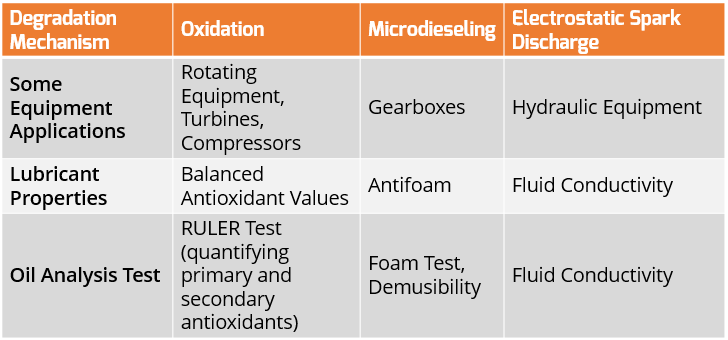
Guidelines should always be followed when selecting a lubricant for a particular application. OEMs will have specific criteria ranges for specialty applications that must be satisfied. Some general guidelines which should be considered can be summarized in the table below based on the listed mechanisms above.

Based on the three listed mechanisms above, one can identify that choosing a lubricant can impact the type of degradation which occurs during its lifetime. As such, when selecting lubricants, it is critical to note their applications and the conditions they will endure.

Having a history of lubricant failures for particular equipment can also assist in this regard by informing users of past failure trends. Therefore, when selecting a lubricant, operators can be more mindful of the properties which should not be compromised during the selection process.

The process of troubleshooting degradation in lubricants has been covered in detail in the book, “Lubrication Degradation – Getting Into the Root Causes” by Bob Latino and myself, published by CRC Press, Taylor and Francis.


Find out more in the full article, "How lubricant selection impacts degradation and machine failure" featured in Precision Lubrication Magazine by Sanya Mathura, CEO & Founder of Strategic Reliability Solutions Ltd.