Start measuring the air in your system. The most useful air-in-oil measurement is not the one that produces the largest number of parameters. It is the one that supports a better engineering process.
- Define a representative baseline.
- Detect a meaningful deviation.
- Interpret it together with fluid, component, and operating context.
- Investigate the most plausible mechanism.
- Verify whether the intervention changed the measured behavior.
Many practitioners only view air as an issue when they see foam. By this time, it is too late and damage has already occurred to the system. Even small bubbles can have system consequences, as shown in the diagram below.
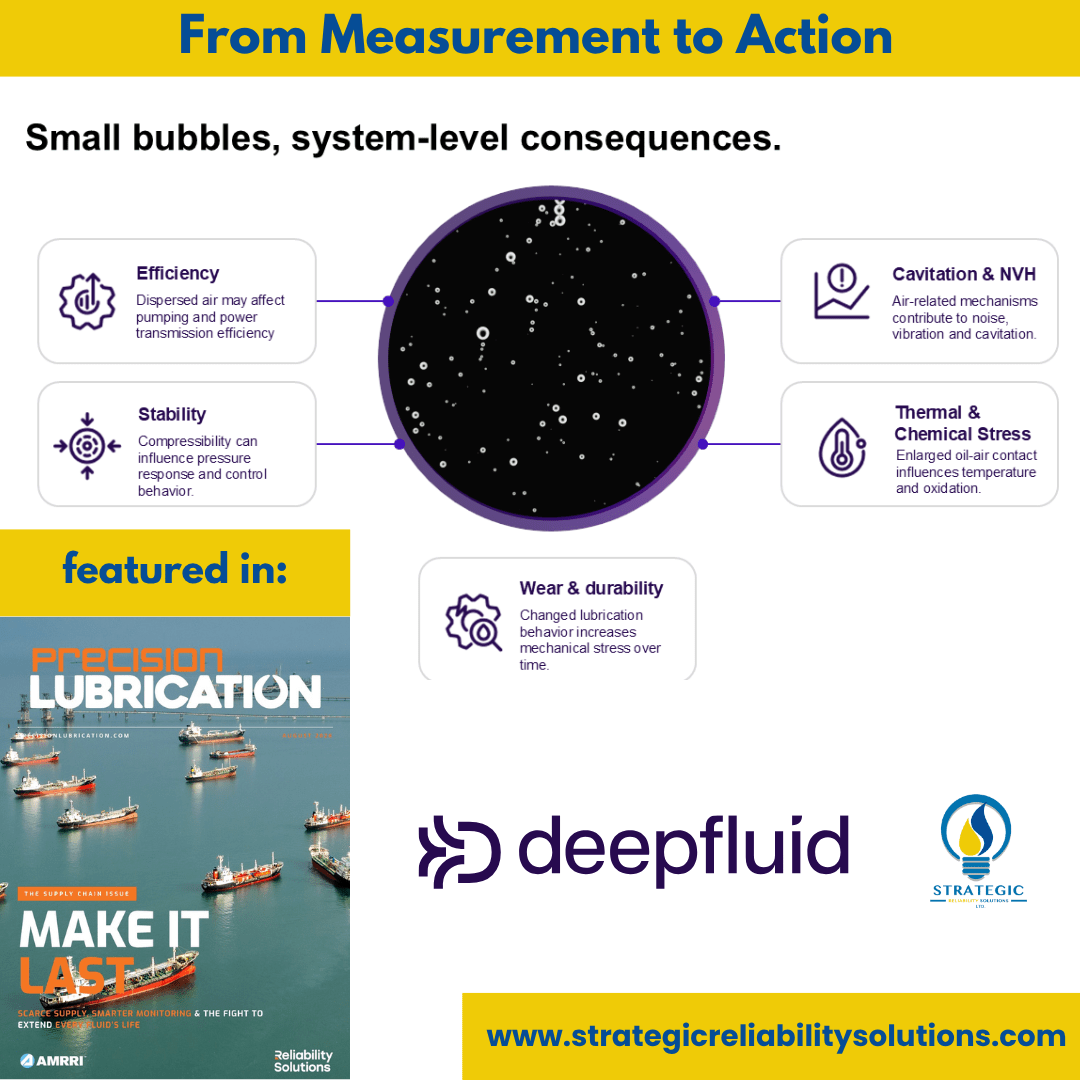
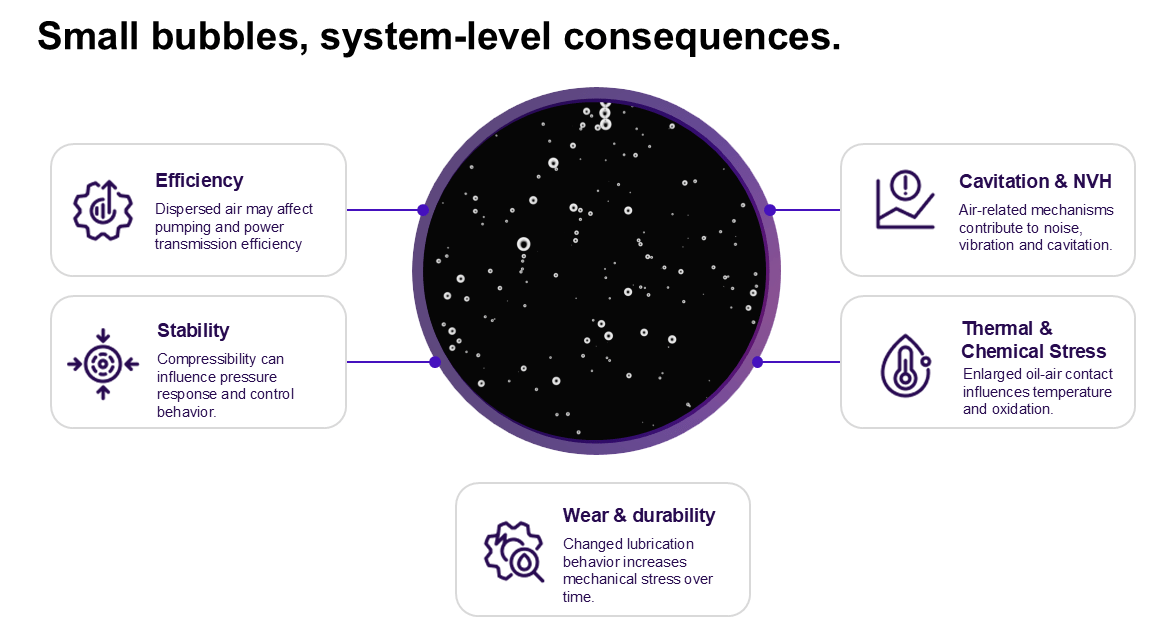
Many operators are not aware of the impacts of air-in-oil and quite often, it is labelled as something else. However, it usually shows up as a foam problem, unexpected NVH, control instability, temperature problem, cavitation problem, pump problem or an oil problem. The key is to monitor these effects in different settings.
Starting with studying air release, dispersion and formulation effects under controlled conditions in the lab. Moving to the testing phase where bubble behaviour is related to operating conditions, design changes and system response. Then finally to the field where changes can be tracked over time to support root-cause analysis and confirm any improvements.
This is the benefit of using the deepfluid technology as it can capture data from the various phases to bring about actionable insights to improve the reliability of operating systems.
Find out more in the full article, "From Lab Insight to Field Action: How Air-in-Oil Diagnostics can support better Troubleshooting" featured in Precision Lubrication Magazine by Sanya Mathura, CEO & Founder of Strategic Reliability Solutions Ltd, David Placzek, Dr. Lukas Hafner