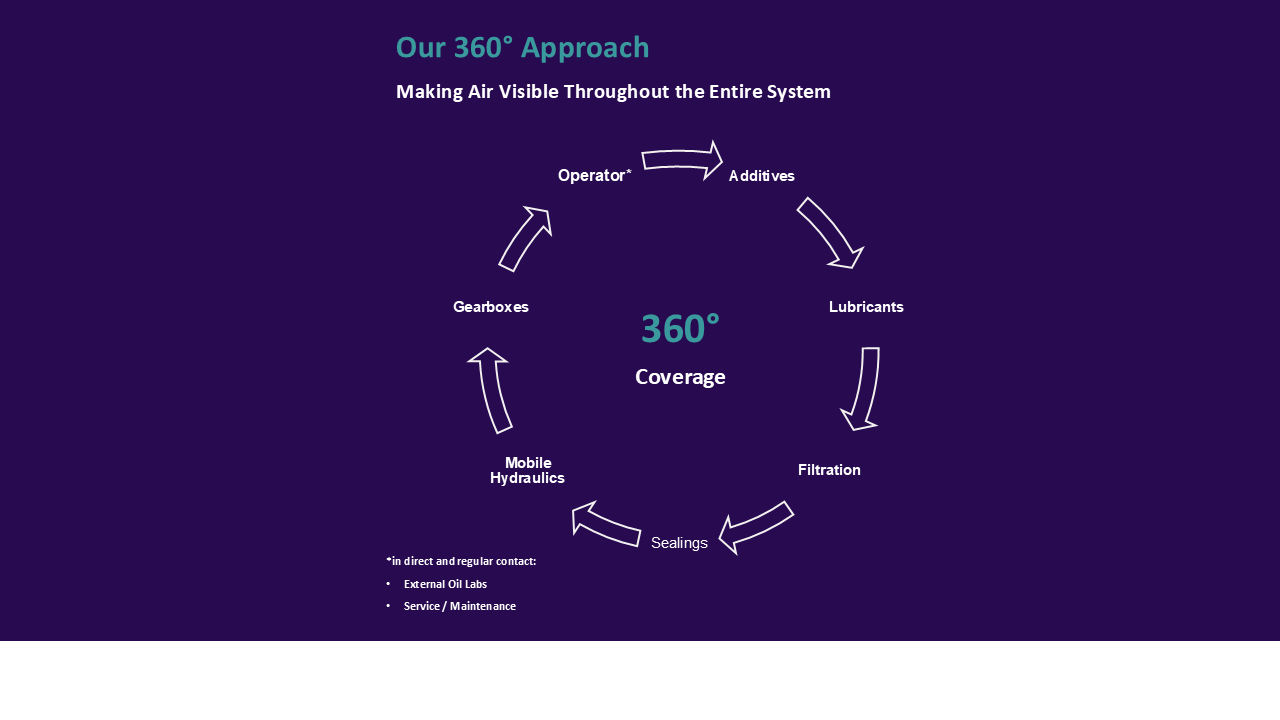
At Deepfluid, they have adopted a 360 approach where they can assist all the stakeholders involved in the lubricant industry as it relates to the oil being in the equipment. It connects formulation development, laboratory testing, component testing, system validation, field operation, maintenance, troubleshooting, and verification of corrective actions.
With the 360 approach, various stakeholders can be involved to ensure that the lubricant is fully assessed in different situations, from the testing and development of the lubricant to its actual application in the component then finally to the end user by ensuring they get the results they need.
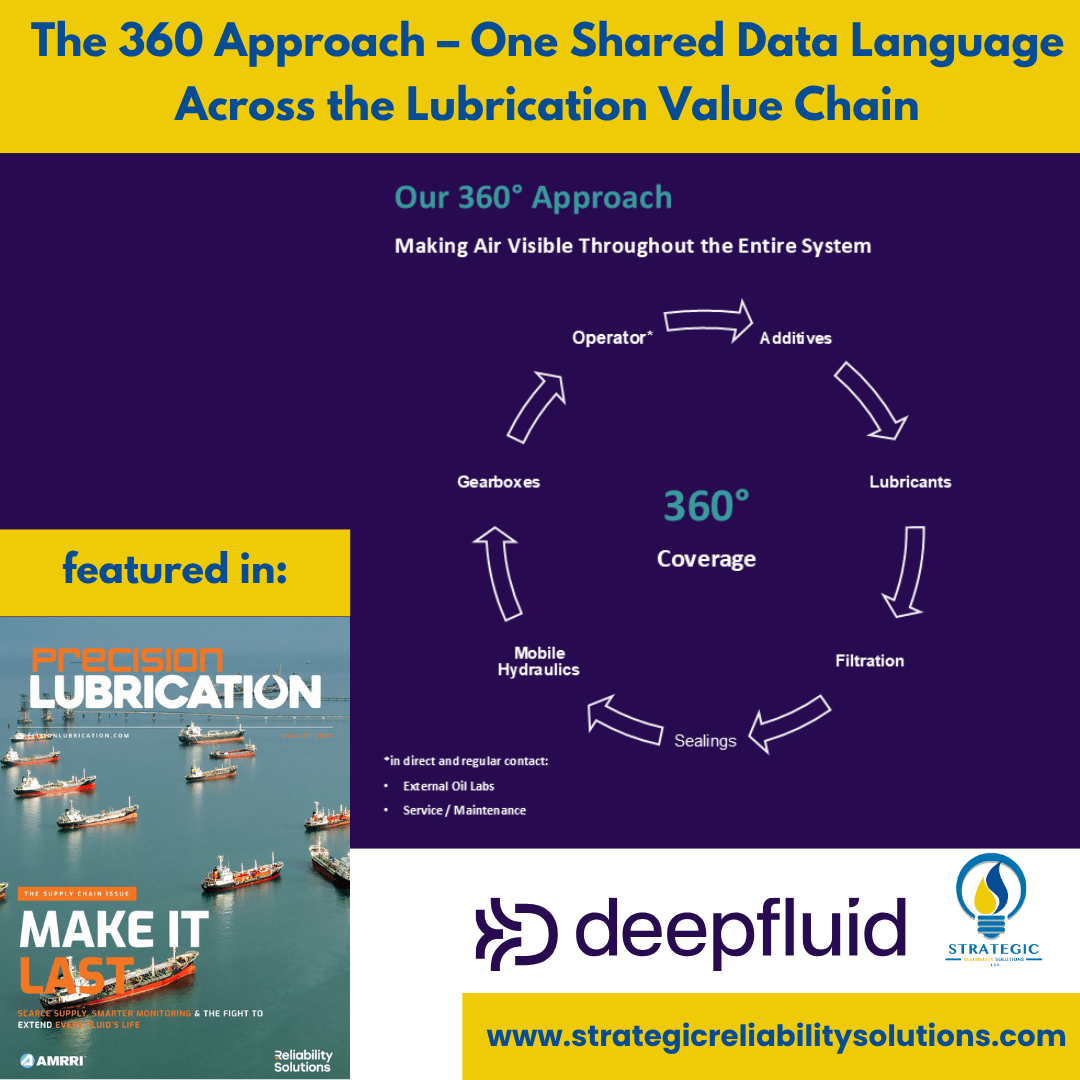
An additive supplier may investigate formulation effects. A lubricant manufacturer may compare air-release and foam behavior. A filter or seal supplier may study aeration or air ingress. An OEM may correlate bubble behavior with efficiency, thermal management, or NVH. An operator may investigate an abnormal field deviation. An external oil laboratory or research institution may provide controlled reference analysis.
The questions differ, but the underlying air-in-oil metrics can remain comparable.
Not one product for every stakeholder, but one measurement logic that allows different stakeholders to work on the same fluid-system question from different positions in the value chain.
The 360 approach ensures that all aspects are taken into consideration for the oil, from the lab testing to the field development, with all the stakeholders involved. This guarantees that the final product is reliable and the user should have a valuable experience.
Find out more in the full article, "From Lab Insight to Field Action: How Air-in-Oil Diagnostics can support better Troubleshooting" featured in Precision Lubrication Magazine by Sanya Mathura, CEO & Founder of Strategic Reliability Solutions Ltd, David Placzek, Dr. Lukas Hafner