Additives can be depleted through different mechanisms. Some of these include:
- Regular consumption through normal functioning of the lubricant
- Antioxidant depletion during oxidation
- Antiwear depletion due to high wear on the inside of the equipment
- Additive depletion via a contaminant to produce a bleaching effect
As mentioned earlier, additives are sacrificial in nature. It is very normal to see additives deplete over time; if they are not depleting and increasing, this may be a cause for concern. This can mean that someone is topping up the oil frequently or perhaps topping up with an incorrect lubricant.
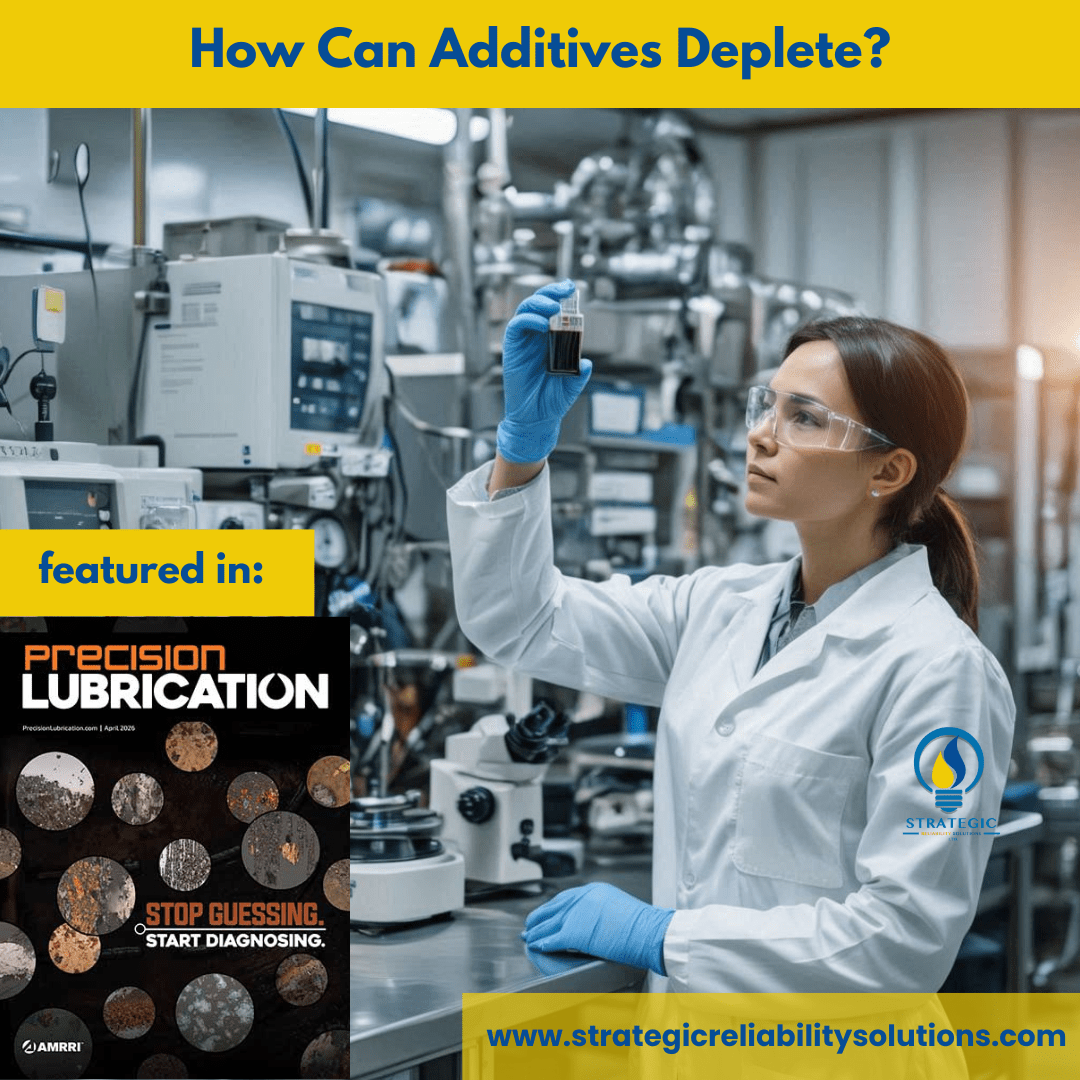
Since there are numerous oils on the market, the best way to monitor the depletion of your additives is to compare them against a new sample of that oil and use that as your baseline. Your lab will help you confirm when the additive limits are approaching the danger zones.
During oxidation, a free radical is formed under conditions such as heat, wear, metal catalysts, oxygen, or water. These free radicals are unstable, and antioxidants usually neutralize them.
In the process, antioxidant levels decrease. However, if the conditions still permit oxidation, more free radicals will be formed. This means that more antioxidants will be depleted as they neutralize the free radicals until they diminish and can no longer protect the base oil. This is when the free radicals begin to attack the base oil, and varnish can form.
Once the antioxidants are gone, the oil stops defending – and starts degrading.
If there are causes of high wear, such as the incorrect viscosity of the lubricant (too thin) or the machine finishing of the inner parts of a component not being done to the required standard, this can affect the levels of antiwear in the oil. Antiwear additives protect the metal surfaces inside the equipment. However, these are only activated when moderate stress exists within the equipment.
Typically, in these situations, the antiwear additive adheres to the metal surface and helps protect it by forming a layer. Once this layer is formed, the antiwear additive has officially left the oil, and this will be reflected in a decrease in its value in the oil analysis report.
The layer will not remain forever, and due to wear on the equipment, it can be worn off and replaced by a new layer, leading to further depletion of the antiwear additives until there are no more to form another layer or protect the metal surface.
Contamination can also cause some additives to become depleted. Contaminants can react with additives, causing them to form deposits that leave the oil. Therefore, their presence will not be detected by oil analysis.
Some common contaminants are water, fuel, coolant, and acids. These contaminants can also promote the formation of catalysts for degradation mechanisms such as oxidation. Dirt and solid particles can also promote additive depletion, especially when they act as catalysts.
Find out more in the full article, "Lubricant Additive Depletion as an Early Asset Health Signal" featured in Precision Lubrication Magazine by Sanya Mathura, CEO & Founder of Strategic Reliability Solutions Ltd.